Basic arithmetic skills Normal Addition & Subtraction Worksheets for Ages 6-8
3 filtered results
-
From - To
Enhance your child's understanding of basic arithmetic with our engaging Normal Addition and Subtraction Worksheets, specially designed for ages 6-8. These worksheets provide a fun and interactive way to practice essential math skills, helping young learners build confidence as they tackle addition and subtraction problems. With varying levels of difficulty, children can develop their abilities gradually, ensuring a solid foundation in mathematics. Our printable resources feature colorful designs and appealing illustrations, making learning enjoyable. Whether used at home or in the classroom, these worksheets are perfect for reinforcing math concepts and enhancing skill retention. Download now and spark your child’s love for math!
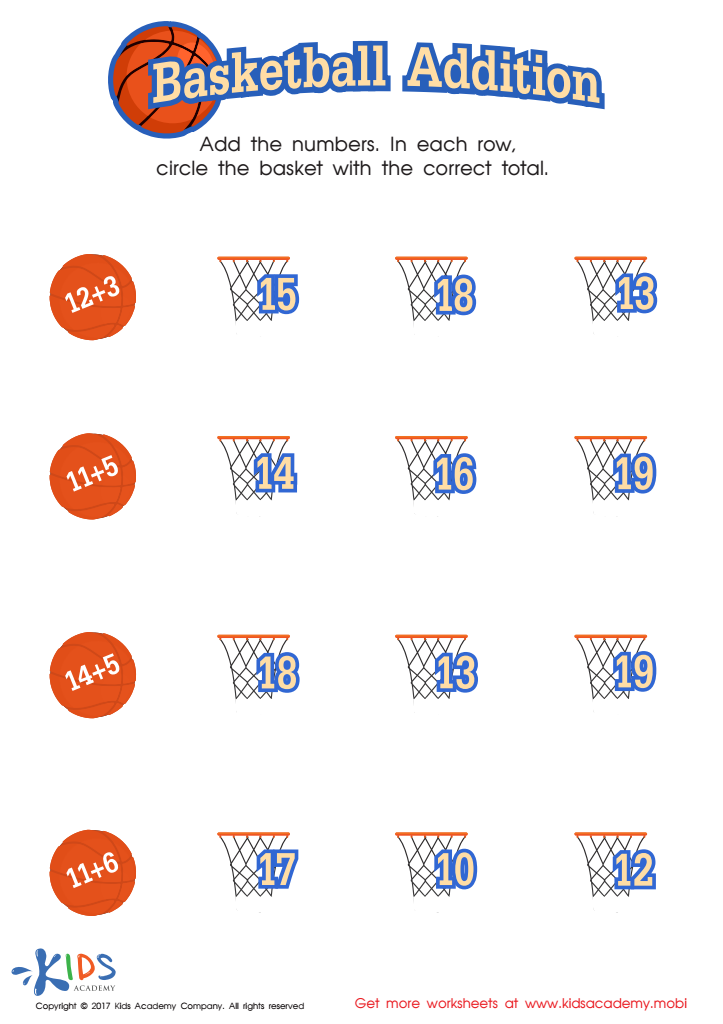
 Assign to My Students
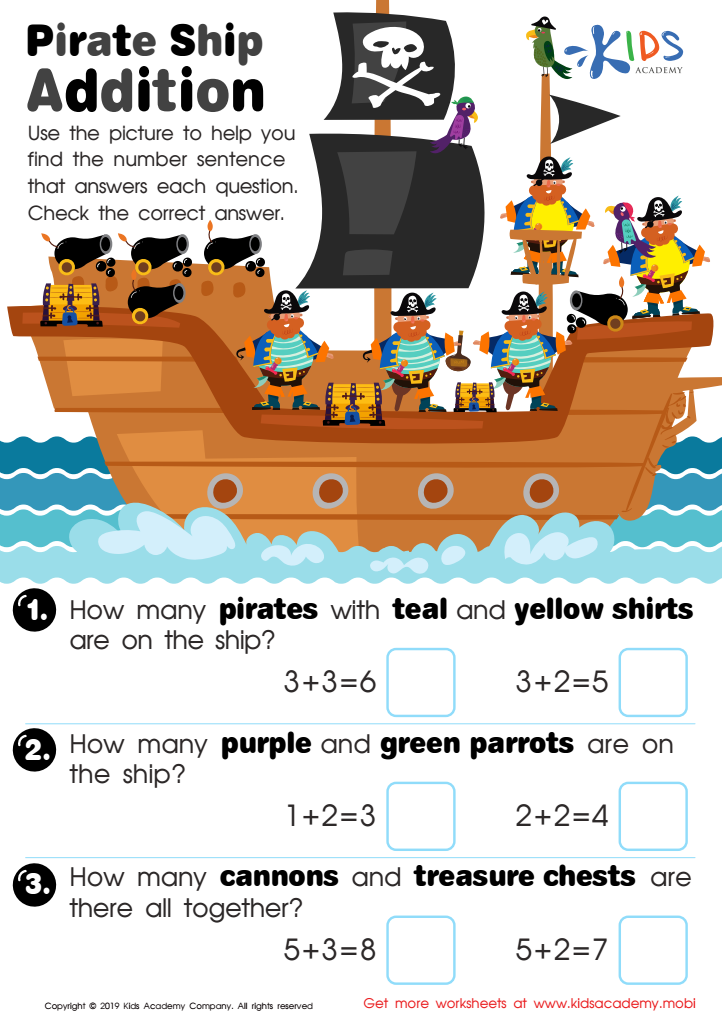
Pirate Ship Addition Worksheet
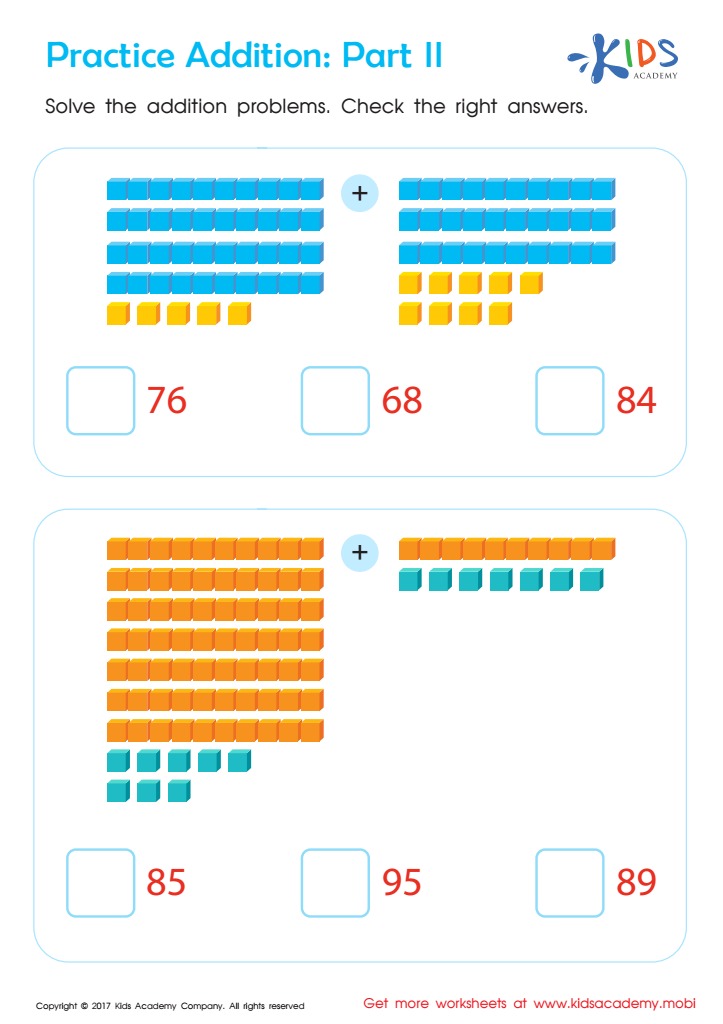
Practice Addition: Part 2 Worksheet








Basic arithmetic skills, especially normal addition and subtraction, are foundational for children aged 6-8, and it's crucial for parents and teachers to prioritize them. During these formative years, children are not just learning to perform calculations; they are developing critical thinking, problem-solving skills, and number sense that will serve as building blocks for more complex mathematical concepts later on.
Mastering addition and subtraction promotes confidence and a positive attitude toward math. When children can efficiently solve basic problems, they are less likely to experience math anxiety, allowing them to engage more deeply with the subject. These skills also help students understand real-life situations, such as budgeting allowance, telling time, and managing resources, enhancing their practical day-to-day decision-making.
Additionally, basic arithmetic aids in improving cognitive abilities, as children learn to categorize, sequence, and recognize patterns. Furthermore, when parents and teachers emphasize these skills, they support collaborative learning, fostering communication and teamwork through group activities or games that involve math.
In summary, investing time and effort in fundamental arithmetic skills lays a robust groundwork that will positively influence children's academic experiences and future success in mathematics and beyond.








