Logical thinking development Normal Addition & Subtraction Worksheets for Ages 6-8
4 filtered results
-
From - To
Enhance your child's logical thinking with our carefully designed Normal Addition & Subtraction Worksheets for ages 6-8! These engaging worksheets help young learners master fundamental math skills while promoting critical thinking and problem-solving abilities. Each worksheet is crafted to challenge students with age-appropriate addition and subtraction problems, enabling them to develop a solid foundation in arithmetic. Integrated puzzles and word problems make learning enjoyable and interactive, ensuring active participation and deeper understanding. Perfect for home or classroom, our worksheets support educators and parents alike in fostering mathematical confidence and logical reasoning in children. Start your child's journey to mathematical mastery today!
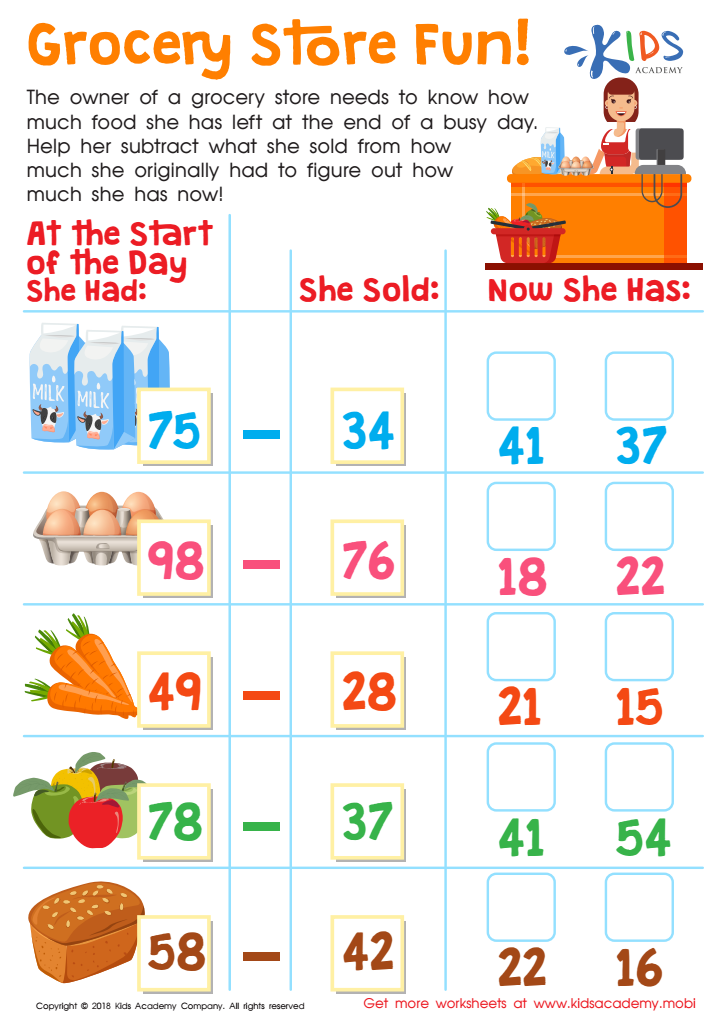
Grocery Store Fun! Worksheet
 Assign to My Students
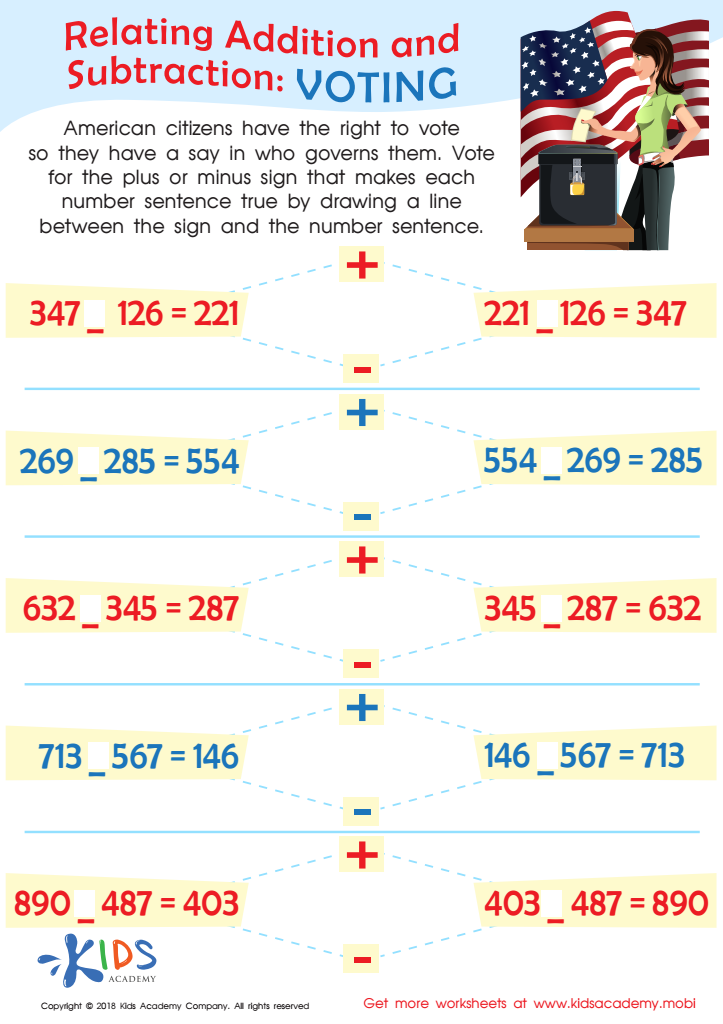
Voting Worksheet
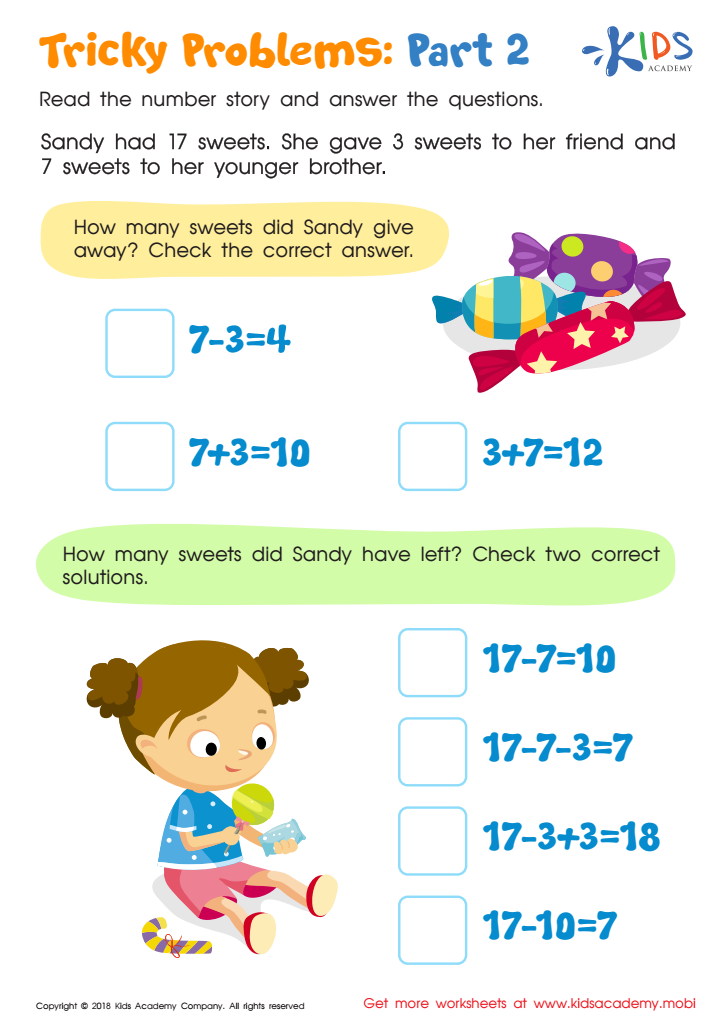
Tricky Problems Worksheet: Part 2
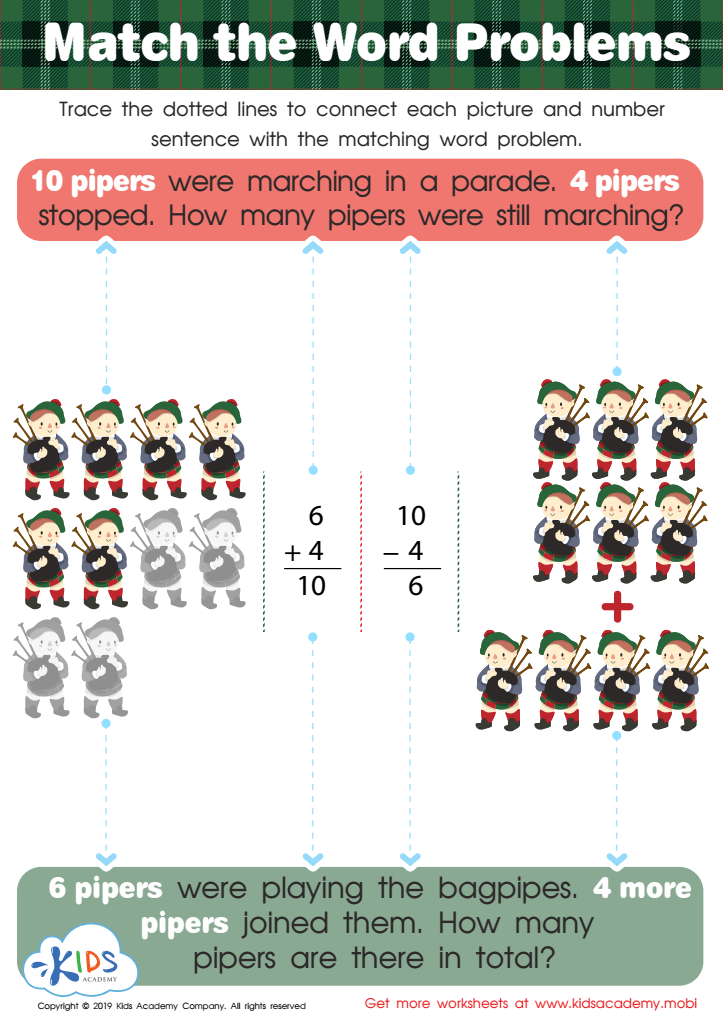
Match the Word Problems Worksheet








Parents or teachers should invest in the development of logical thinking, addition, and subtraction skills for children aged 6-8 because these foundational abilities are crucial for their academic and everyday success. At this stage, children's cognitive abilities are rapidly developing, making it an ideal time to nurture these fundamental skills. Logical thinking enhances problem-solving abilities, enabling children to approach tasks systematically and make reasoned decisions. It will help them in subjects like mathematics, science, and even everyday scenarios requiring critical thinking.
By mastering normal addition and subtraction, children build the groundwork for more complex mathematics. These fundamental operations are not only important for school but also equip children with practical skills that are essential in daily life. Whether they’re in a grocery store trying to budget money, sharing items equally, or planning time for their activities, these basic math skills are indispensable.
Moreover, developing logical thinking and basic math skills boost children’s confidence and foster a positive attitude toward learning. When children feel competent and succeed in early mathematic tasks, it encourages a growth mindset, setting the stage for future learning achievements. Therefore, focusing on these areas at a young age sets children on a path to academic and life-long success.








