Differentiating shapes Normal Geometry Worksheets for Ages 6-8
3 filtered results
-
From - To
Explore our "Differentiating Shapes: Normal Geometry Worksheets for Ages 6-8" and give your child the perfect start in understanding geometry! Designed specifically for young learners, these worksheets make learning fun with engaging activities that help identify, sort, and classify different shapes. Perfect for classroom use or at-home practice, our age-appropriate worksheets challenge and inspire kids, enhancing their spatial awareness and critical thinking skills. Ideal for parents and teachers, these resources provide clear instructions and colorful visuals to capture children's interest. Start building a strong foundation in geometry today with our expertly crafted worksheets!
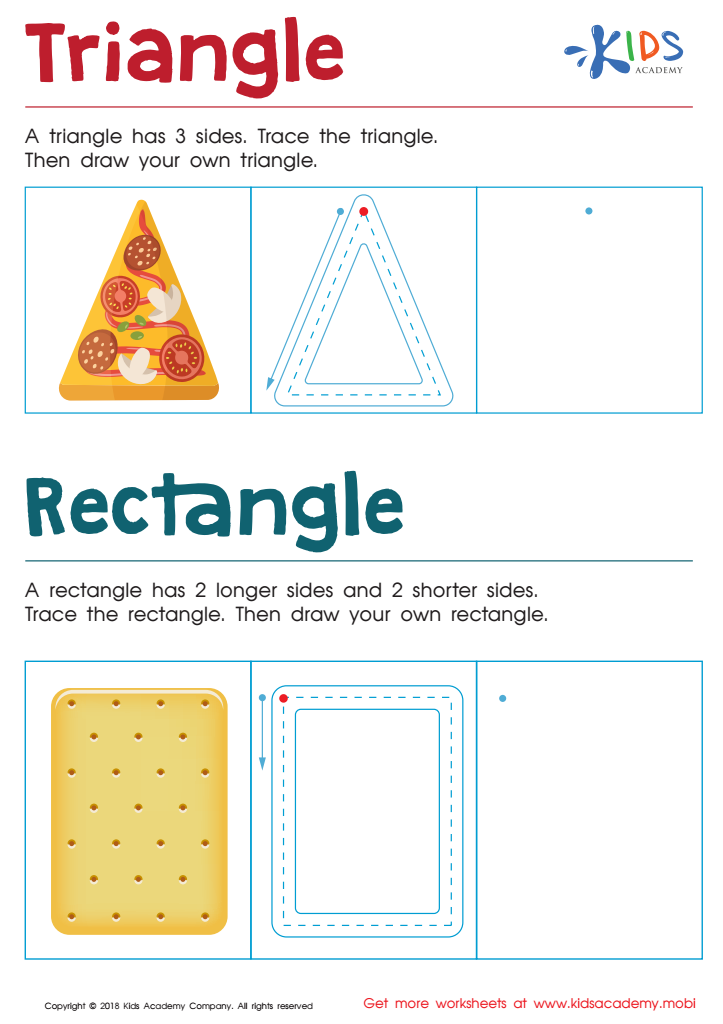
Triangle Rectangle Worksheet
 Assign to My Students











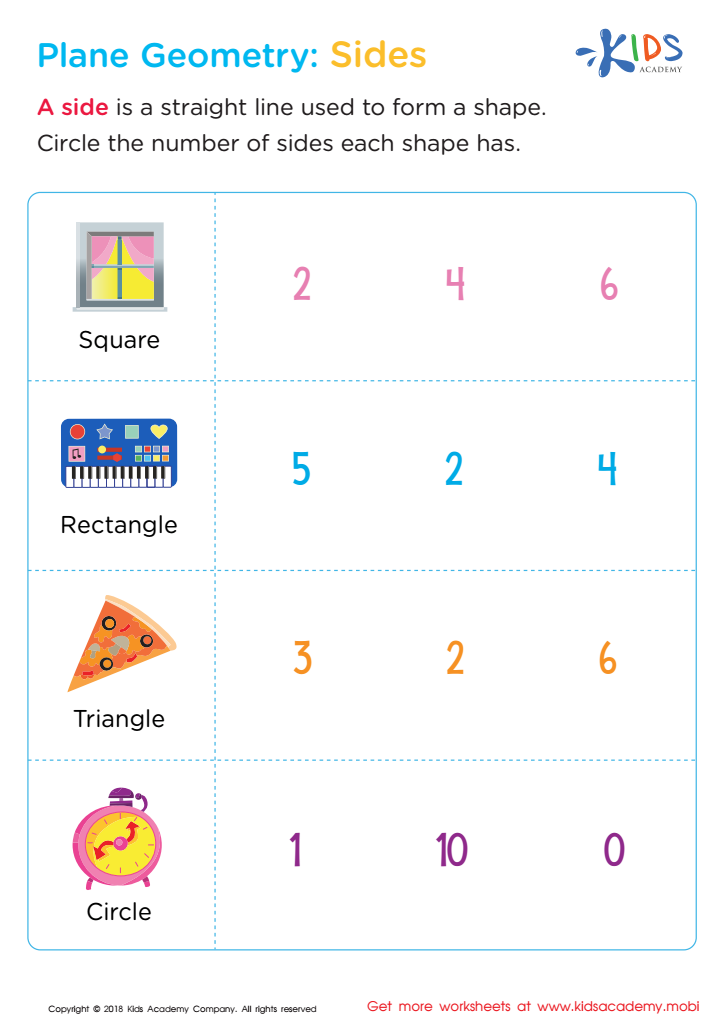
Plane Geometry: Sides Worksheet
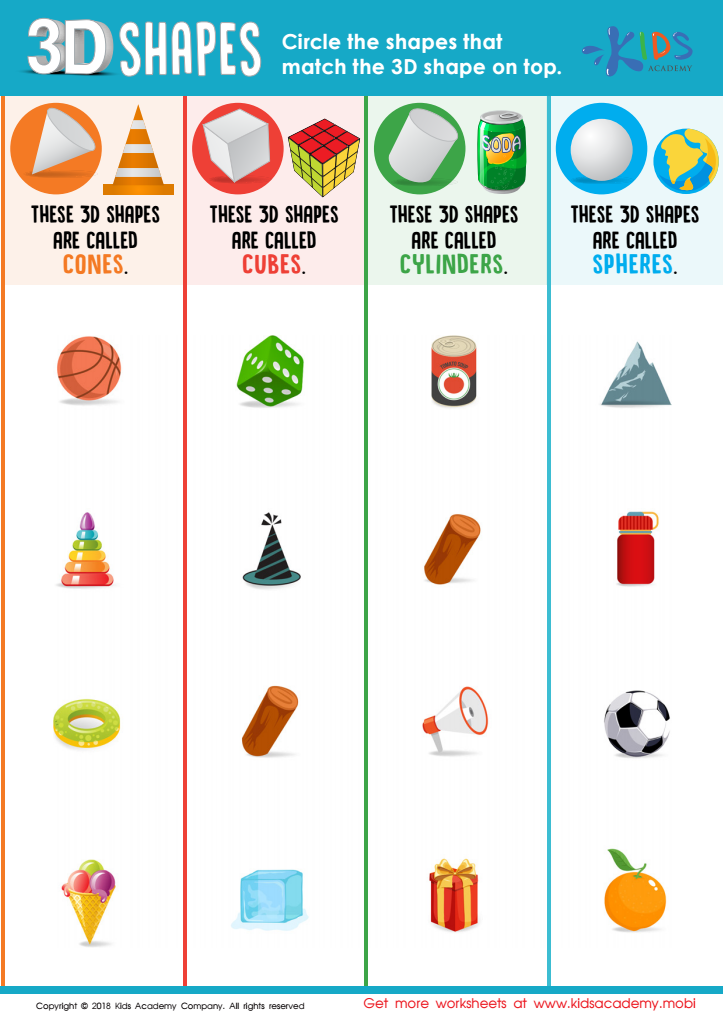
3D Shapes Worksheet








Differentiating shapes in geometry for ages 6-8 is essential because it lays the foundational skills for broader mathematical understanding and cognitive development. At this age, children are forming critical thinking and visual-spatial skills that are vital for future academic success. When parents and teachers focus on differentiating shapes, they help kids recognize, categorize, and name various geometric figures such as circles, squares, triangles, and rectangles.
This practice aids in enhancing children's pattern recognition abilities and problem-solving skills, as they learn to identify and classify shapes based on attributes like size, color, angles, and sides. Such skills are not only crucial in math but play a significant role in everyday activities, from understanding traffic signs to playing with building blocks, thus making learning relevant and practical.
Additionally, differentiating shapes can foster language development. As children describe shapes and their properties, they expand their vocabulary and improve their ability to articulate ideas clearly. Activities that involve shapes can also be a source of interactive, hands-on learning, which keeps young learners engaged and motivated. Therefore, by investing time and effort into differentiating shapes, parents and teachers are building a solid educational foundation, which is integral for a child's later academic achievements and practical life skills.








