Shape Recognition Normal Geometry Worksheets for Ages 6-8 - Page 2
26 filtered results
-
From - To
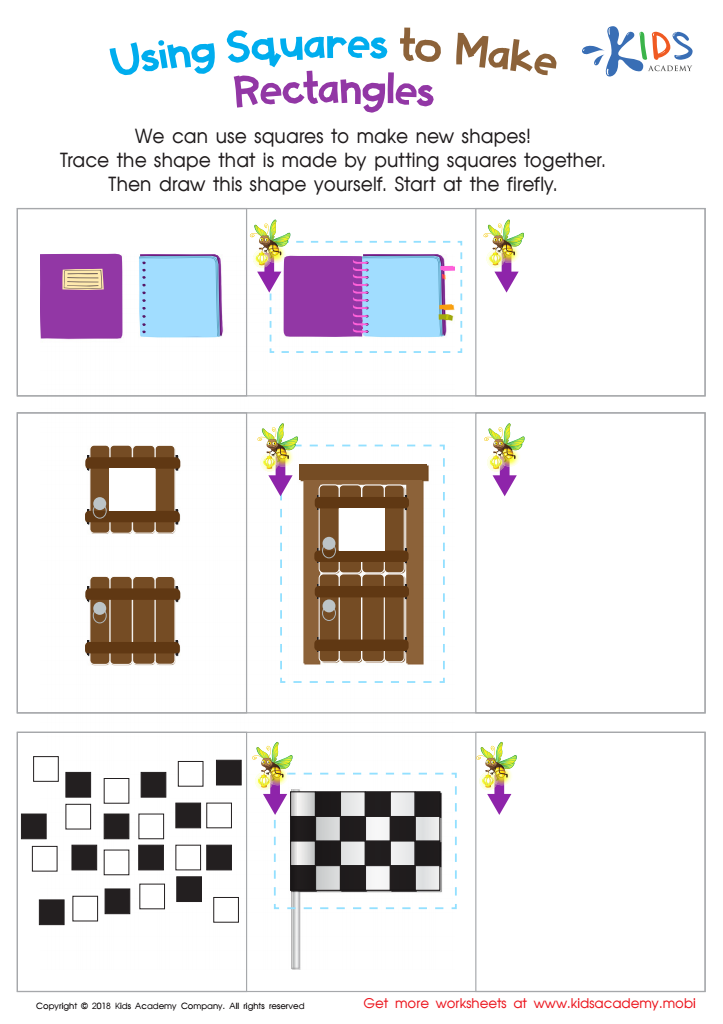
Using Squares to Make Rectangles Worksheet
 Assign to My Students











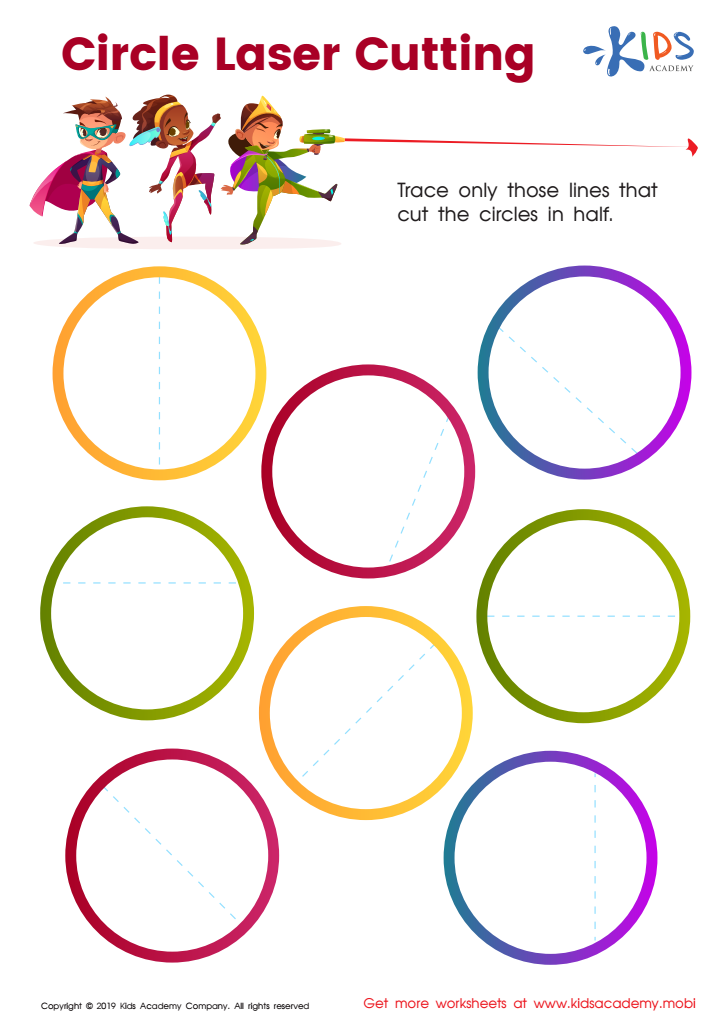
Circle Laser Cutting Worksheet








Shape recognition and understanding of basic geometry are foundational skills for children aged 6-8, which have a lasting impact on their cognitive development. During this critical age range, children are not only beginning to recognize and identify geometric shapes but are also developing mathematical reasoning skills and spatial awareness. Mastering these concepts promotes critical thinking, problem-solving, and pattern recognition, which are essential for later stages of learning.
Teachers and parents should care about fostering these skills because they enhance a child's ability to describe, analyze, and engage with their environment. Early experiences in geometry support the development of a mathematical mindset, preparing children for more complex mathematical concepts in the future, such as fractions, measurement, and spatial reasoning. Furthermore, engaging with shapes boosts creativity, as children can create art and explore their world through different geometrical forms.
Effective shape recognition also impacts everyday life skills, from understanding maps to solving real-world problems involving space, construction, and design. By cultivating these skills, parents and educators not only enhance academic performance but also build a strong foundation for lifelong learning and critical thinking in young learners.








