
Enhancing math skills Normal Numbers Worksheets for Ages 6-8
5 filtered results
Difficulty Level
Grade
Age
-
From - To
Subject
Activity
Standards
Discover a fun and engaging way to enhance math skills with our Normal Numbers Worksheets designed specifically for children ages 6-8. These worksheets focus on building a strong foundation in number recognition, counting, and basic arithmetic. Featuring colorful illustrations and interactive activities, kids will enjoy learning while improving their mathematical abilities. Our expertly crafted resources cater to different learning styles, ensuring every child can master essential concepts at their own pace. Perfect for both classroom settings and at-home practice, these worksheets make math accessible and enjoyable! Empower your child’s math journey today with our enriching Normal Numbers Worksheets.
Favorites
With answer key
Interactive
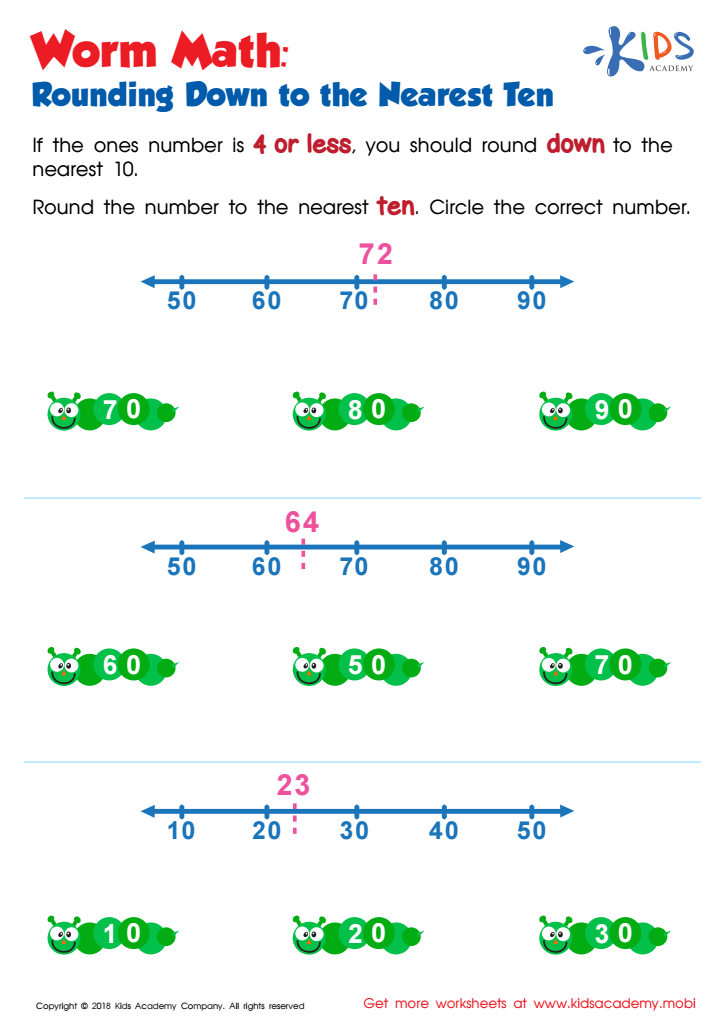
Worm Math Rounding Down to the Nearest Ten Worksheet
Look at the full of smiles worms carrying two-digit numbers. Is the number in the ones spot 4 or less? Round down to the nearest ten! Help kids learn the tricky concept of rounding with this math worksheet. Perfect for clearing up confusion and practicing rounding down to the nearest ten!
 Assign to My Students
Worm Math Rounding Down to the Nearest Ten Worksheet
Worksheet
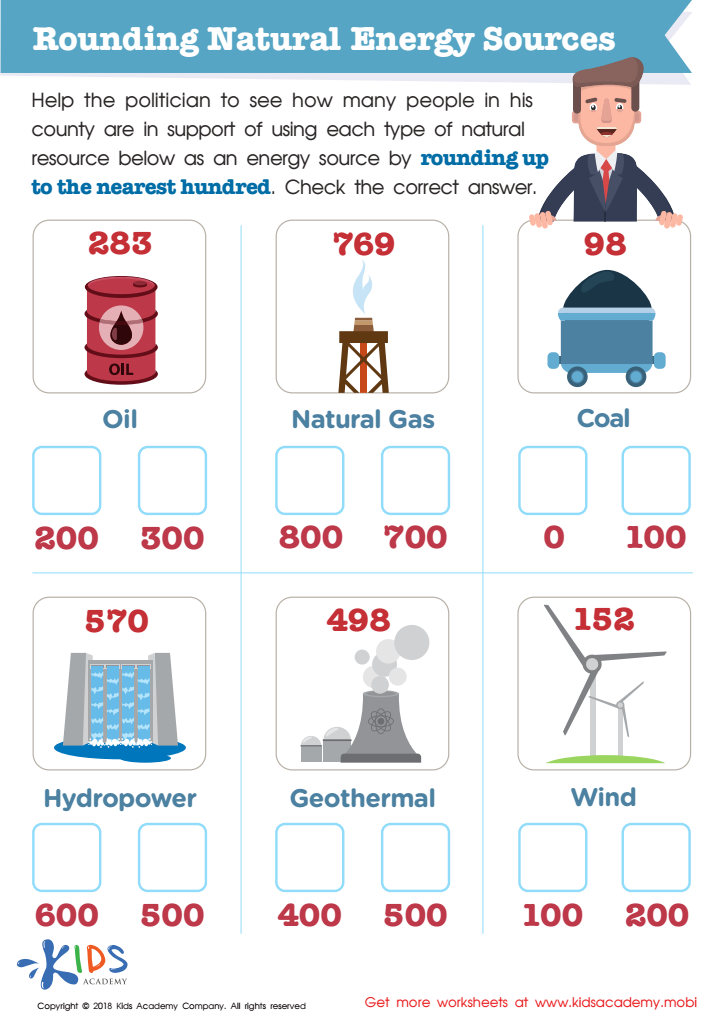
Rounding Natural Energy Sources Worksheet
Ask your kids what policies they would love to see if a politician is voted into power. Then, have them help the politician in this worksheet, downloading the PDF and rounding up the number of people to the nearest hundred in support of using different natural resources as an energy source. Guide them to the correct answer.
Rounding Natural Energy Sources Worksheet
Worksheet
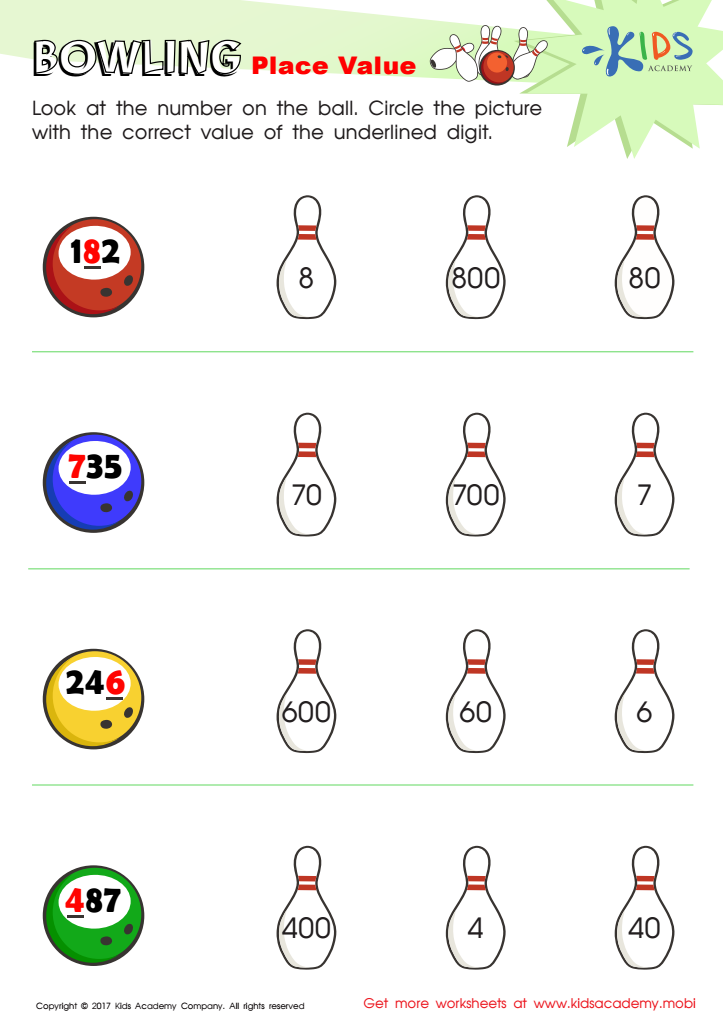
Place Value Worksheet
Try this place value worksheet to help your 2nd grader understand place value in a more meaningful way.
Place Value Worksheet
Worksheet
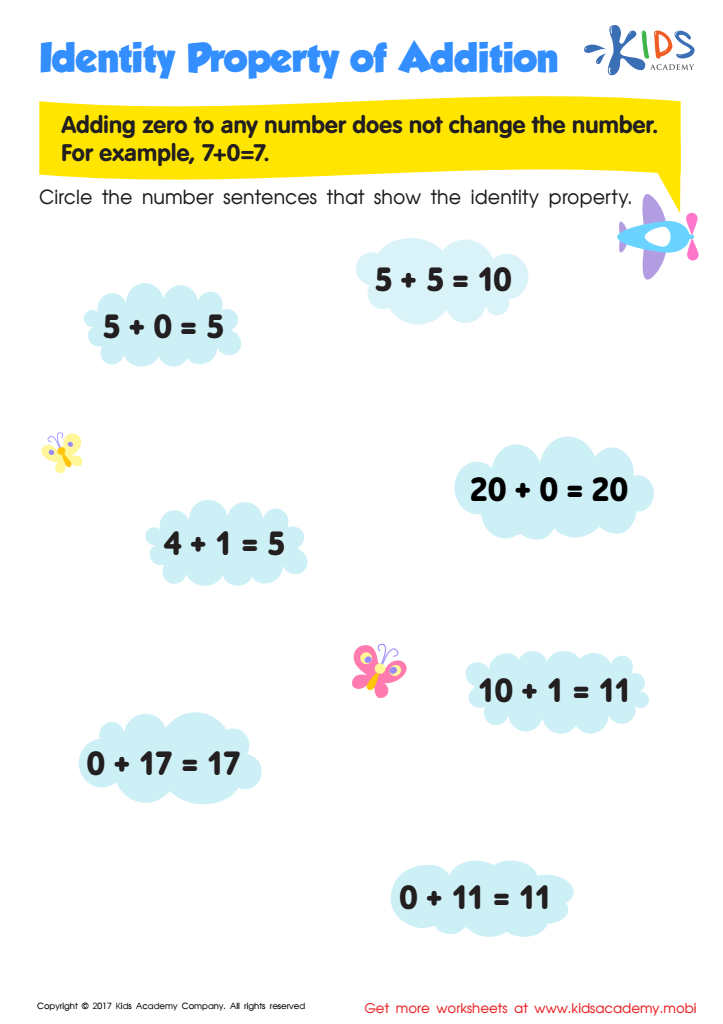
Identity Property of Addition Worksheet
Kids must learn the identity property of addition in math. It states that adding zero to an equation does not change the number. A great way to help kids understand this concept is with a Kids Academy worksheet. It encourages kids to identify which number sentences demonstrate the identity property of addition. Doing so builds vital mental math skills for fast addition.
Identity Property of Addition Worksheet
Worksheet
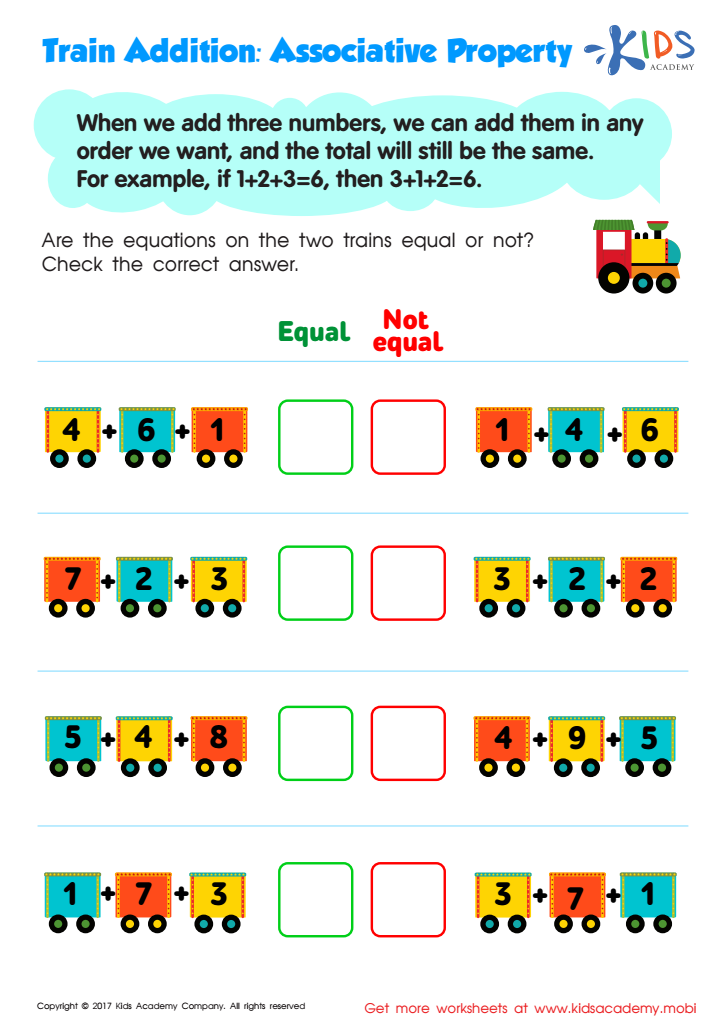
Train Addition: Associative Property Worksheet
The associative property of addition lets us add numbers in any order. Total will remain the same. Help kids practice this pre-algebra skill with a train-themed worksheet. It will help them understand if the equations are equal using this property.
Train Addition: Associative Property Worksheet
Worksheet
Join Kids Academy for Free
Who is primarily going to use this learning content?








Enhancing math skills, particularly in the context of normal numbers, for children ages 6-8 is crucial for several reasons. At this developmental stage, kids are forming the foundational skills and confidence needed for future mathematical understanding. Mastering normal numbers—essentially the whole numbers and their usage—helps children grasp essential concepts that will apply to more complex math later, such as addition, subtraction, and basic operations.
Moreover, understanding these concepts directly impacts a child's problem-solving abilities and critical thinking skills, fostering cognitive development. Since math skills are closely linked to academic success across subjects, strengthening a child's math foundation provides them with an advantage in their overall educational journey.
Furthermore, engaging in math at this early age can be incredibly motivating and aids in the development of a positive attitude towards learning. By ensuring children are adept with normal numbers, parents and teachers can cultivate a love for math, making future learning more accessible and enjoyable.
Ultimately, enhancing math skills during these formative years is a gift that pays dividends throughout a child’s academic life, promoting resilience, adaptability, and a foundation upon which they can build lifelong learning. Investing time and resources in this area is essential for setting children up for success.








