Understanding base ten Normal Numbers Worksheets for Ages 6-8
3 filtered results
-
From - To
Unlock your child's mathematical potential with our "Understanding Base Ten Normal Numbers Worksheets" for ages 6-8 at Kids Academy! These engaging and educational worksheets are designed to help young learners grasp the concept of base ten—a critical foundational skill. Featuring fun and interactive activities, your child will develop a strong understanding of place value, number sense, and arithmetic operations. Perfect for both classroom and at-home learning, our worksheets support consistent practice, reinforce key skills, and foster a love for math. Empower your child to excel in mathematics with these expertly-crafted resources. Visit Kids Academy today!
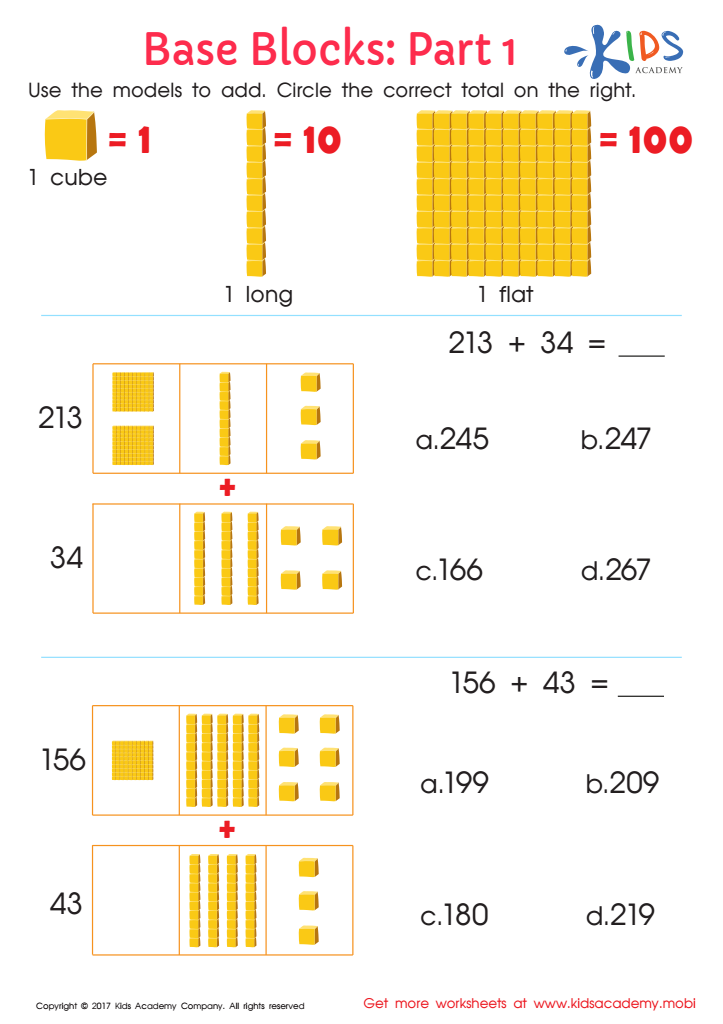
Base Ten Blocks Worksheet: Part 1
 Assign to My Students
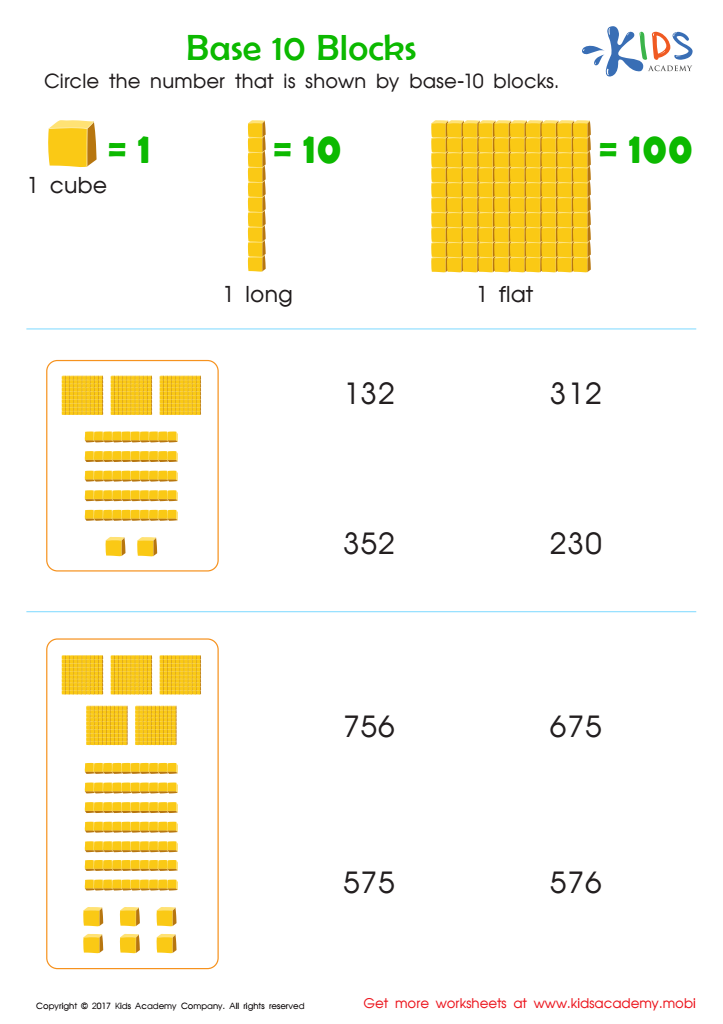
Base Ten Blocks Worksheet
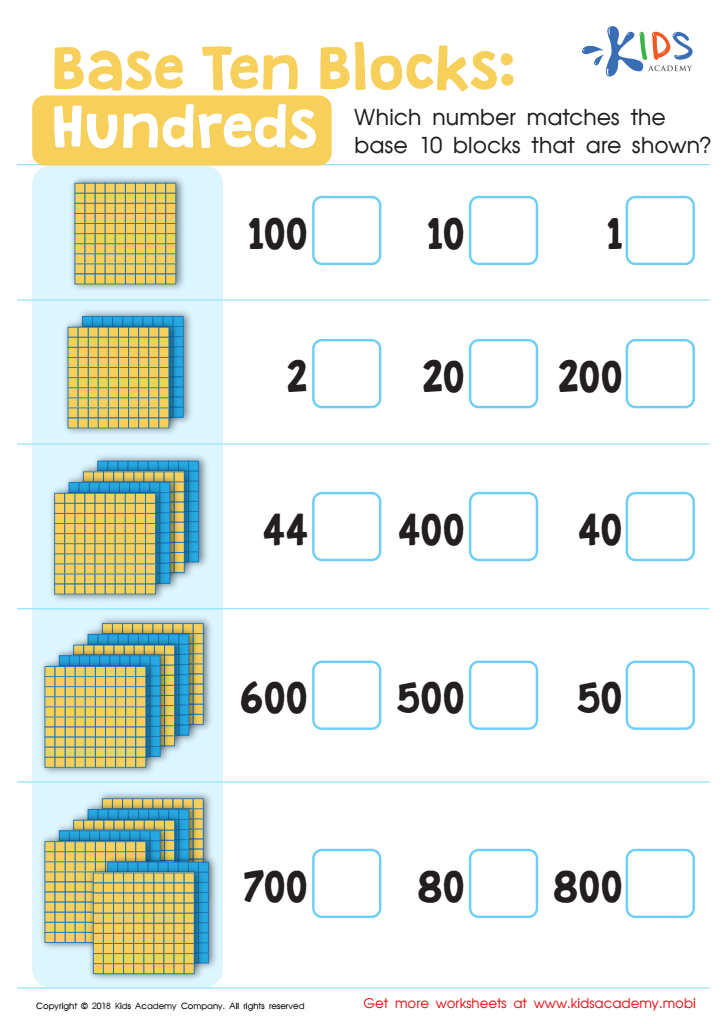
Base Ten Blocks: Hundreds Worksheet








Understanding base ten systems is essential for young learners, and parents and teachers need to prioritize this foundational concept for children aged 6-8. The base ten system is the number structure predominantly used in mathematics, and grasping it early sets the stage for more complex math skills. When children understand that numbers are composed of ones, tens, hundreds, and so forth, they can more easily perform addition, subtraction, and eventually multiplication and division.
At this young age, children are developing critical thinking and problem-solving skills. Recognizing how numbers fit into a base ten framework helps improve their mental math abilities. For example, understanding that 15 is one ten and five ones strengthens their ability to estimate, round numbers, and eventually tackle more challenging arithmetic with confidence.
Moreover, this knowledge transcends math classes, enhancing overall cognitive development, and fostering a positive attitude towards learning. Visual aids, such as base ten blocks or abacuses, can make these abstract concepts concretely comprehensible, engaging children's imaginations and making learning fun.
Equipping children with a robust comprehension of the base ten system provides the building blocks for future academic success in math and many other learning areas, proving invaluable throughout their education journey.








