
Understanding comparisons Normal Math Worksheets for Ages 6-8
4 filtered results
Difficulty Level
Grade
Age
-
From - To
Subject
Activity
Standards
Discover the engaging world of "Understanding Comparisons" with our Normal Math Worksheets designed specifically for children ages 6-8. These worksheets provide a fun and interactive way for young learners to grasp essential comparison skills, such as identifying greater than, less than, and equal values. Our thoughtfully crafted activities encourage kids to practice these concepts through colorful visuals and relatable examples. With easy-to-follow instructions, parents and educators can facilitate meaningful learning experiences that build confidence in mathematical reasoning. Explore our collection and watch your child excel in understanding how to compare numbers effectively and make sense of their mathematical environment!
Favorites
With answer key
Interactive
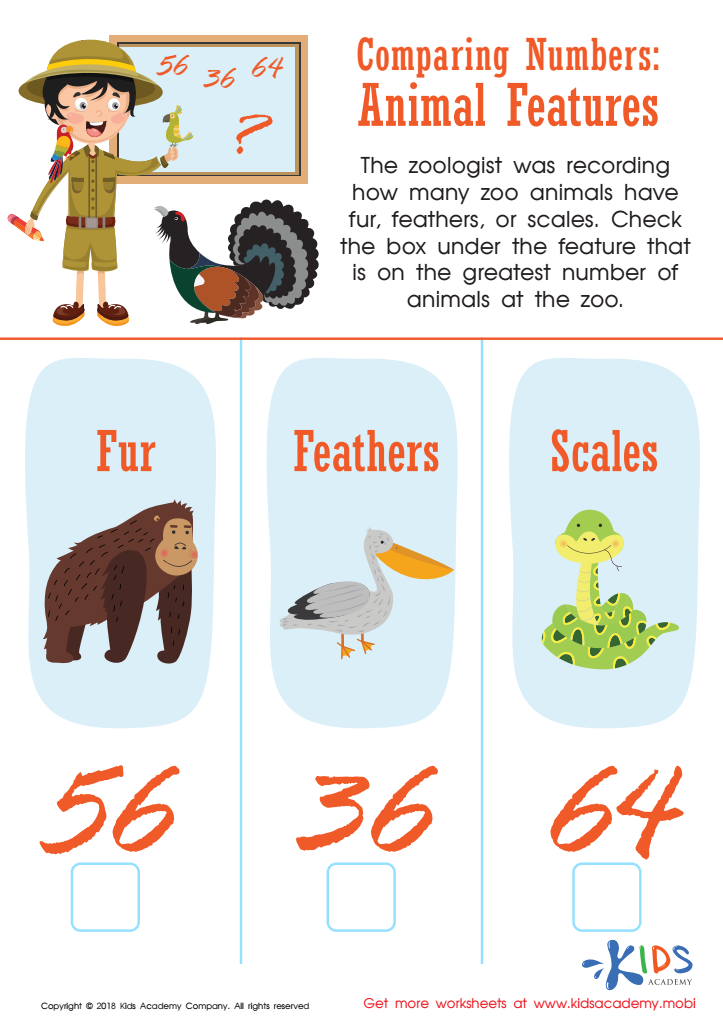
Animal Features Worksheet
Let your kids join a budding zoologist! They can count zoo animals' fur, feathers or scales, then use numbers and comparison to check the box with the most friends. The PDF will captivate them and help them understand how the value of '6' changes based on its position.
 Assign to My Students
Animal Features Worksheet
Worksheet
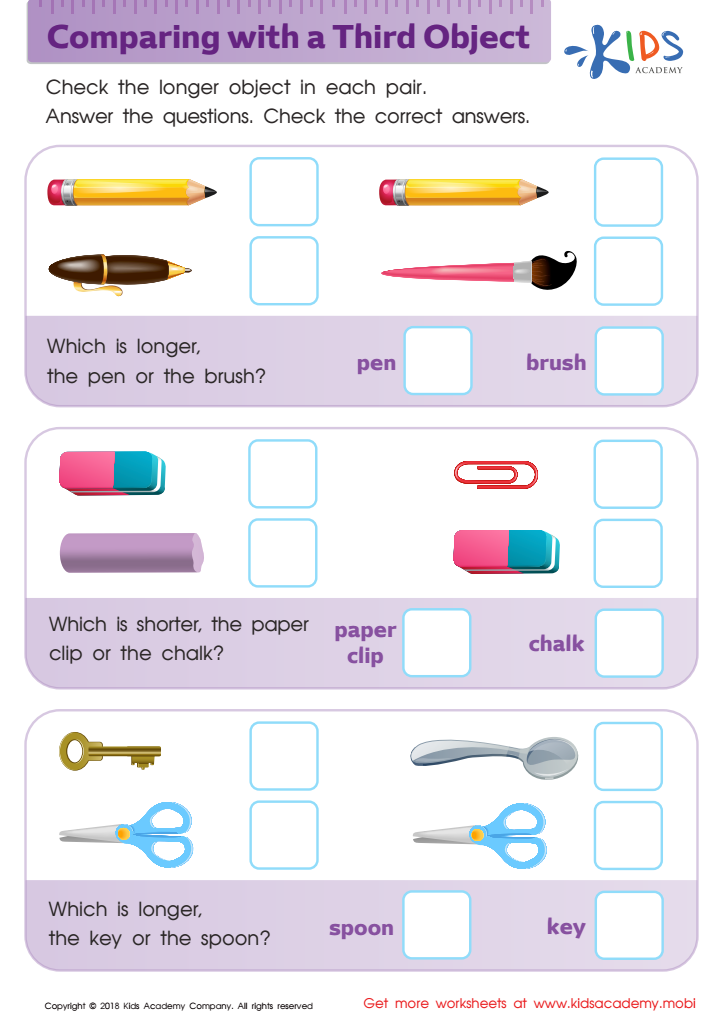
Comparing with a Third Object Worksheet
Help your child master measurement skills with this free downloadable math worksheet! Ask them to compare each pair of objects, checking the box for the longer one. Then, read the question and compare the objects across the pairs before ticking the box and continuing to the next group of pictures.
Comparing with a Third Object Worksheet
Worksheet
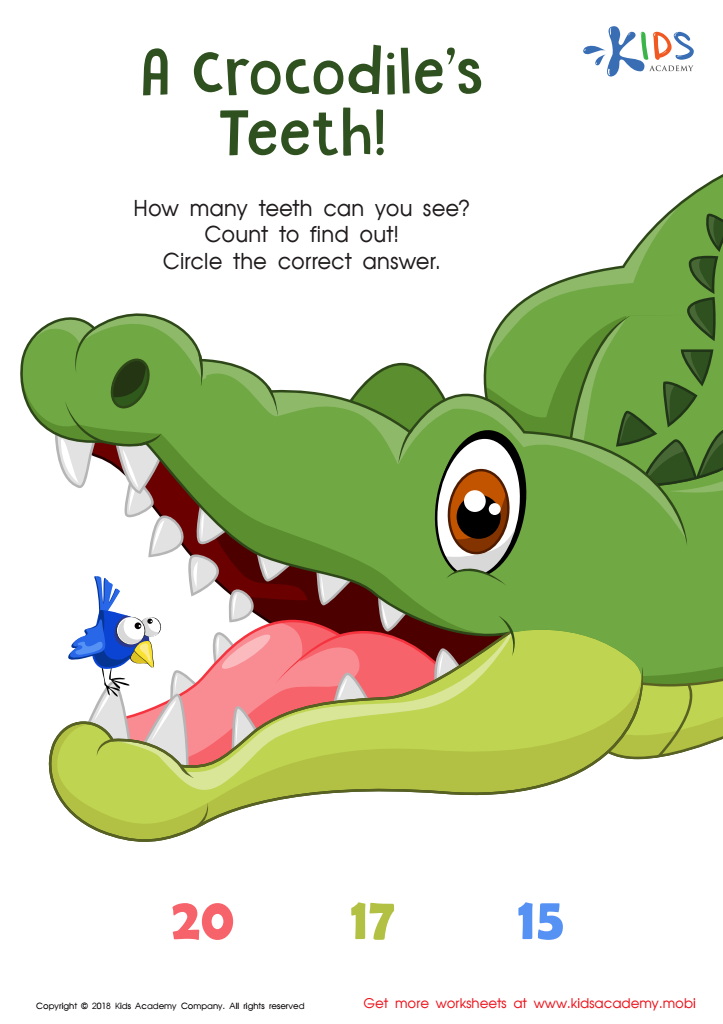
A Crocodile's Teeth Worksheet
Show your child the animal image and ask them to identify it. If they watch animal shows, they'll likely be interested. Count the teeth together, then look at the options and help them circle the right one.
A Crocodile's Teeth Worksheet
Worksheet
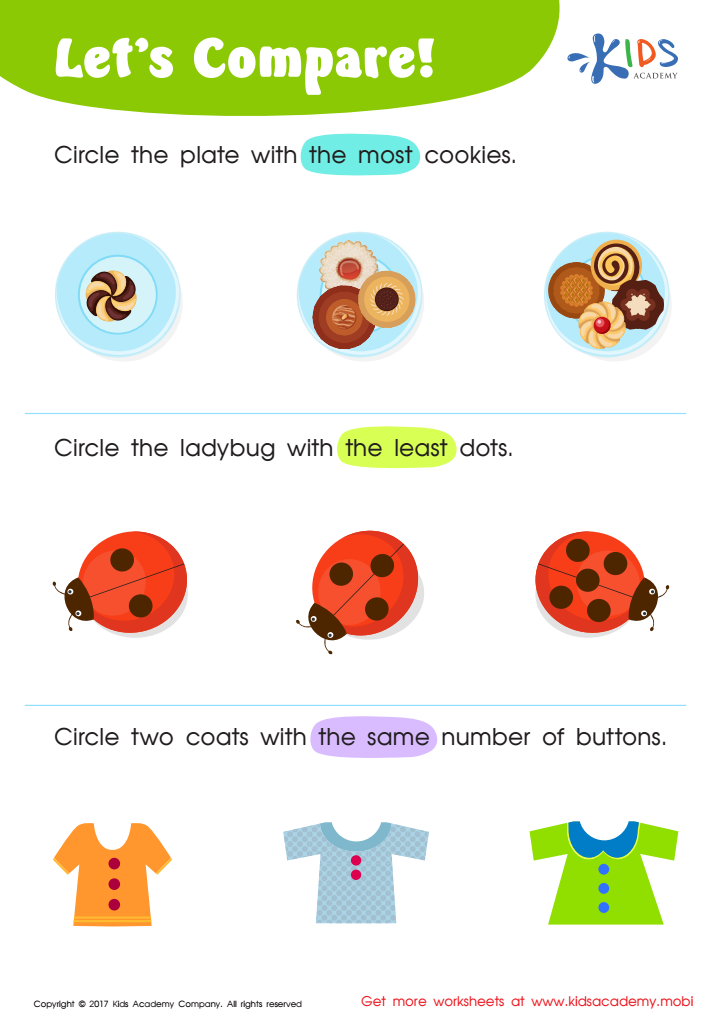
Matching: Classifying Toys by Size Worksheet
.
Have your young one's observation and counting skills ready for this worksheet; carefully look through the images and count the objects, then circle the plates with the least, most or equal number of patterns. Pay attention and have good counting abilities to make this task easy.
Matching: Classifying Toys by Size Worksheet
Worksheet
Join Kids Academy for Free
Who is primarily going to use this learning content?




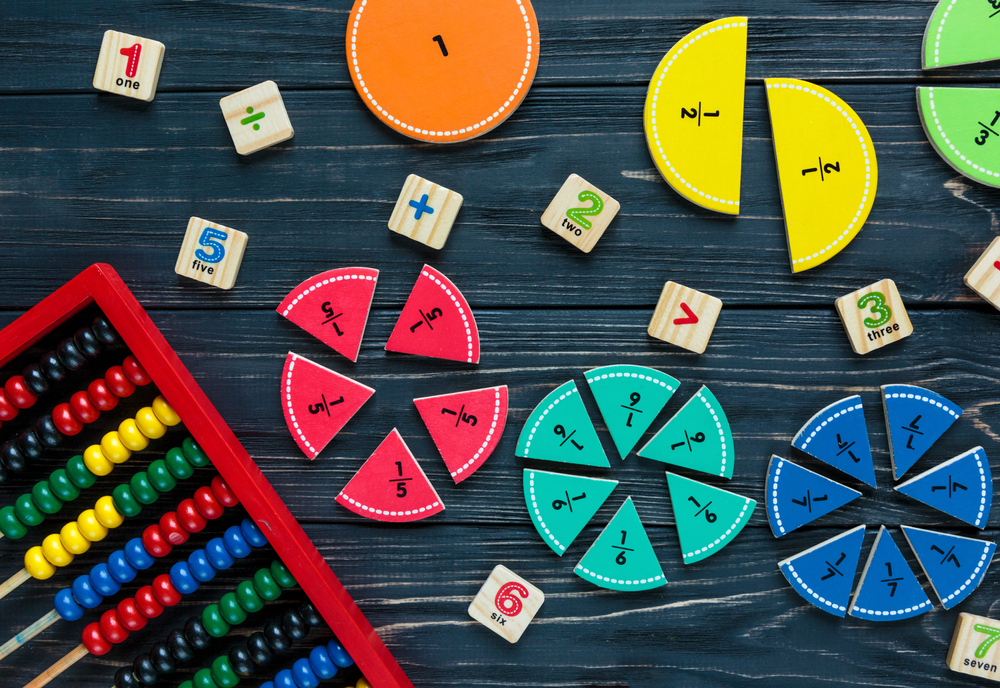


Understanding comparisons in math is crucial for young learners aged 6-8, as it lays the foundation for critical thinking and problem-solving skills. Parents and teachers should care about this concept because it helps children grasp essential mathematical principles, such as greater than, less than, and equal to, which are fundamental for their future learning.
At this age, children are beginning to interact with numbers in more complex ways, and understanding comparisons aids them in recognizing patterns and relationships between values. For instance, when children compare quantities or measure lengths, they develop a deeper understand ing of size relationships and their applications in real-world contexts.
Moreover, mastering comparisons promotes confidence in math. Children who develop strong comparative skills are more capable of tackling word problems and other advanced math concepts in later grades. Additionally, this understanding enhances their overall cognitive skills, aiding in logic and reasoning abilities. Encouraging parents and teachers to engage children in comparison-focused activities, like puzzles or games, can foster a nurturing environment for exploration and learning. Thus, investing in understanding comparisons in math not only supports academic success but also equips children with practical skills for everyday life.








