Understanding directions Normal Math Worksheets for Ages 6-8
3 filtered results
-
From - To
Introducing our "Understanding Directions" Normal Math Worksheets, designed specifically for children aged 6-8. These engaging worksheets help young learners grasp essential directional concepts in a fun, interactive way. With a variety of exercises focused on interpreting and following instructions, students enhance their comprehension and critical thinking skills. From navigating shapes to solving simple problems, each worksheet is aligned with educational standards, ensuring a holistic learning experience. Perfect for homeschooling, classroom activities, or independent practice, these resources create a solid foundation for mathematical reasoning. Foster your child's confidence and curiosity in math with our carefully crafted materials today!
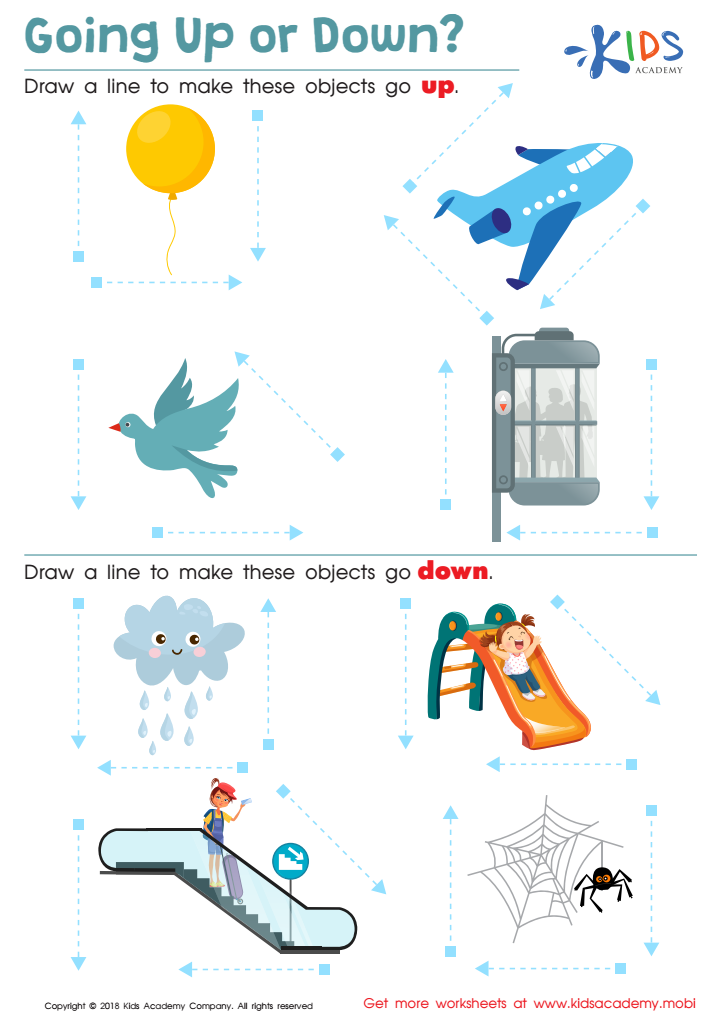
Going up or Down? Worksheet
 Assign to My Students
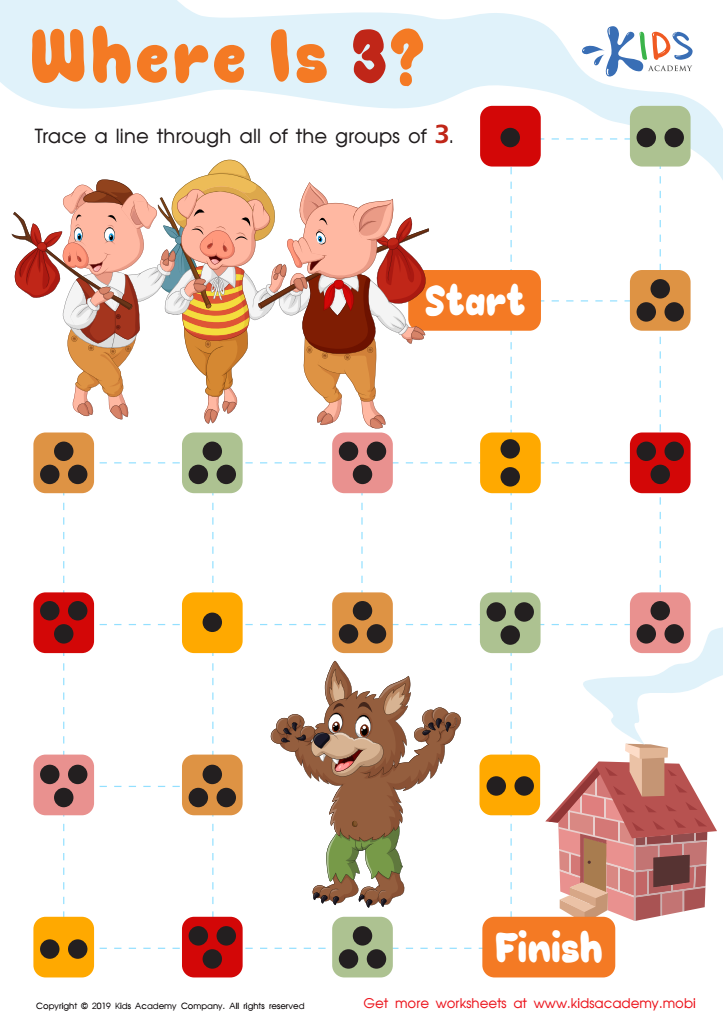
Where Is 3? Worksheet
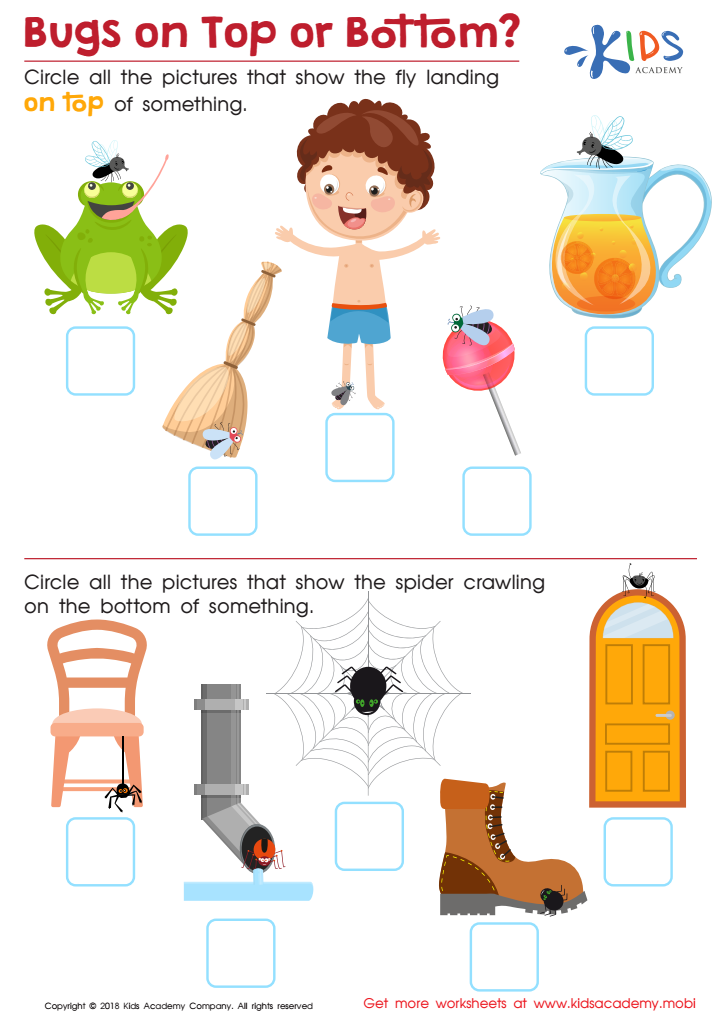
Bugs on Top or Bottom? Worksheet








Understanding directions in math, particularly for children aged 6-8, is crucial for several reasons. At this developmental stage, kids are building foundational skills that will support their future learning, problem-solving abilities, and everyday life tasks. Math instruction that emphasizes clear, precise directions allows young learners to grasp concepts more readily, preventing confusion and frustration.
Parents and teachers should care about this aspect of math education because effective comprehension of directions fosters independence and confidence in children. When students understand how to approach a problem or follow instructions, they are more likely to engage actively in learning and take ownership of their educational journey.
Furthermore, developing strong directional understanding helps enhance critical thinking. It trains children to break down tasks into manageable steps, a skill that is applicable beyond mathematics into various subjects and life scenarios. Games and activities that involve following directions also promote teamwork and communication skills, essential in social development.
Ultimately, when children master understanding directions in math, they build a solid foundation for advanced concepts, better performance in standardized assessments, and a lifelong positive attitude towards learning. This ensures both parents and teachers contribute significantly to nurturing well-rounded, capable individuals.








