Understanding shapes Normal Math Worksheets for Ages 6-8
3 filtered results
-
From - To
Explore our "Understanding Shapes" Normal Math Worksheets designed for children aged 6-8. These engaging and interactive resources help young learners grasp the fundamentals of geometry through fun, hands-on activities. Each worksheet complements classroom learning, promoting essential skills like identifying, comparing, and categorizing different shapes. Kids will enjoy colorful illustrations and age-appropriate challenges that stimulate critical thinking and creativity. Ideal for home practice or as supplementary material in academic settings, our worksheets transform shape recognition into an enjoyable adventure. Unlock your child’s potential in math with engaging exercises that make learning exciting and effective! Perfect for progressive learning journeys.
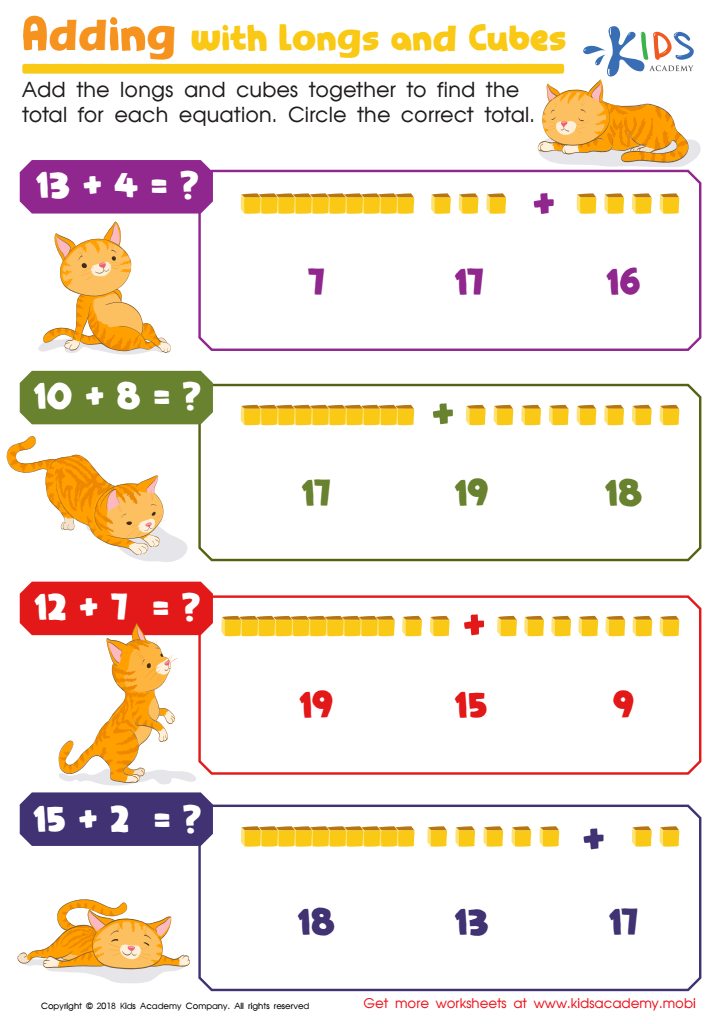
Adding With Longs and Cubes Worksheet
 Assign to My Students
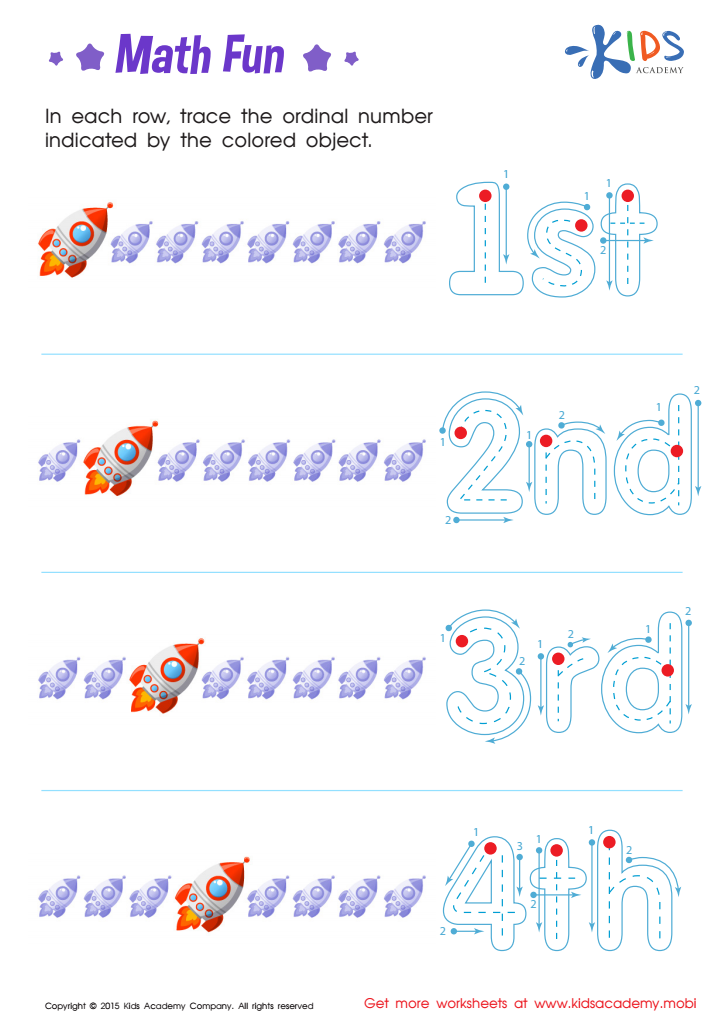
Ordinal Numbers: Math Fun Worksheet
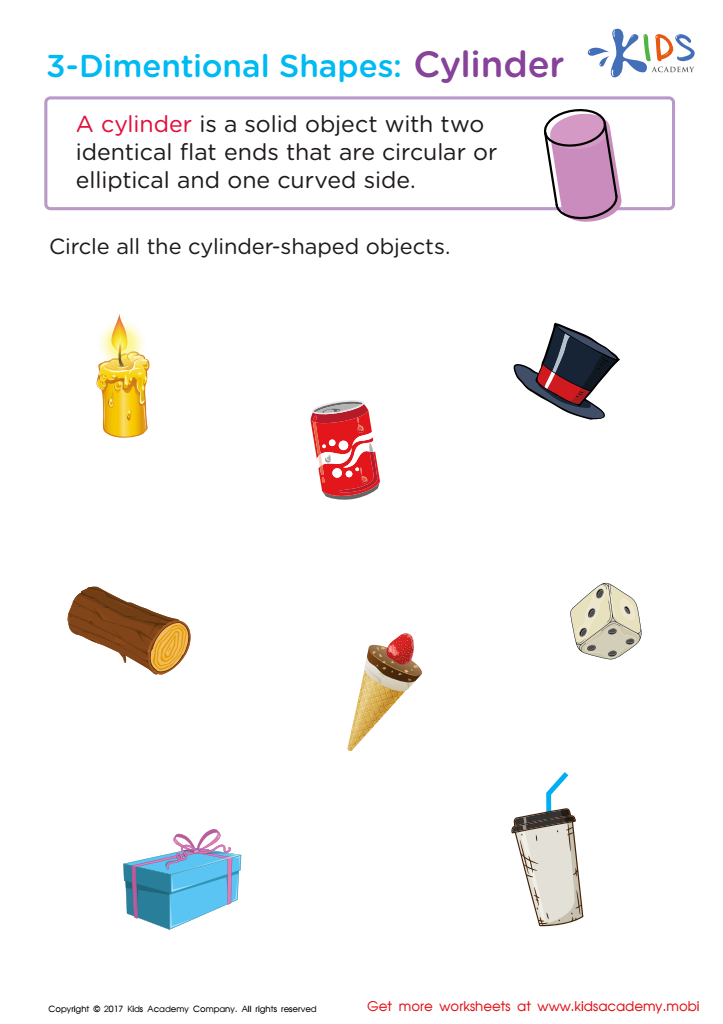
Three–Dimensional Shapes: Cylinder Worksheet








Understanding shapes is a fundamental aspect of early mathematics education for children aged 6-8. At this developmental stage, children begin to grasp mathematical concepts that lay the foundation for more complex skills in later years. Knowledge of shapes goes beyond mere recognition; it enhances spatial reasoning, which is critical for problem-solving in everyday life.
Parents and teachers should care about this topic because shape recognition and understanding encourage cognitive development. When children learn to identify and categorize shapes, they cultivate critical thinking skills and begin to see relationships and patterns in the world around them. Additionally, understanding shapes plays a vital role in foundation skills for geometry, measurement, and data analysis, essential components of the math curriculum.
Incorporating shape activities encourages engagement and makes learning fun, promoting a positive attitude toward mathematics. Furthermore, functional knowledge of shapes aids children in making connections to real-world contexts, from art to architecture, and enhances their ability to organize and interpret visual information. Overall, emphasizing the importance of understanding shapes in early education fosters not just mathematical proficiency but also essential skills that support lifelong learning and critical thinking.








