Understanding times tables Normal Math Worksheets for Ages 6-8
3 filtered results
-
From - To
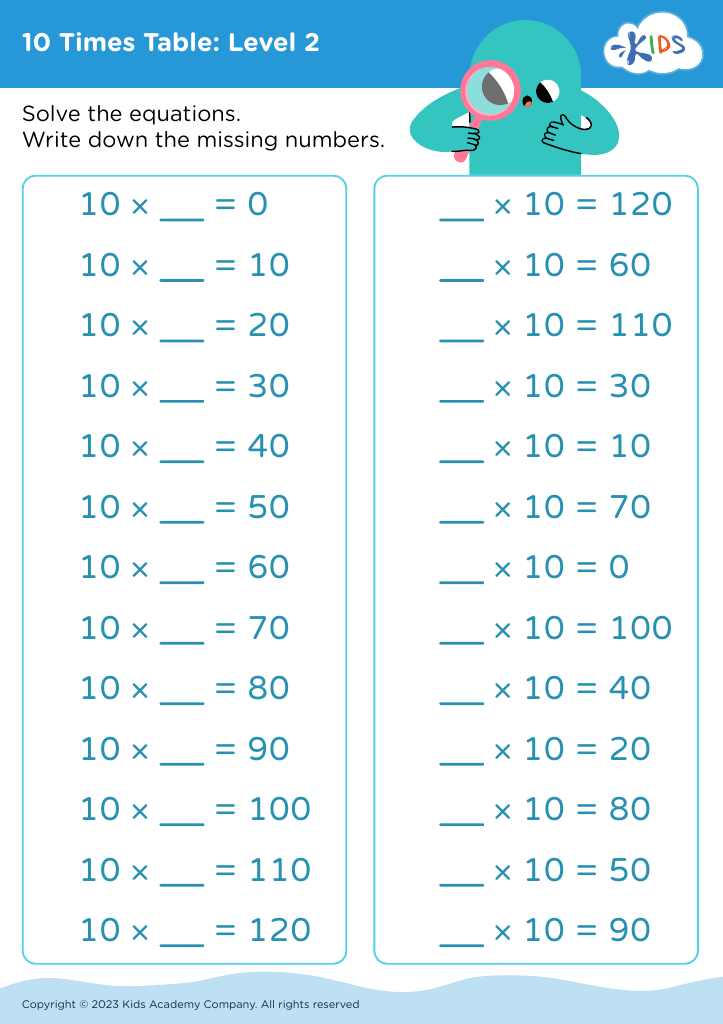
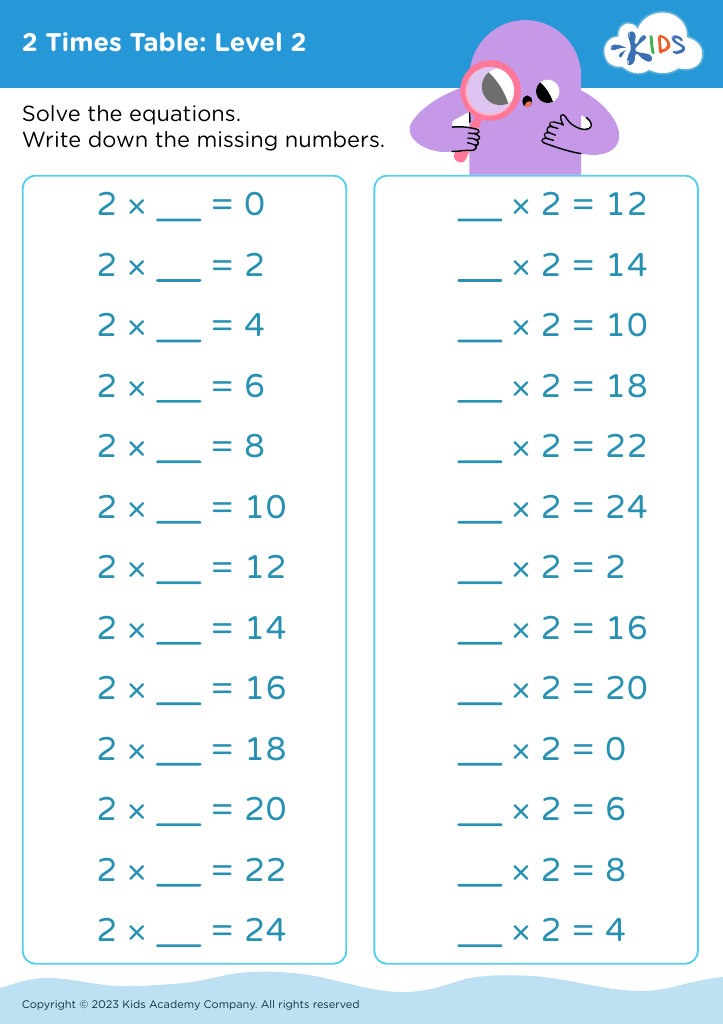
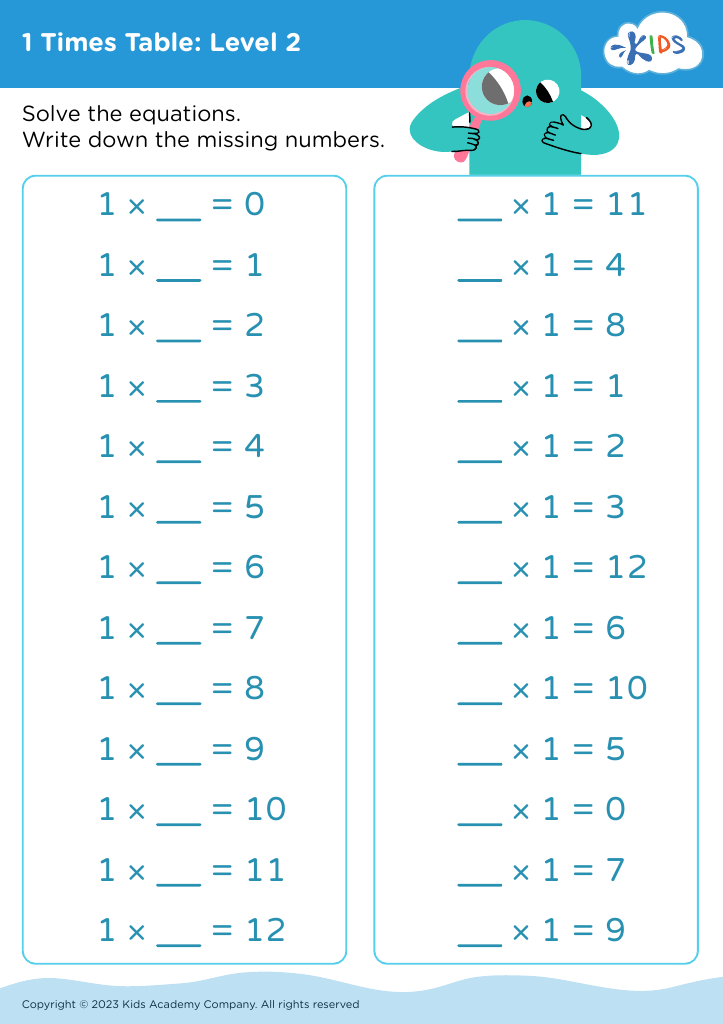
Explore our "Understanding Times Tables" worksheets designed specifically for children aged 6-8. These engaging and interactive resources help young learners grasp multiplication concepts with ease. Our worksheets feature colorful illustrations and fun exercises that make mastering times tables enjoyable. Designed to cater to different learning styles, they include a variety of activities such as fill-in-the-blanks, matching games, and timed challenges to build confidence and fluency. Perfect for home or classroom use, these normal math worksheets foster critical thinking and problem-solving skills while encouraging children to develop a strong foundation in multiplication. Start your child’s journey to math success today!






Understanding times tables is essential for children aged 6-8, as it lays the groundwork for their mathematical development. At this age, children are developing crucial cognitive skills, and grasping multiplication concepts enhances their ability to problem-solve and think critically. Mastery of times tables fosters confidence in handling more complex math operations, such as division and fractions, which they will encounter in later grades.
Parents and teachers should care about this aspect of math education because it helps to reinforce key skills in a fun and engaging way. Encouraging a positive attitude towards math can curb anxiety and resistance to learning in the future. By instilling an understanding of times tables, children can improve their basic arithmetic skills, making everyday tasks, like shopping or sharing equally among friends, much more manageable.
Furthermore, a solid foundation in times tables supports collaborative learning. When children can confidently tackle multiplication, they can participate in group activities and peer-tutoring sessions, enhancing social skills and teamwork abilities. Overall, nurturing this mathematical knowledge at an early age not only builds quantitative competence but also lays the groundwork for lifelong learning and appreciation for mathematics.








