
Fine Motor Skills Normal Matching Worksheets for Ages 6-8
3 filtered results
Difficulty Level
Grade
Age
-
From - To
Subject
Activity
Standards
Enhance your child's fine motor skills with our engaging Normal Matching Worksheets designed for ages 6-8. These worksheets provide a playful yet educational approach to develop essential hand-eye coordination and dexterity through fun matching activities. Perfect for young learners, our printable resources encourage creativity while reinforcing important cognitive concepts. Each worksheet is designed to prevent frustration and promote successful learning experiences. Whether at home or in the classroom, these fine motor skills activities are perfect for fostering independence and confidence in your child. Download our worksheets today and watch your child thrive as they combine learning with play!
Favorites
With answer key
Interactive
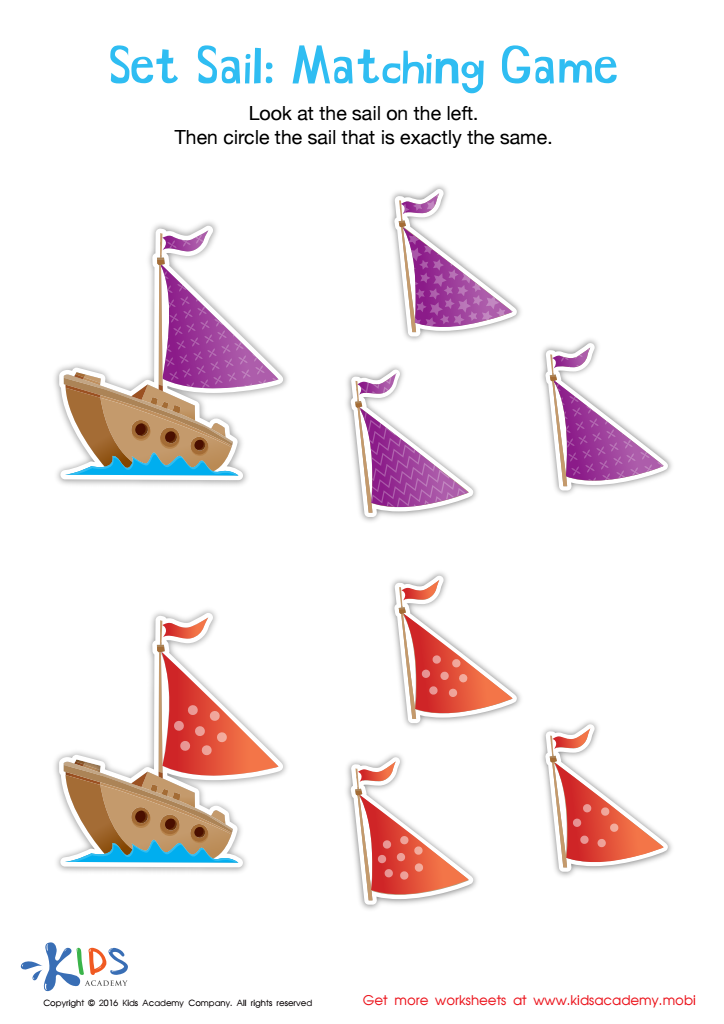
Set Sail Worksheet
Set sail with this fun matching game for toddlers! Kids will love finding the same pattern on the sails, improving their problem-solving and counting skills. Enjoy this bright and engaging worksheet!
 Assign to My Students
Set Sail Worksheet
Worksheet
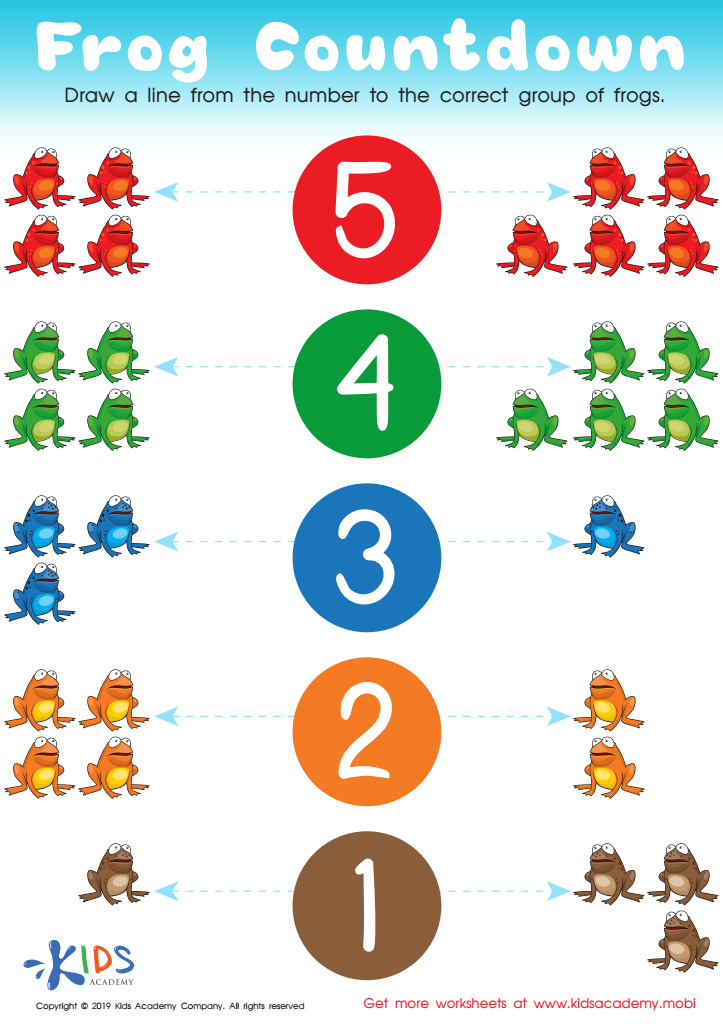
Frog Countdown Worksheet
Make learning fun for kids with traceable printouts! This exercise has kids counting frogs and drawing a line to match the number. Expand their knowledge with activities like this, beyond the basics they learn in school. Help them explore new ways of learning and make it enjoyable.
Frog Countdown Worksheet
Worksheet
Join Kids Academy for Free
Who is primarily going to use this learning content?








Fine motor skills are essential for children aged 6-8, as they play a crucial role in overall development and daily functioning. These skills involve the ability to use small muscles in the hands and fingers to perform tasks that require precision, such as writing, drawing, cutting with scissors, and manipulating small objects. Parents and teachers should care about fine motor skills because they directly impact academic performance and self-esteem.
At this age, children are increasingly expected to complete more complex tasks that require coordination and dexterity. Poor fine motor skills can lead to difficulties in handwriting and, consequently, hinder academic progress. Moreover, developing these skills fosters independence and confidence in children, allowing them to perform self-care tasks like buttoning clothes or tying shoes.
Furthermore, engaging in fine motor activities, such as arts and crafts, puzzle assembly, or building with blocks, promotes cognitive development and encourages creativity. Parents and teachers can support this growth by providing opportunities for structured and unstructured play, ensuring that children have a rich environment to practice and enhance their fine motor skills. By actively supporting fine motor development, adults can lay the groundwork for children's success in school and everyday life.








