Mental arithmetic skills Normal Multiplication Worksheets for Ages 6-8
3 filtered results
-
From - To
Boost your child's mental arithmetic abilities with our Normal Multiplication Worksheets designed for ages 6-8. These engaging worksheets focus on enhancing multiplication skills while fostering quick thinking and problem-solving. Perfect for young learners, our resources encourage practice in a fun and interactive way, making math enjoyable. Each worksheet offers a variety of exercises to help children grasp the concept of multiplication, build confidence, and improve accuracy. Ideal for classroom use or at-home practice, these worksheets are an excellent tool for supporting your child's educational journey. Elevate their math skills today with our thoughtfully crafted multiplication activities!
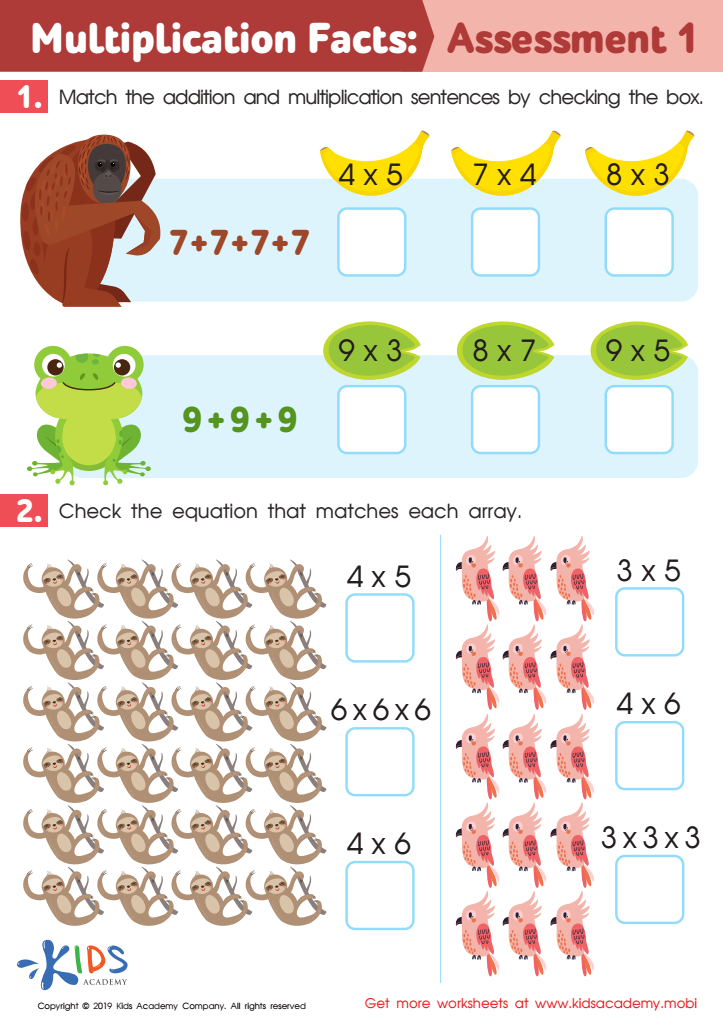
Multiplication Facts: Assessment 1 Worksheet
 Assign to My Students
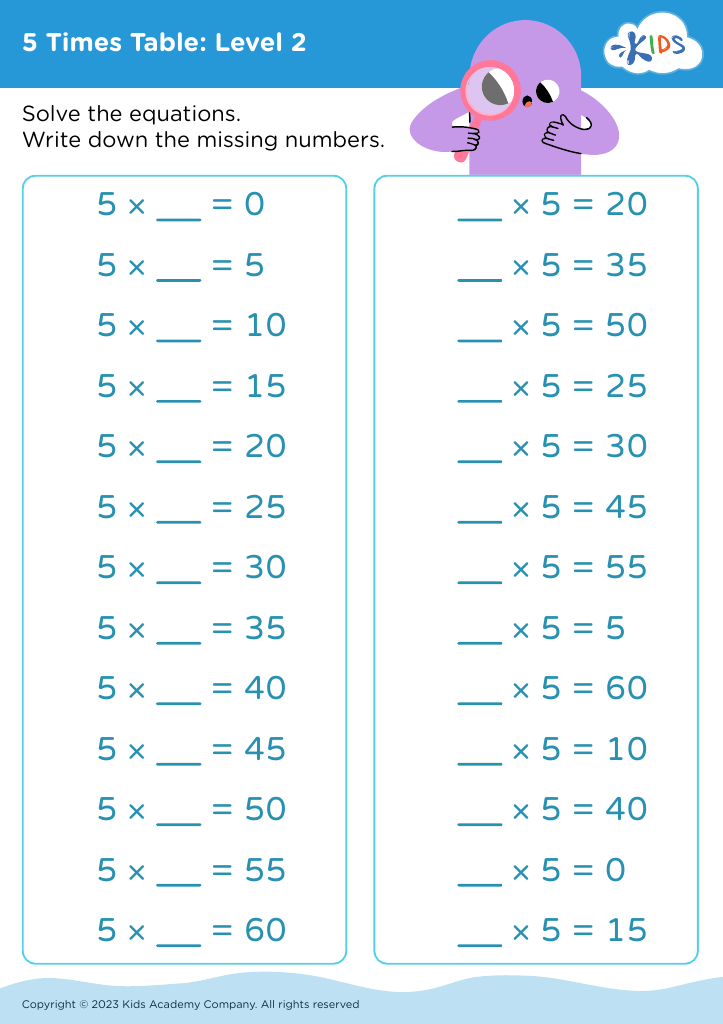
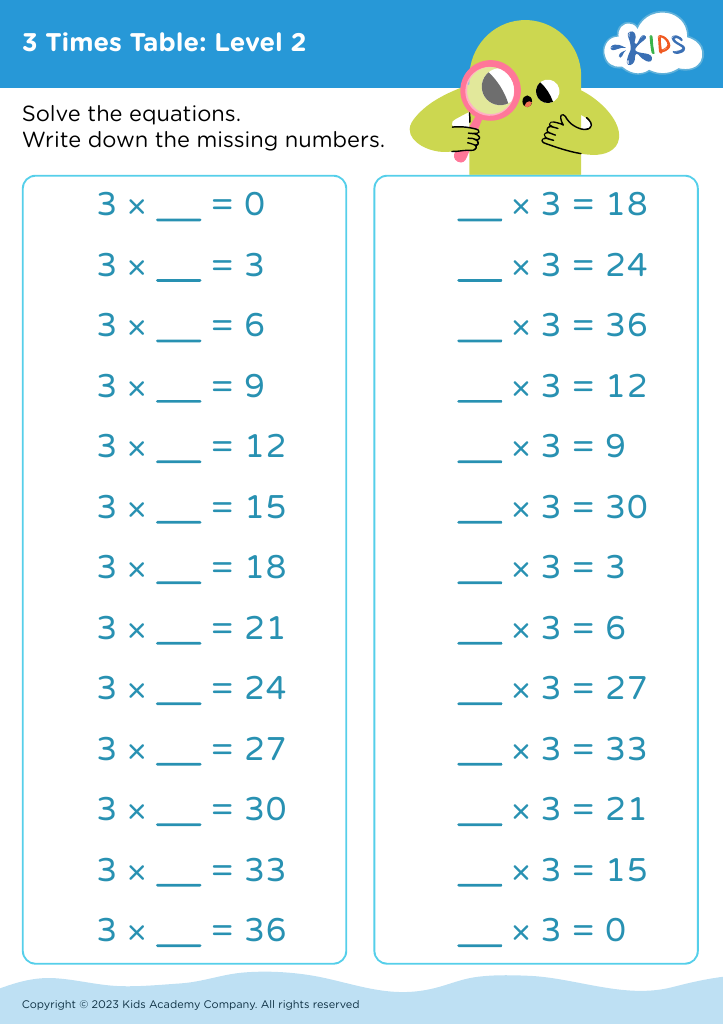








Parents and teachers should prioritize mental arithmetic skills, particularly normal multiplication, for children aged 6-8 because these skills lay the foundation for future mathematical understanding. At this age, children are developing critical cognitive abilities, and mastering mental multiplication promotes logical thinking, problem-solving, and numerical fluency.
Strengthening these mental skills enables children to perform calculations swiftly, which can enhance their confidence, reduce math anxiety, and improve overall academic performance. In everyday contexts, the ability to multiply mentally supports practical tasks, such as managing money, calculating time, and understanding measurements, all of which are essential life skills.
Additionally, early mastery of multiplication fosters a deeper appreciation for mathematics, encouraging children to explore more complex concepts later. It cultivates perseverance, as they learn to tackle challenges and grow from mistakes. Collaborative activities centered around mental multiplication can also hone social skills, fostering teamwork and communication.
Ultimately, focusing on mental arithmetic allows children to develop a strong mathematical mindset that benefits them both in school and in their everyday lives, building a positive relationship with learning as they grow. Encouraging these skills can set the stage for long-term success in mathematics and beyond.








