Handwriting practice Normal Numbers 0–10 Worksheets for Ages 6-8
3 filtered results
-
From - To
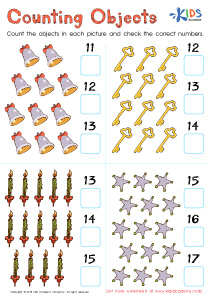
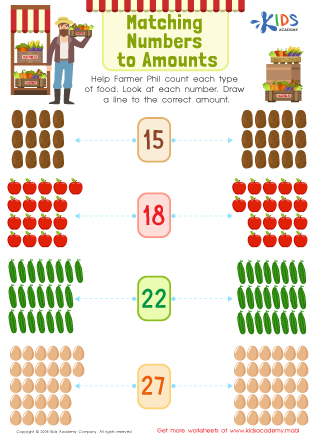
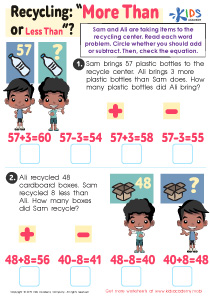
Boost your child's numeral recognition and handwriting skills with our Handwriting Practice Normal Numbers 0–10 Worksheets, designed for ages 6-8. Perfect for young learners, these printable sheets provide engaging and structured practice for writing numbers, improving fine motor skills and number formation. Each worksheet includes fun activities and clear instructions tailored to keep kids motivated and making great strides in their handwriting and math abilities. Ideal for classroom or at-home practice, our worksheets are an excellent resource for parents and teachers aiming to support kids' educational growth in a fun and effective way.
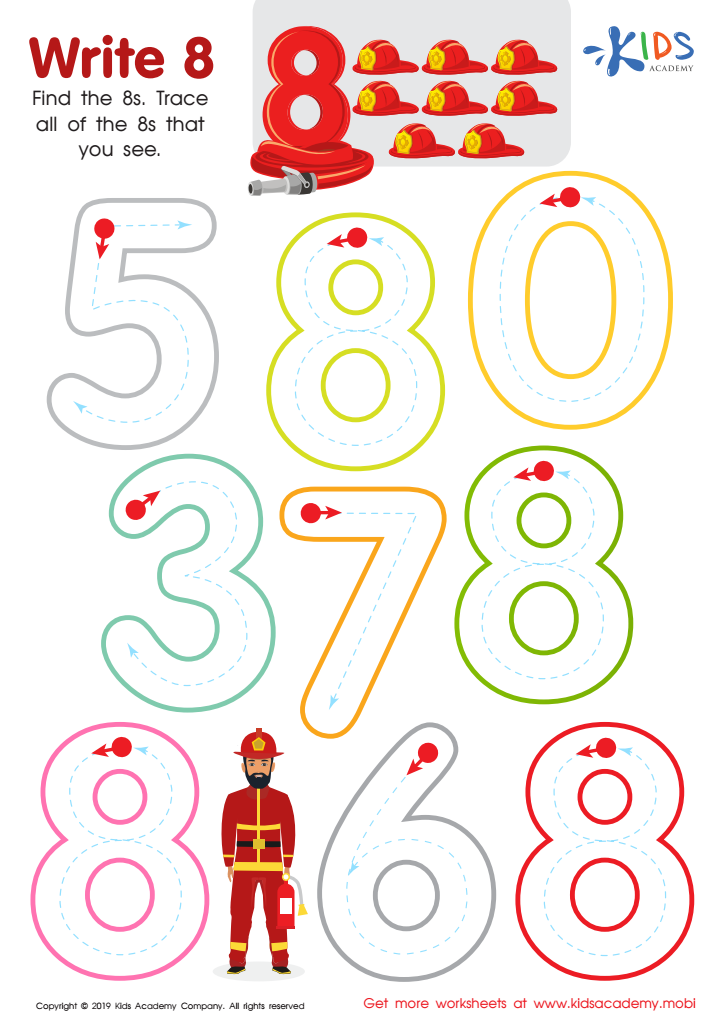
Write 8 Worksheet
 Assign to My Students
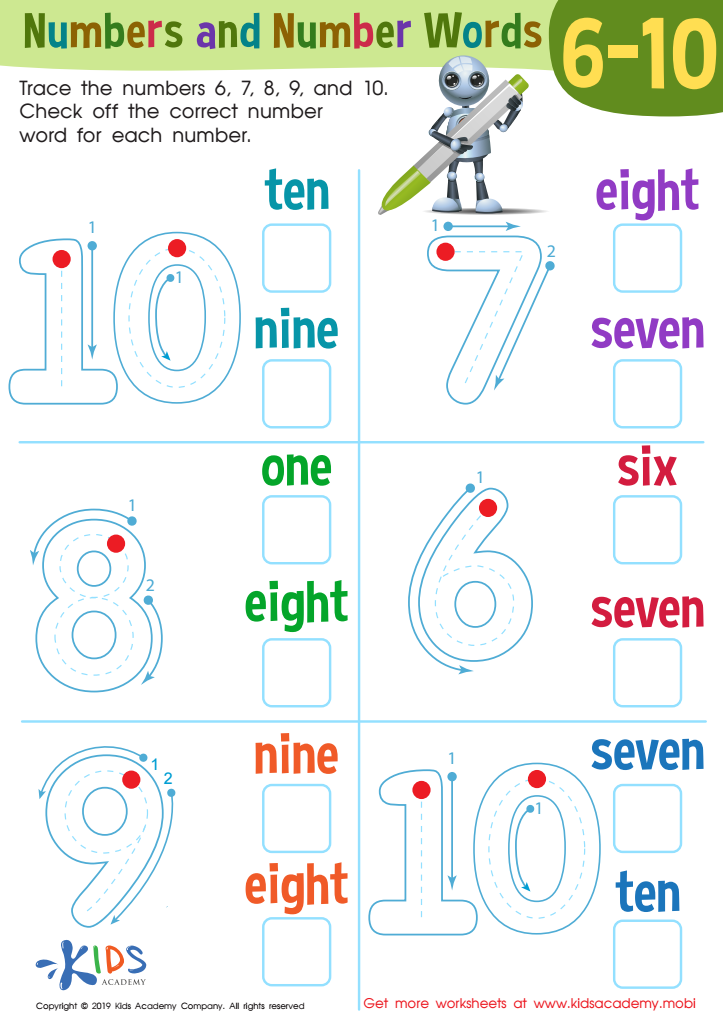
Numbers and Number Words 6–1 Worksheet
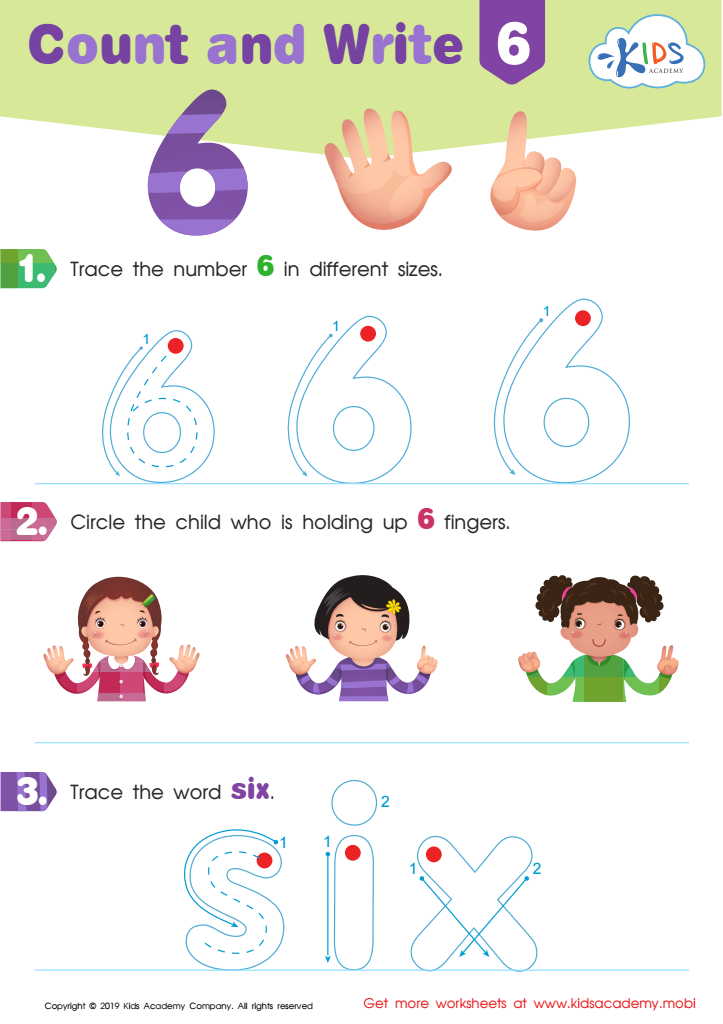
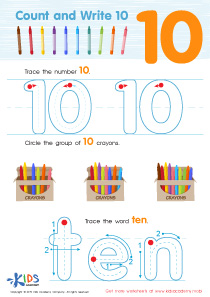
Count and Write 6 Worksheet








Handwriting practice for normal numbers 0–10 is vital for children aged 6-8, as it pertains to multiple areas of their development. From a developmental perspective, writing numbers ensures that children refine their fine motor skills, including hand-eye coordination and finger dexterity, which are essential for other life skills like tying shoelaces and buttoning clothes.
Furthermore, familiarity and consistent practice with these numbers lay a strong mathematical foundation. Developing number sense—understanding, using, and relating numbers—forms the basis for more complex mathematical concepts and problem-solving skills later on. At this age, visual identification and accurate reproduction of numbers help children seamlessly transition to addition, subtraction, and other arithmetic operations.
Additionally, handwriting practice reinforces cognitive processes like concentration, memory, and focus. When children repetitively practice writing numbers, they reinforce neural pathways that aid in better retention and understanding. Practicing handwriting also instills discipline and perseverance—traits beneficial beyond academics.
For teachers and parents, paying close attention to this practice allows early identification of learning difficulties, such as dysgraphia or dyslexia. Recognizing these conditions early ensures timely interventions, leading to improved educational outcomes. Overall, handwriting practice is foundational to a child's academic journey and equips them with essential skills for future learning.