Fine Motor Skills Normal Numbers up to 100 Worksheets for Ages 6-8
3 filtered results
-
From - To
Enhance your child's fine motor skills while learning numbers up to 100 with our engaging worksheets designed for ages 6-8. These carefully crafted activities focus on developing pencil control, hand-eye coordination, and dexterity through fun exercises that integrate counting and number recognition. Perfect for home or classroom use, our worksheets encourage creativity and concentration, making learning enjoyable. Watch as your child transforms their handwriting and mathematical abilities, all while exploring numbers in a playful manner. Equip them with essential skills for academic success with our printable resources tailored for young learners. Start your child's journey to confident counting today!
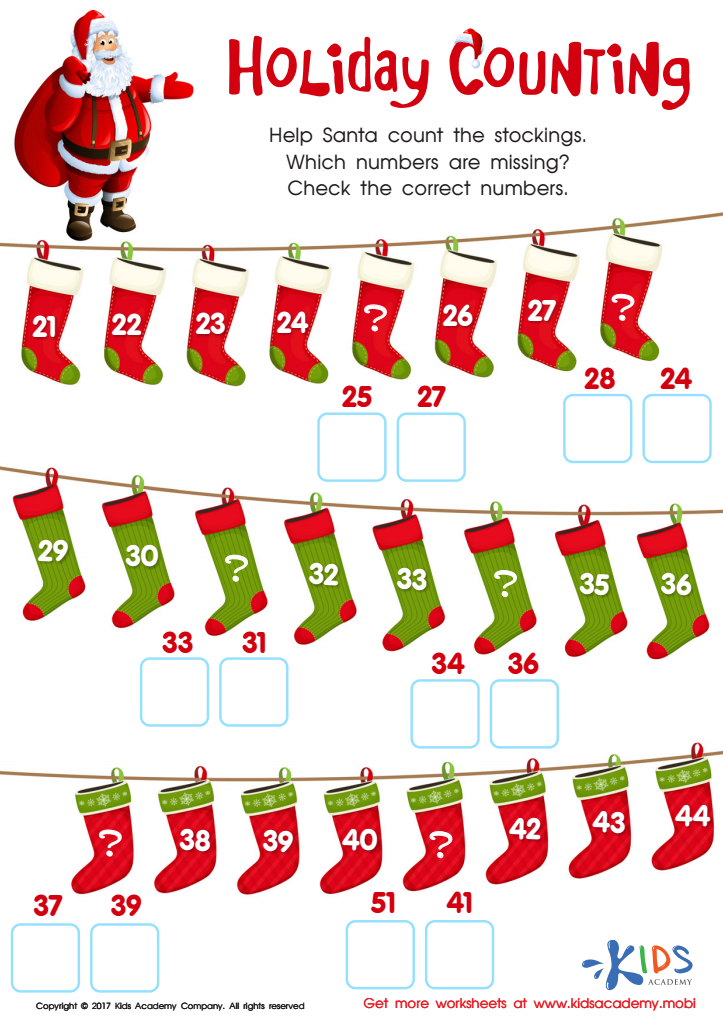
Holiday Counting Worksheet
 Assign to My Students
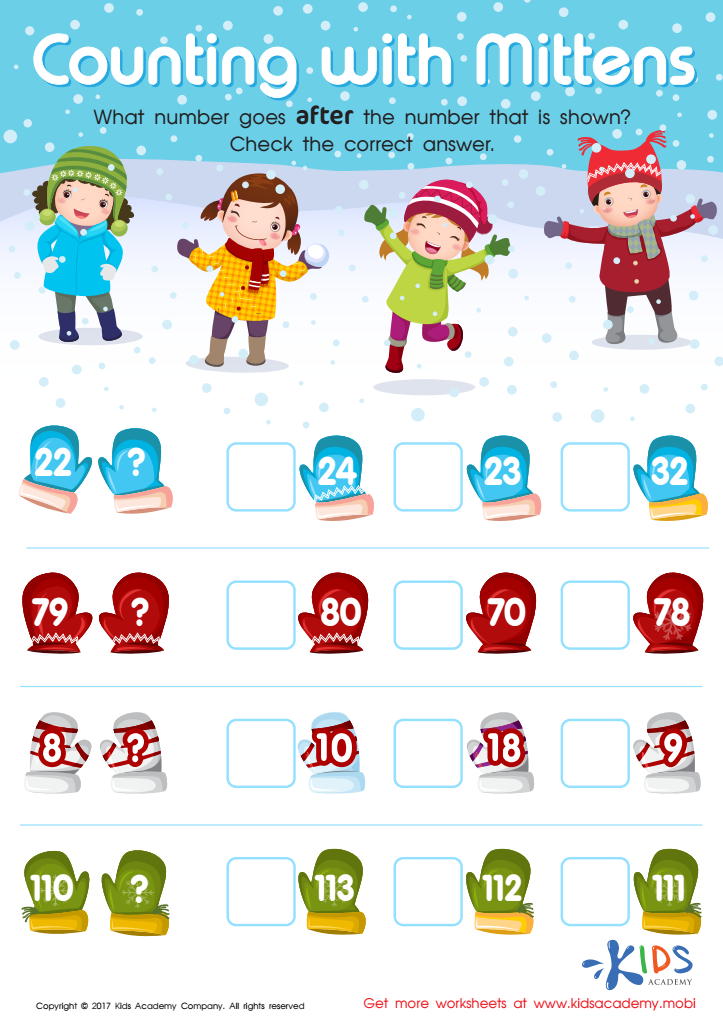
Counting with Mittens Worksheet
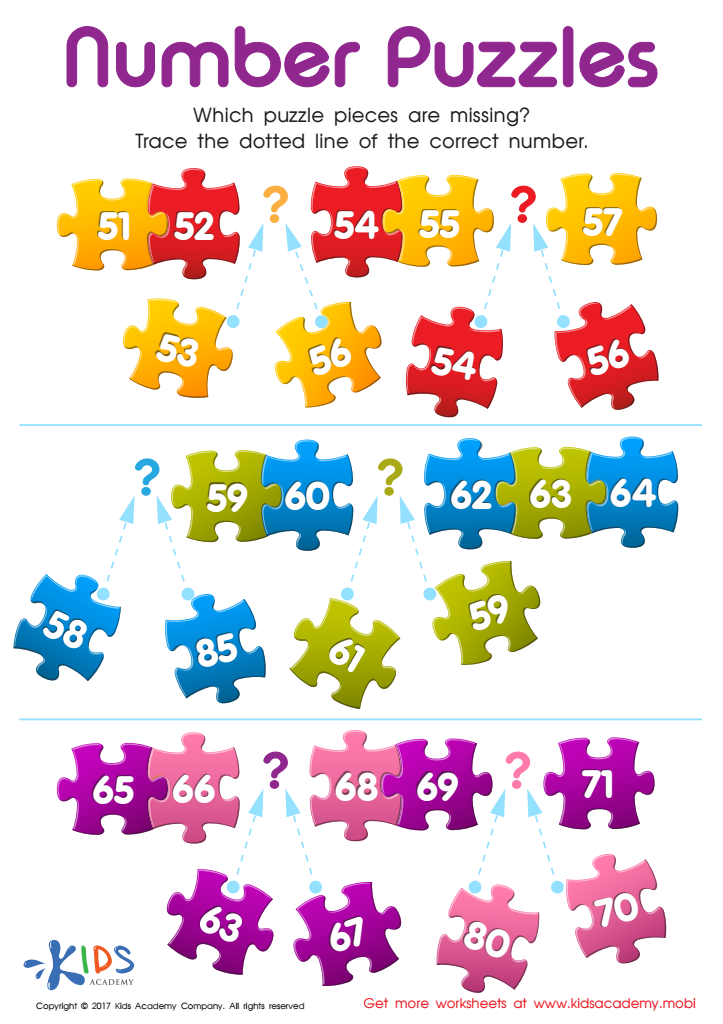
Number Puzzles Worksheet






%20(1).jpg)

Fine motor skills are crucial for the development of children aged 6-8, as they directly impact a child's ability to perform various everyday tasks. Learning to manipulate small objects, using scissors, or writing neatly requires these skills. When children develop fine motor skills, they can complete school tasks more effectively, boosting their confidence and enthusiasm in the classroom.
Understanding and working with numbers up to 100 is also foundational for this age group. Mastering basic math concepts aids in problem-solving abilities and lays the groundwork for future mathematical learning. Fine motor skills are intertwined with writing numbers, creating graphs, and engaging in hands-on math activities, which involve counting and manipulating physical objects.
Teachers and parents should focus on fostering these skills together. Engaging in fun activities like threading beads, building with small blocks, or using play dough can help strengthen fine motor skills. Simultaneously, parents and teachers can introduce counting games, basic addition/subtraction, and number recognition exercises up to 100. This dual focus not only prepares children academically but also enhances their dexterity, therefore supporting overall cognitive and physical development. Investing in these skills at a young age promotes lifelong learning and independence.