Word identification Normal Building Vocabulary Worksheets for Ages 6-8
3 filtered results
-
From - To
Enhance your child’s reading skills with our "Word Identification Normal Building Vocabulary Worksheets" designed specifically for ages 6-8. These engaging worksheets help young learners develop essential vocabulary and word recognition skills through fun and interactive activities. With a variety of exercises, including matching, fill-in-the-blanks, and word searches, children will enjoy building their language proficiency while boosting their confidence in reading. Perfect for classroom or at-home use, these worksheets cater to different learning styles and encourage independent learning. Help your child unlock the world of words today, setting a strong foundation for their literacy journey! Download your worksheets now!
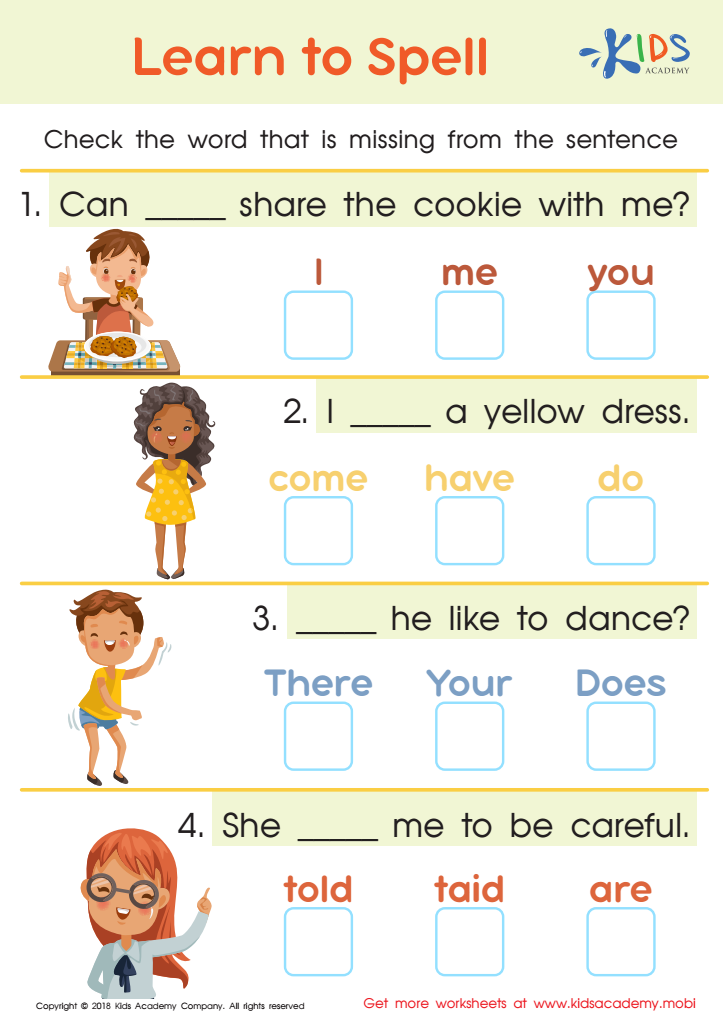
Learn to Spell Worksheet
 Assign to My Students











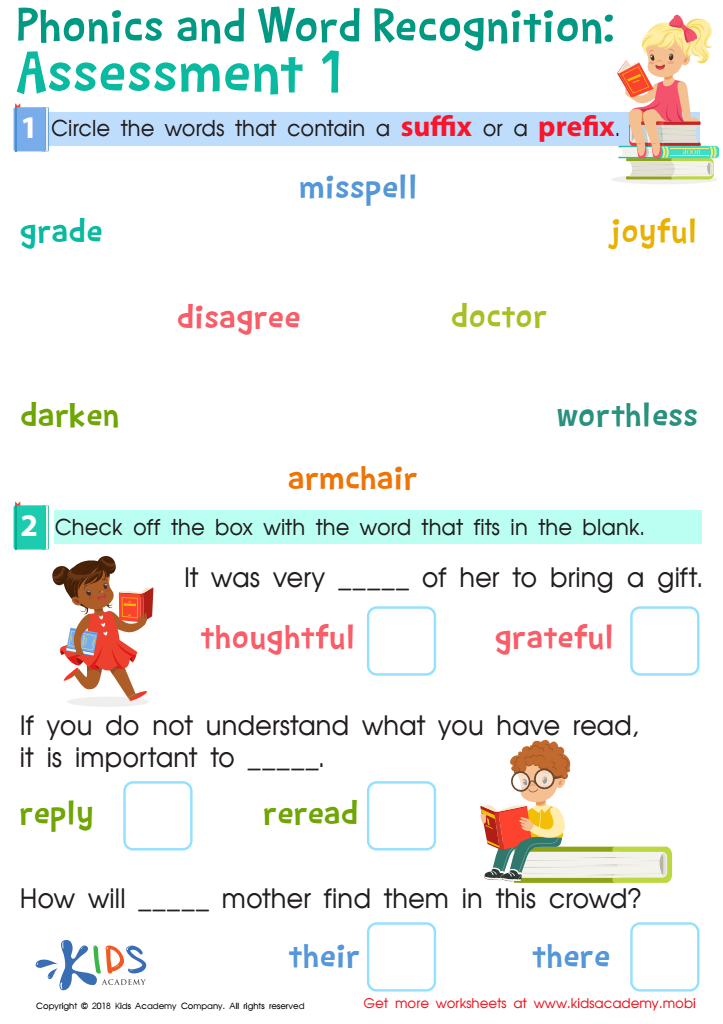
Phonics and Word Recognition: Assessment 1 Worksheet
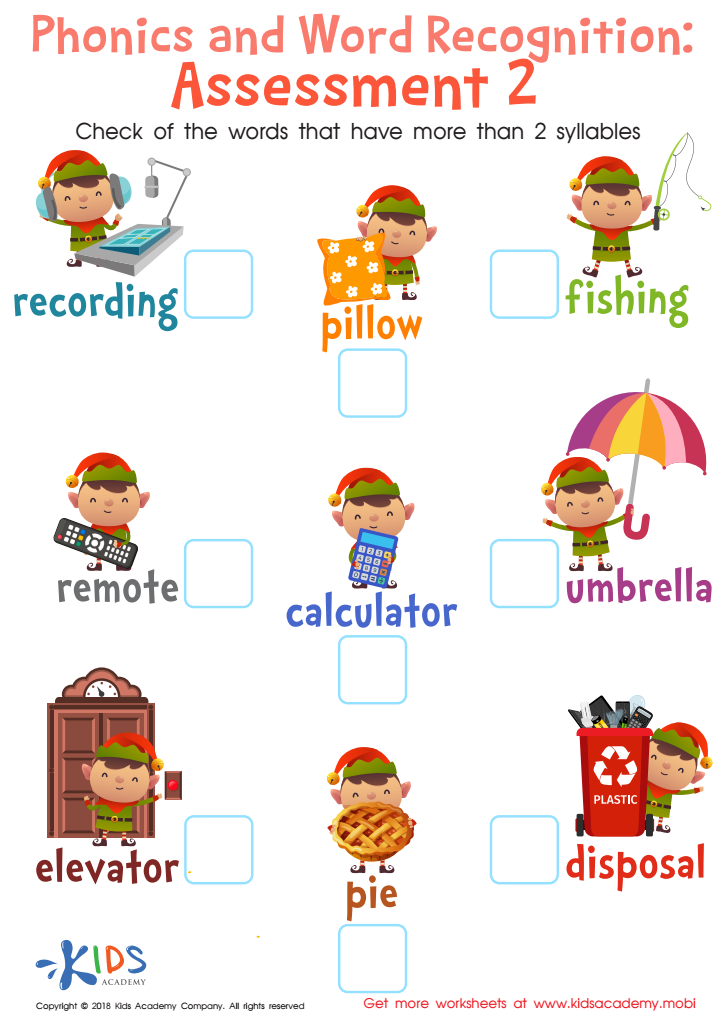
Phonics and Word Recognition: Assessment 2 Worksheet








Word identification and vocabulary building are critical for children aged 6-8, as this period is pivotal for literacy development. During these formative years, children are transitioning from learning to read to reading to learn, making effective word identification essential for comprehension and academic success.
Firstly, the ability to identify words quickly and accurately allows children to focus on understanding the content rather than struggling with decoding. This efficiency makes reading more enjoyable and fosters a love for books. When parents and teachers emphasize vocabulary acquisition, they empower children to engage with more complex texts, boosting their cognitive development and critical thinking skills.
Moreover, a rich vocabulary enhances communication skills, aiding children in expressing their thoughts and emotions fluently. This burgeoning vocabulary also influences academic achievement across all subjects, as many areas of knowledge rely on understanding specific terms and contexts.
Investing time in building vocabulary through engaging activities such as storytelling, word games, and discussions cultivates confidence and independence in young readers. Overall, supporting word identification and vocabulary development during these years lays the foundation for lifelong learning and literacy skills, making it paramount for both parents and teachers to prioritize this aspect of education.








