Animal identification Normal Reading Worksheets for Ages 6-8
4 filtered results
-
From - To
Discover our engaging Animal Identification Normal Reading Worksheets designed for ages 6-8! These worksheets are perfect for young learners looking to enhance their reading skills while exploring the fascinating world of animals. Each activity encourages children to identify various animals through fun texts and colorful illustrations, making reading enjoyable and interactive. With a mix of comprehension questions and vocabulary exercises, these worksheets support literacy development and strengthen critical thinking skills. Ideal for classroom use or home practice, our resources align with educational standards and foster a love for reading in young minds. Start your adventure in reading with our animal-themed worksheets today!
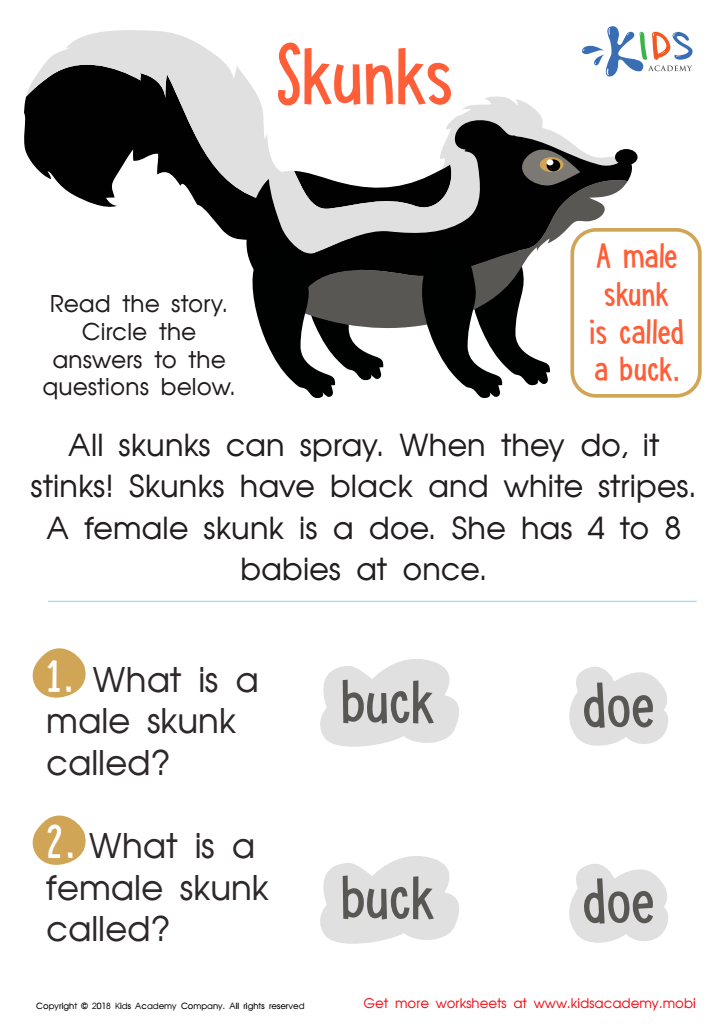
Skunks Worksheet
 Assign to My Students
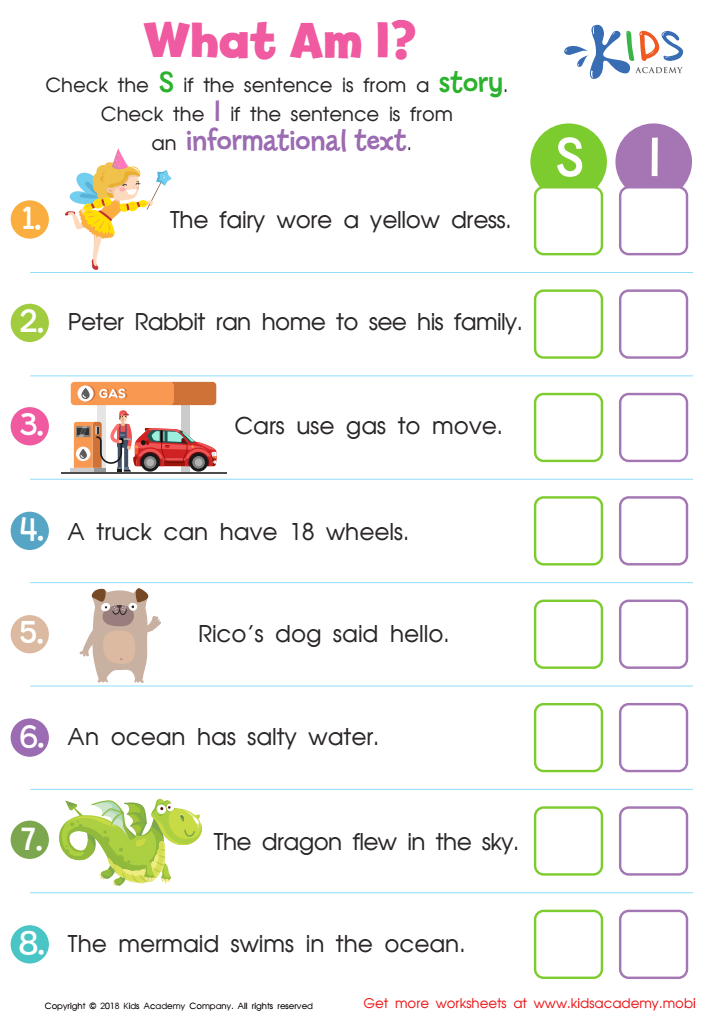
What Am I? Worksheet
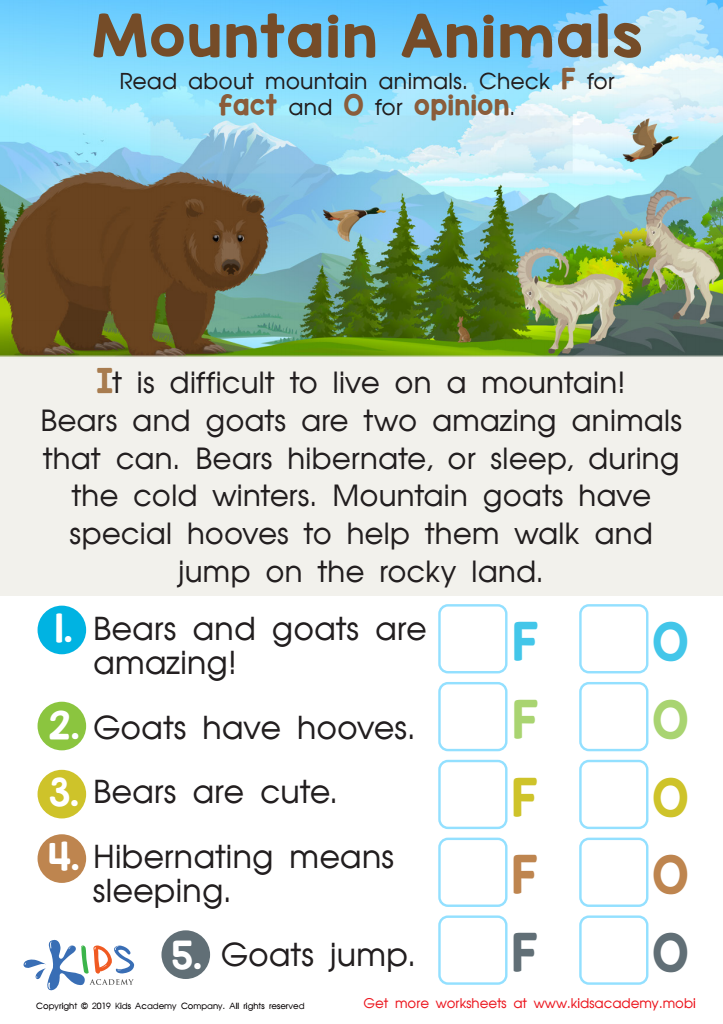
Mountain Animals Worksheet
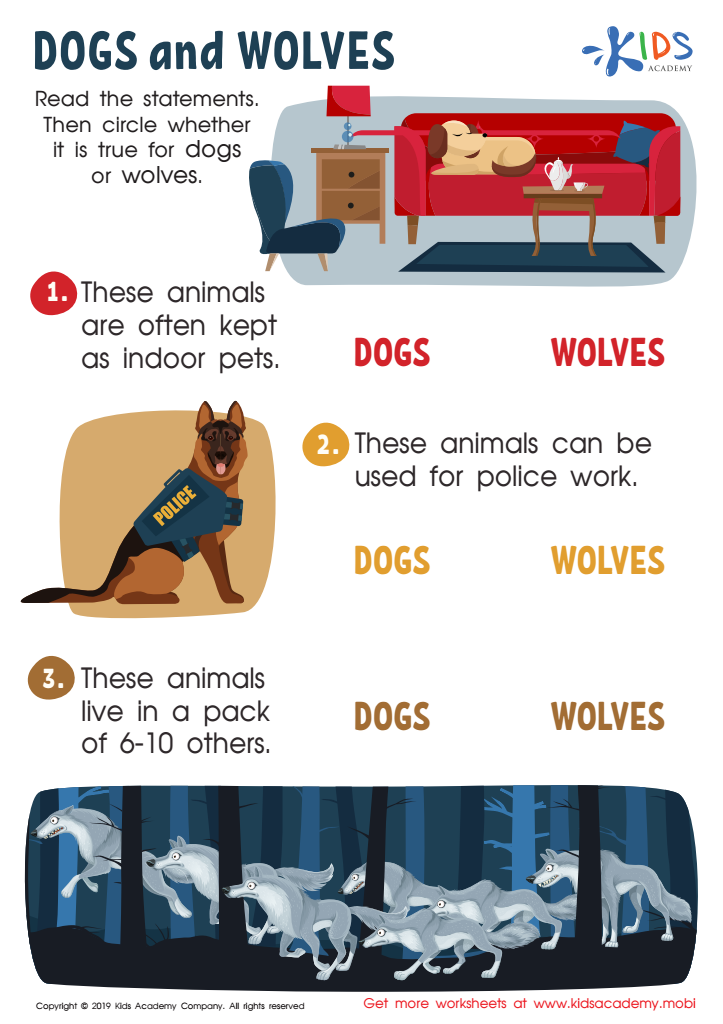
Dogs and Wolves Worksheet






.jpg)
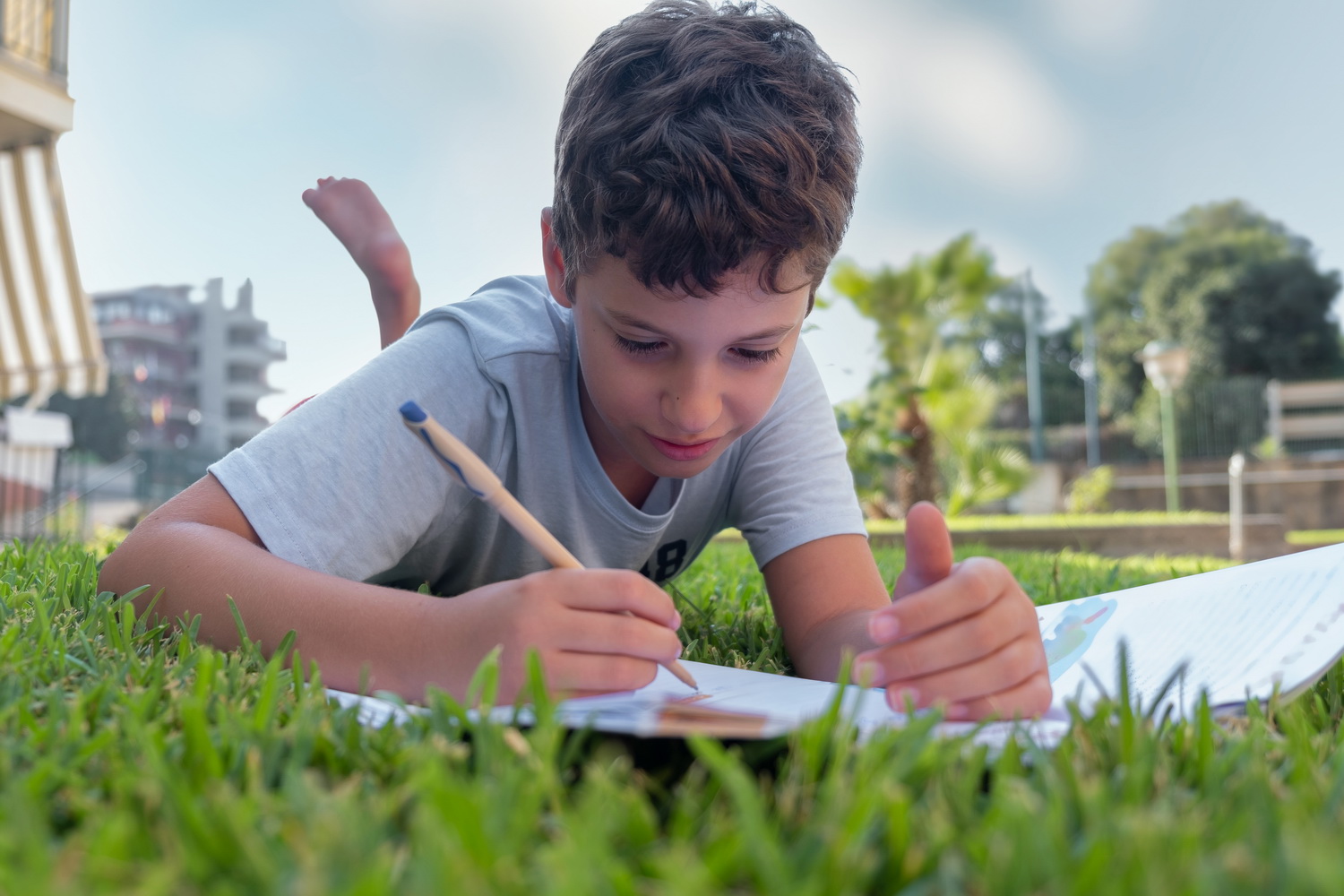
Animal identification is more than just names and pictures; it plays a crucial role in a child's understanding of the world around them. For parents and teachers, fostering knowledge about different animals can enhance children's curiosity, critical thinking, and empathy. When children learn to identify animals, they develop important observational skills, which help them notice details in their environment and build cognitive capabilities.
Understanding various animals also enhances language skills, as kids learn new vocabulary and improve their ability to express thoughts and ideas. Additionally, this knowledge encourages a sense of responsibility and care for living creatures. Teaching kids about animal identification can spark discussions about ecosystems, habitats, and conservation, instilling a sense of stewardship in the next generation.
Moreover, engaging activities, books, and games centered around animal identification make learning fun and interactive, keeping young learners motivated and involved. When parents and teachers emphasize the value of recognizing animals, they pave the way for a well-rounded education that fosters emotional and intellectual growth. Ultimately, this foundational knowledge helps children connect to nature and appreciate the diversity of life on our planet.








