Dinosaur Knowledge Normal Reading Worksheets for Ages 6-8
3 filtered results
-
From - To
Discover the thrilling world of dinosaurs with our "Dinosaur Knowledge Normal Reading Worksheets" designed specifically for children aged 6-8! These engaging worksheets help young learners enhance their reading skills while exploring fascinating facts about these prehistoric creatures. Each worksheet combines fun exercises with age-appropriate text, making learning both enjoyable and educational. Your child will develop reading comprehension, vocabulary, and critical thinking skills as they uncover the mysteries of dinosaurs. Perfect for both classroom learning and home activities, these worksheets inspire curiosity and a love for reading. Start your dino adventure today and watch your child's skills soar!
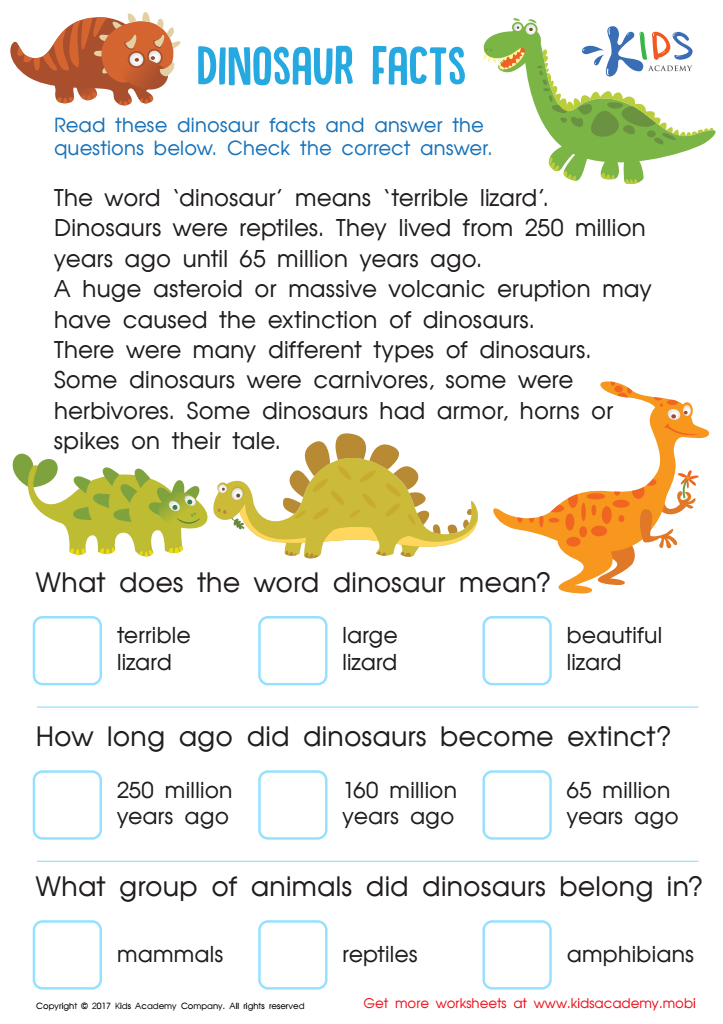
Dinosaur Facts Worksheet
 Assign to My Students
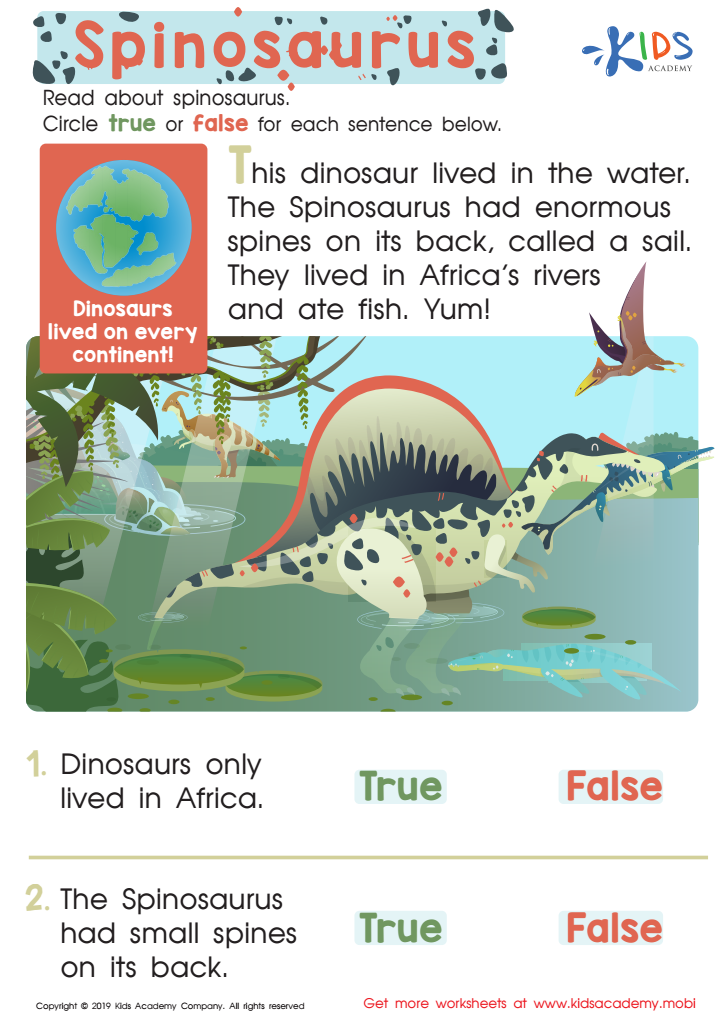
Spinosaurus Assessment Worksheet
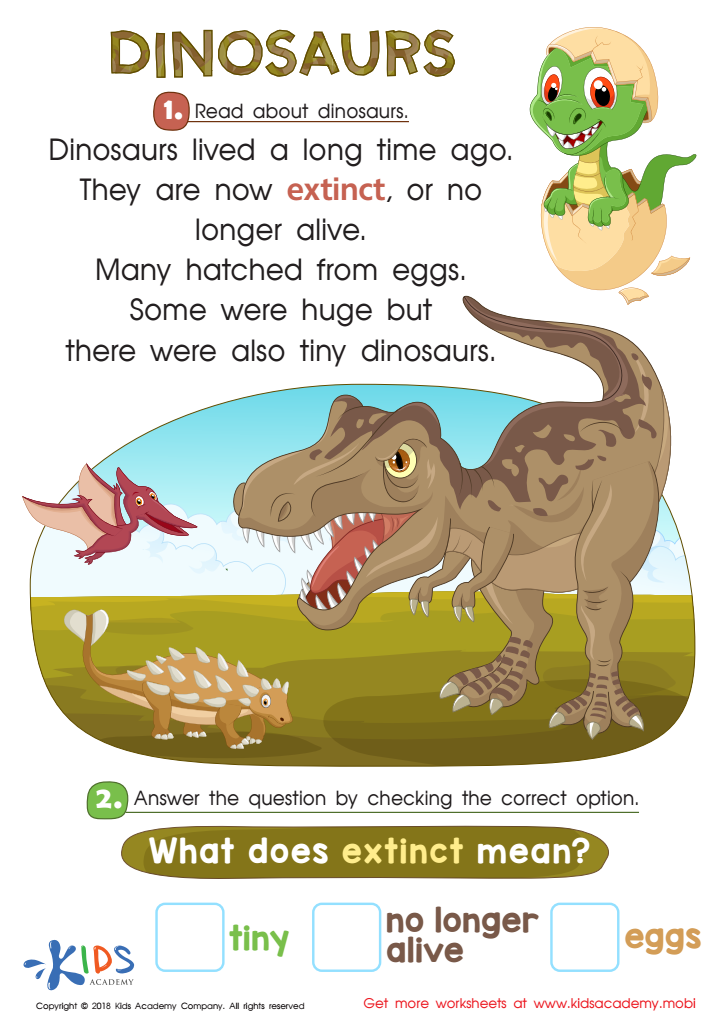
Dinosaurs Worksheet








"Dinosaur Knowledge Normal Reading" for ages 6-8 is a vital resource for nurturing young minds. First and foremost, this genre of reading offers an exciting way to engage children’s curiosity about the natural world, specifically the captivating era of dinosaurs. At this age, children are at a crucial stage for language development, and fun, informative texts can enhance vocabulary and comprehension skills.
Reading about dinosaurs can also spark an interest in science and history, encouraging children to ask questions, seek answers, and develop critical thinking skills. The interactive nature of dinosaur-themed books—often complemented by vibrant illustrations, fun facts, and engaging narratives—can foster a love of reading that extends beyond this topic.
Additionally, discussing dinosaurs can serve as a gateway for parents and teachers to introduce broader concepts such as extinction, evolution, and environmental awareness, grounding complex scientific ideas in a relatable context. Such knowledge inspires STEM interest at a young age. Encouraging children to learn about dinosaurs not only enriches their literacy skills but also forms the foundation for lifelong learning, ensuring they are well-prepared for future educational challenges. In short, fostering an appreciation for dinosaurs today might spark the interest of future paleontologists or scientists.








