Identifying story elements Normal Reading Worksheets for Ages 6-8
3 filtered results
-
From - To
Unlock the magic of storytelling with our "Identifying Story Elements" reading worksheets, designed for children ages 6-8. These engaging worksheets teach young readers to recognize key story components such as characters, setting, plot, and events. Each worksheet enhances comprehension while nurturing curiosity and creativity. Perfect for home or classroom use, our expertly crafted materials support developing excellent reading skills. Help your child or student become a confident reader with these fun and educational printables. Explore the enchanting world of stories with our kid-friendly, easy-to-use resources, expertly designed for early grade learners.
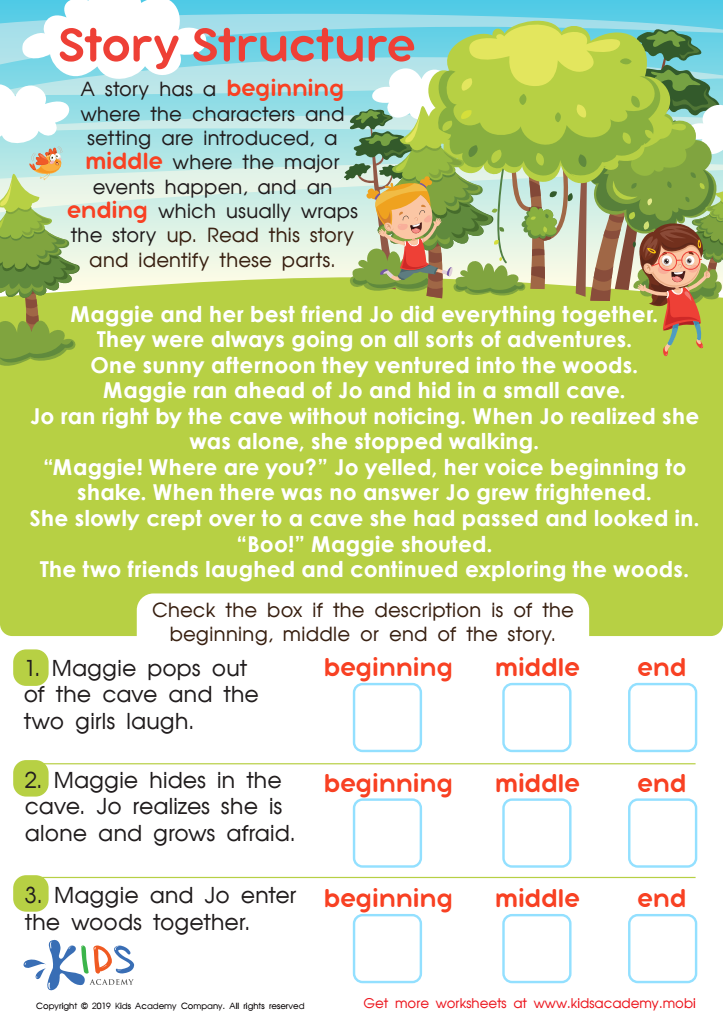
Story Structure Worksheet
 Assign to My Students
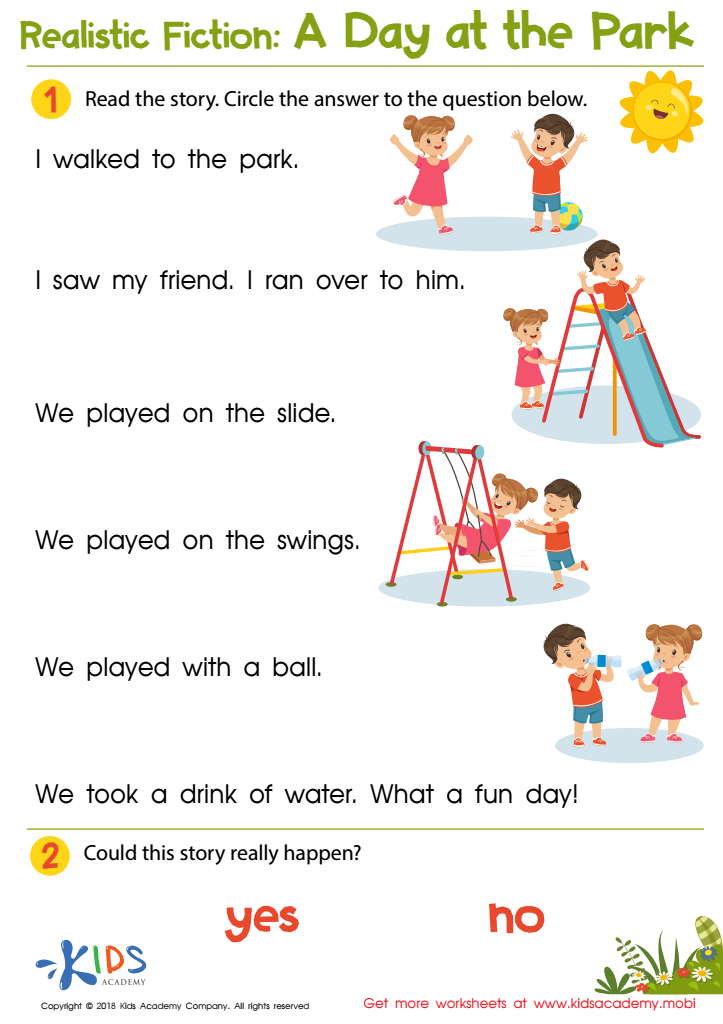
A Day at the Park Worksheet
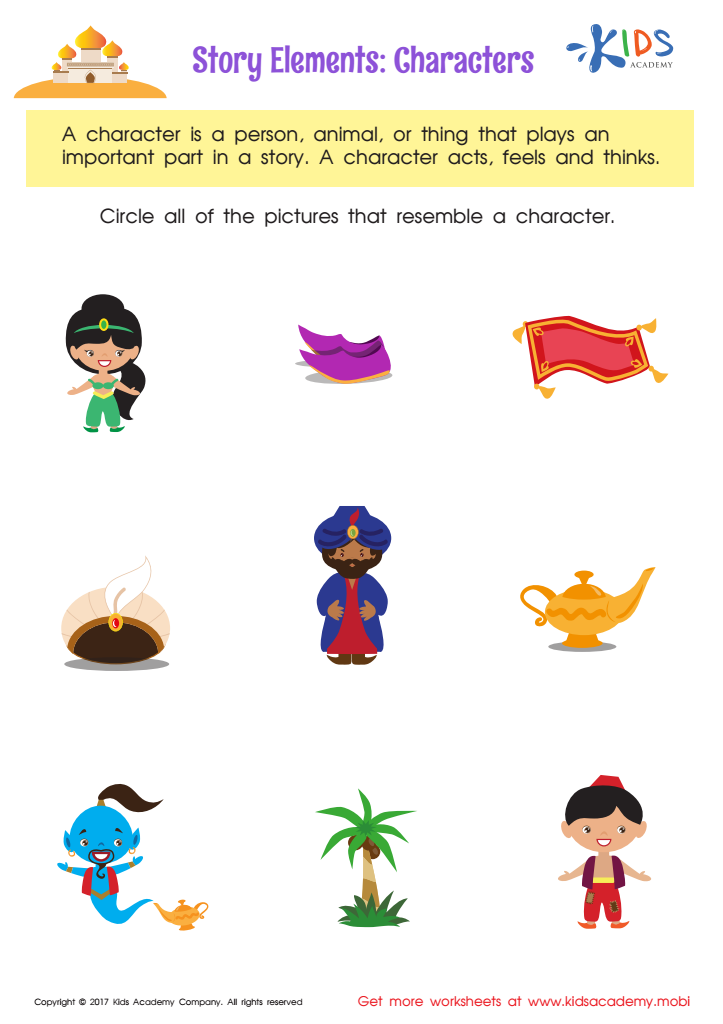
Story Elements Printable








Identifying story elements is crucial for young readers, aged 6-8, as it lays the foundational skills for comprehension, critical thinking, and a lifelong love of reading. Parents and teachers should care about this practice because it helps children understand the structure of stories, including key components like characters, settings, problems, and solutions. Recognizing these elements boosts children’s ability to follow the plot, which enhances their overall understanding and retention of the narrative.
Furthermore, this skill encourages children to think critically about what they’re reading, fostering analytical skills that are essential for academic success across all subjects. By discussing story elements, educators and parents can also prompt children to make personal connections and predictions, enriching their engagement with the text and making reading a more interactive and dynamic experience.
In addition, understanding story elements can support language development by expanding vocabulary and improving sentence structures. When children discuss characters or settings, they often use descriptive words, enhancing their expressive skills. Lastly, being able to identify and understand story elements can help children develop empathy, as they examine characters’ emotions and actions in various situations. This holistic approach not only improves reading skills but also contributes to social and emotional learning.








