Moral lesson understanding Normal Reading Worksheets for Ages 6-8
5 filtered results
-
From - To
Help your children develop crucial reading comprehension and ethical decision-making skills with our "Moral Lesson Understanding Normal Reading Worksheets for Ages 6-8." These engaging worksheets are designed to enhance young readers' abilities to grasp key moral lessons from various texts. Each worksheet combines both reading practice and discussions about values such as honesty, kindness, and responsibility. Perfect for home or classroom use, these resources promote reflection and understanding through interactive and thought-provoking activities. Give your child or students the tools they need to become thoughtful readers and compassionate individuals with our expertly designed materials.
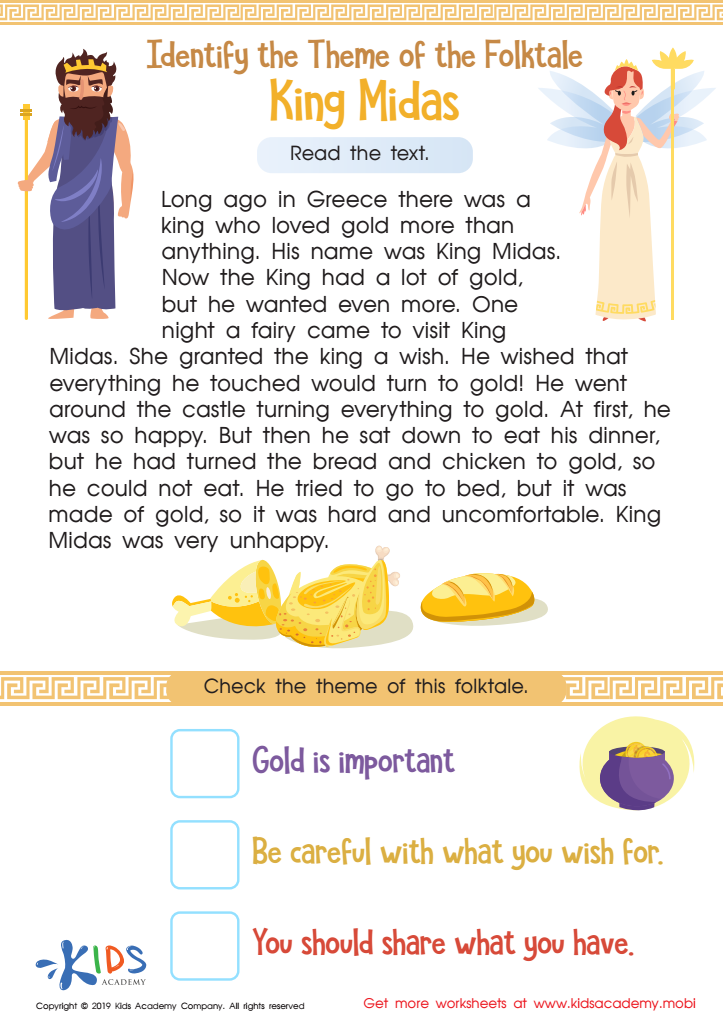
King Midas Worksheet
 Assign to My Students
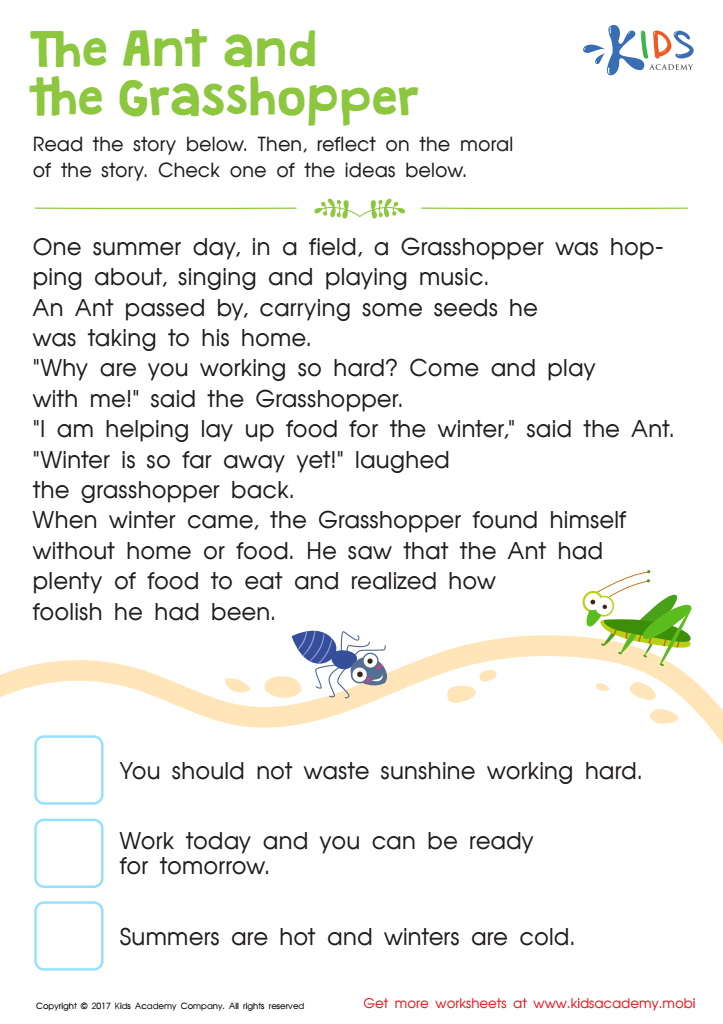
The Ant and The Grasshopper Printable
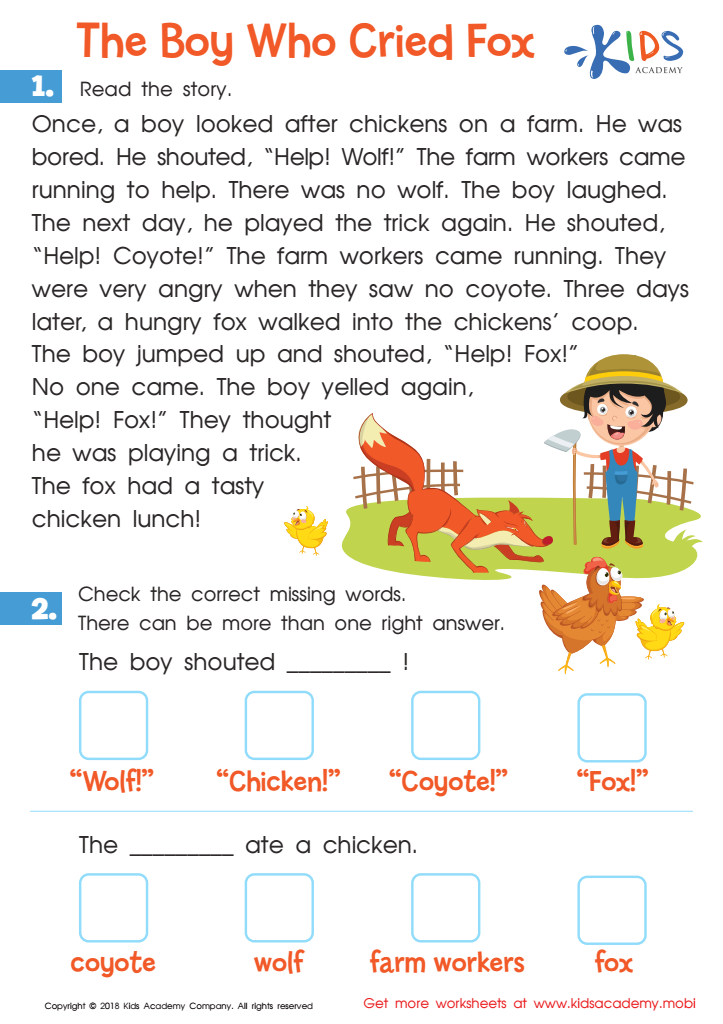
The Boy Who Cried Fox Worksheet
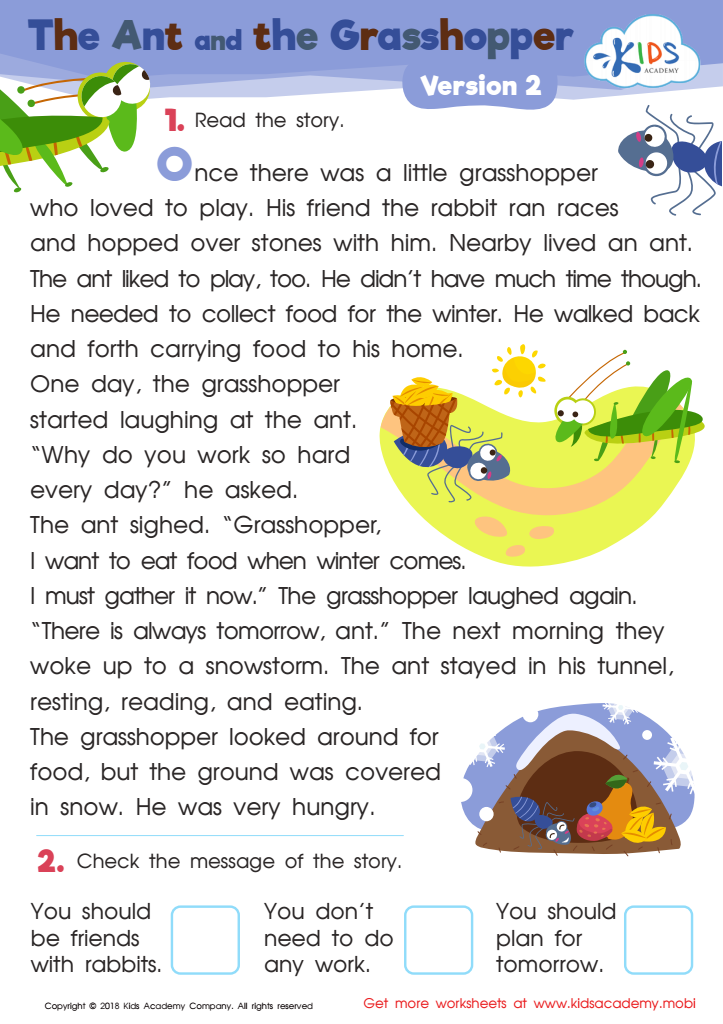
The Ant and The Grasshopper Version 2 Worksheet
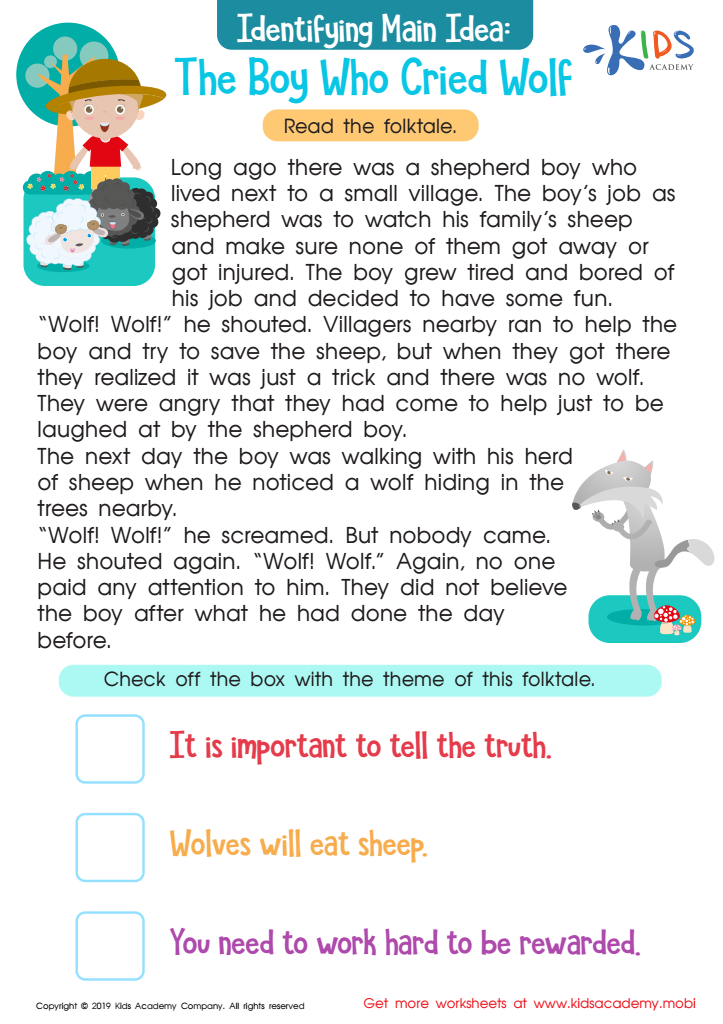
The Boy Who Cried Wolf Part 2 Worksheet






Teaching moral lessons and normal reading skills to children ages 6-8 is crucial for their overall development. At this formative stage, children are highly impressionable and begin to comprehend the world around them more deeply. Understanding moral lessons helps children distinguish between right and wrong, fostering essential values such as honesty, kindness, and respect. These values lay the foundation for their character, guiding their behavior in various social settings.
Normal reading skills are equally important as they provide children with the tools necessary to engage with written content effectively. Proficient reading skills enhance their ability to understand instructions, enjoy stories, and gain knowledge across subjects. This, in turn, builds their confidence and academic performance.
Combining moral lessons with reading can make the learning process more engaging and meaningful. Through stories, children can see characters facing moral dilemmas and making choices, which lets them learn valuable lessons in a relatable and memorable way. This intertwines their cognitive and moral development, making lessons more impactful.
In essence, prioritizing moral education and reading skills from an early age equips children with the foundations they need to grow into thoughtful, literate, and responsible individuals, ready to navigate the complexities of life.








