Moral understanding Normal Reading Worksheets for Ages 6-8
5 filtered results
-
From - To
Enhance your child's reading skills and moral comprehension with our engaging Moral Understanding Normal Reading Worksheets, designed specifically for ages 6-8. These supportive worksheets encourage young learners to explore ethical themes through age-appropriate texts, fostering empathy, fairness, and respect for others. Each activity is tailored to stimulate critical thinking and moral reflection while improving reading fluency. With a focus on interactive learning, your child will enjoy developing both comprehension and gentle life lessons. Perfect for homeschoolers or classroom settings, our resources provide a structured approach to blending literacy with essential moral values, enriching your child's education in a fun and meaningful way.
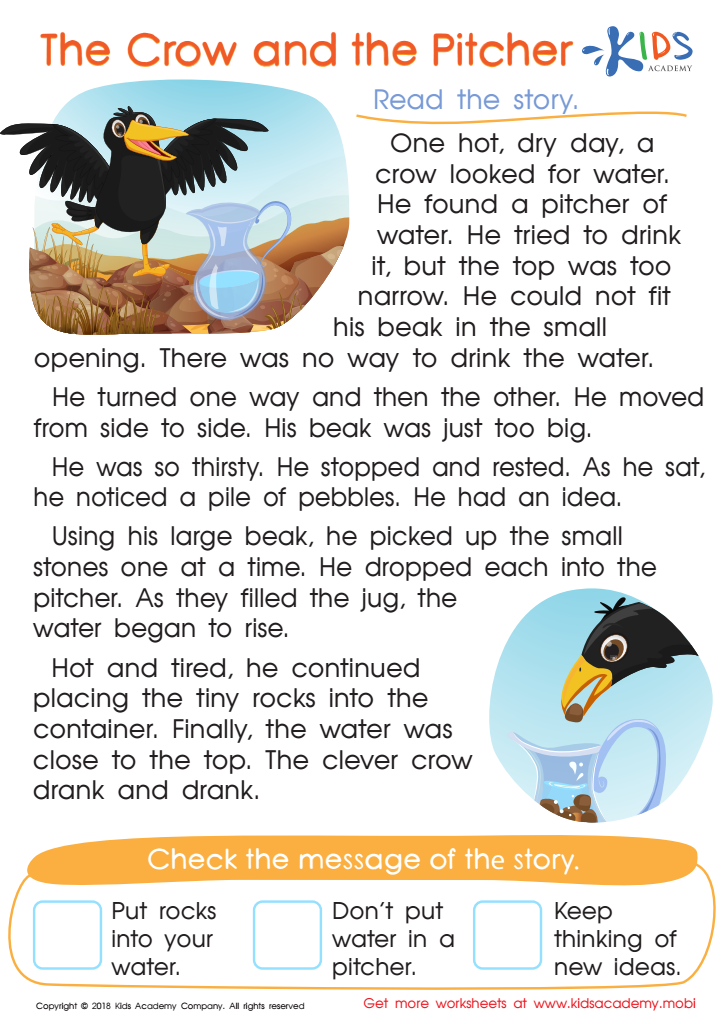
The Crow and the Pitcher Worksheet
 Assign to My Students
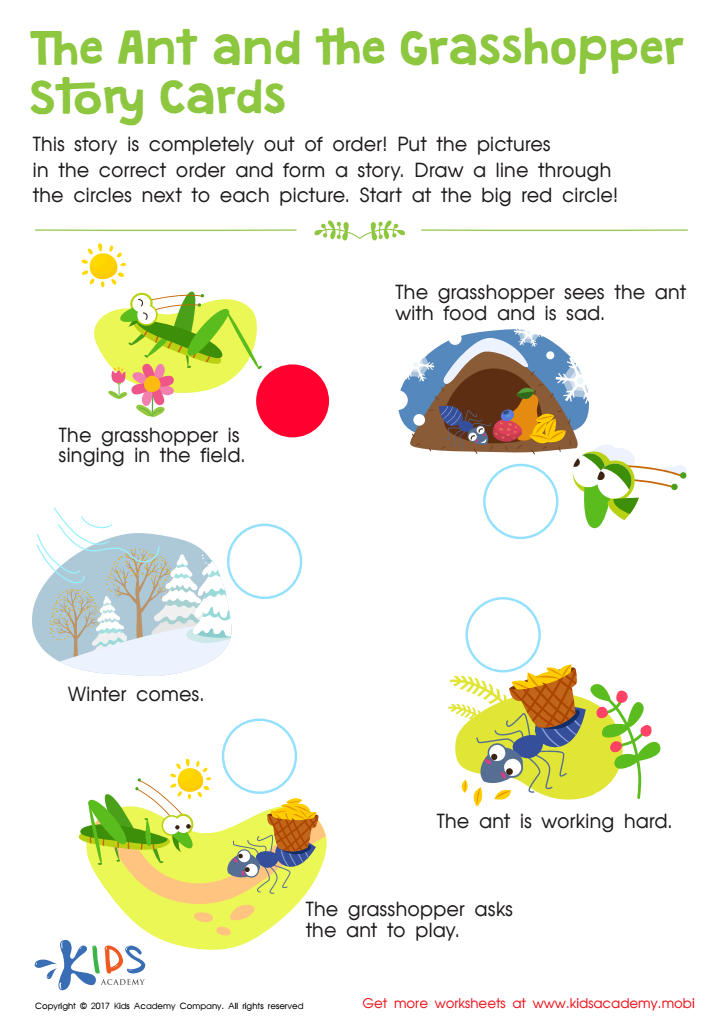
The Ant and The Grasshopper Worksheet
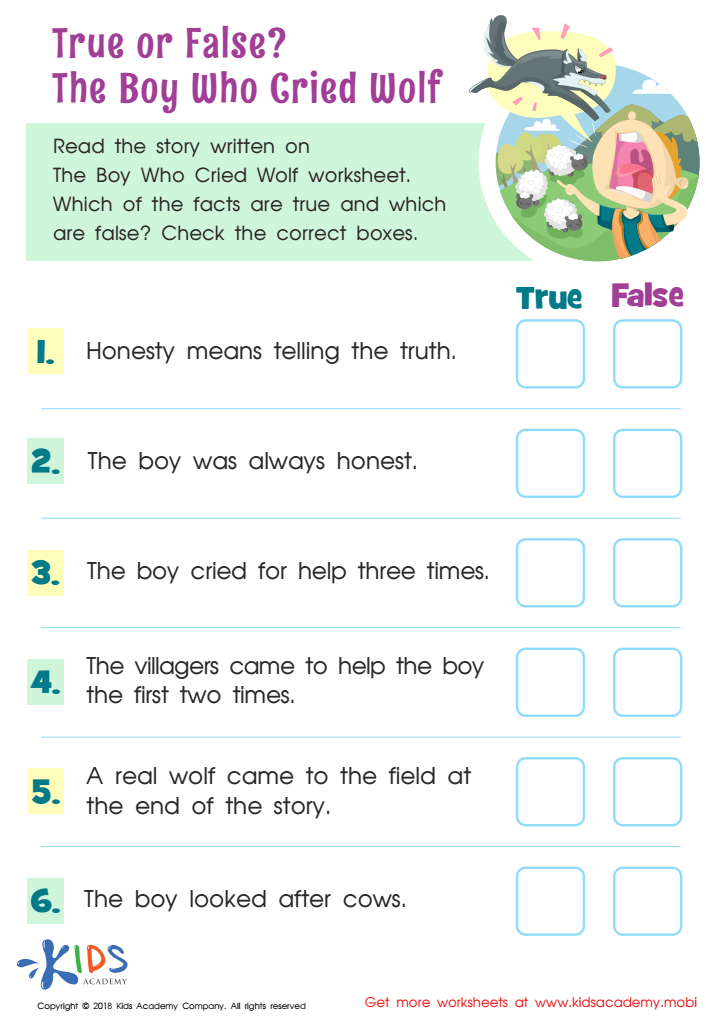
True or False? The Boy Who Cried Wolf Worksheet
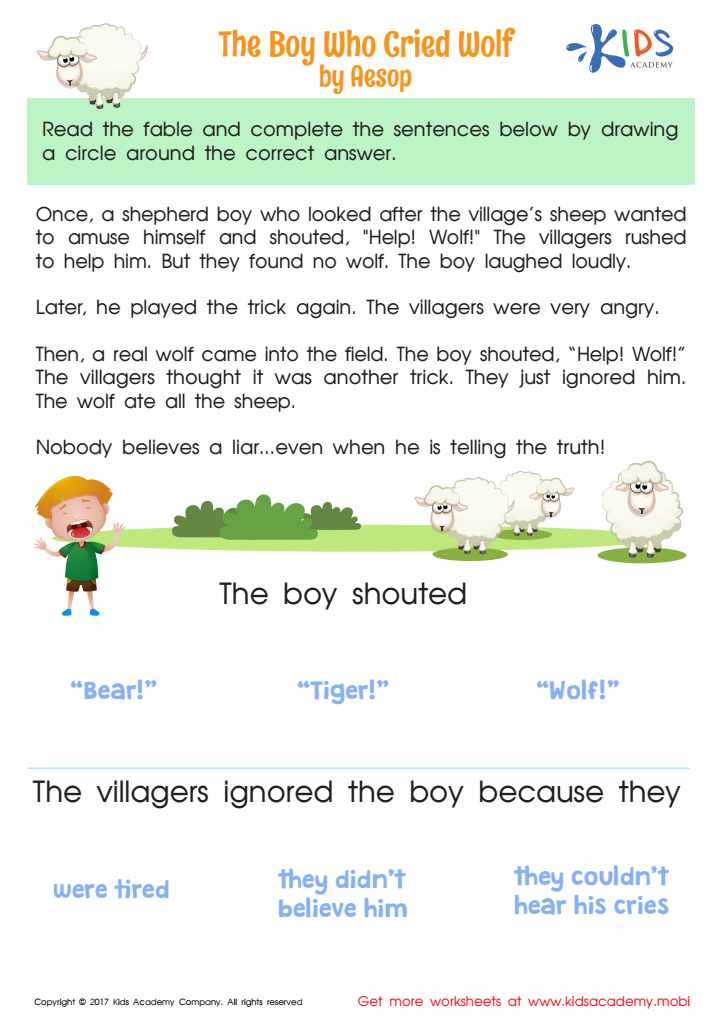
The Boy Who Cried Wolf Worksheet
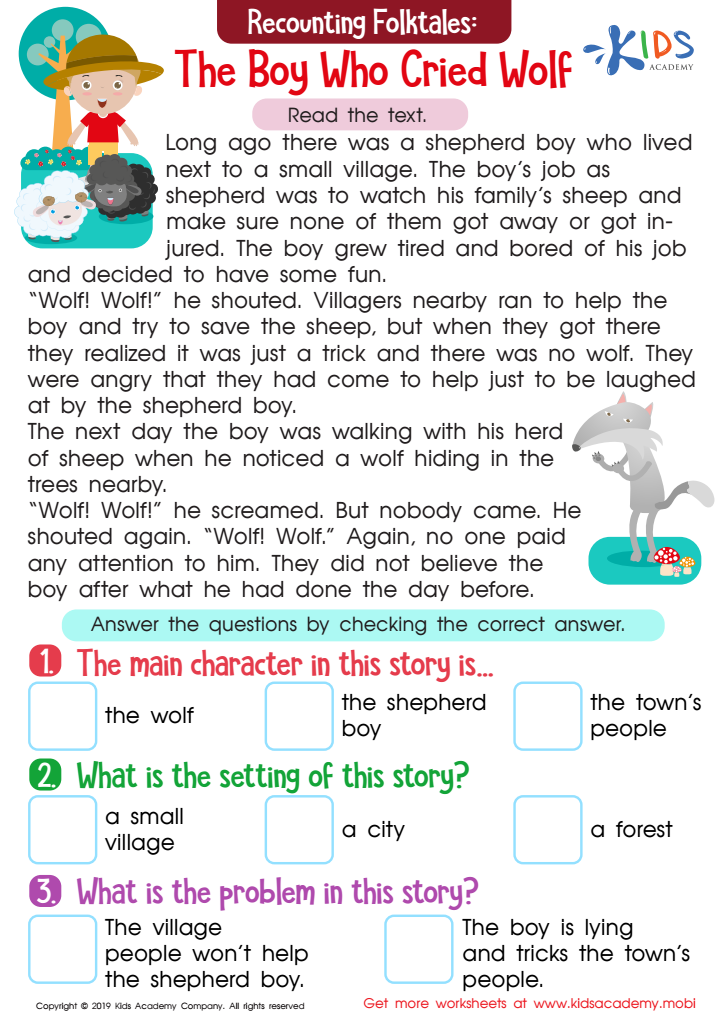
The Boy Who Cried Wolf Part 1 Worksheet







Moral understanding during ages 6-8 is crucial for a child's development, as it helps them differentiate between right and wrong and fosters empathy toward others. At this formative stage, children begin to grasp complex social interactions and the consequences of their actions. When parents and teachers prioritize moral understanding through reading, they provide children with stories that present ethical dilemmas, diverse perspectives, and character values.
These narratives not only guide children in evaluating situations but also stimulate discussions about honesty, kindness, fairness, and respect. Furthermore, discussing moral themes in books enables children to analyze emotions and the motivations behind characters' decisions, enhancing their ability to relate to peers and resolve conflicts positively.
Additionally, incorporating moral understanding into reading cultivates critical thinking skills, encouraging children to actively engage with the material and form their own opinions. When caregivers and educators model and reinforce these values, they help create a supportive environment that nurtures emotional intelligence and a sense of community. Ultimately, instilling moral understanding aids in shaping responsible individuals who contribute positively to society as they grow. Therefore, investing time in this aspect of children's education is essential for holistic development.








