Rhyming skills development Normal Reading Worksheets for Ages 6-8
3 filtered results
-
From - To
Enhance your child’s reading prowess with our engaging Rhyming Skills Development Worksheets, specially designed for ages 6-8. These printable worksheets are tailored to foster essential literacy skills through fun and interactive activities that promote rhyming recognition and wordplay. Through vibrant illustrations and age-appropriate exercises, kids will have the opportunity to explore phonetic sounds and enhance vocabulary, all while enjoying the learning process. Perfect for classrooms or home study, our resources aim to build confidence in young readers, making phonemic awareness entertaining and effective. Help your child develop a love for reading and poetry by using our captivating rhyming worksheets today!
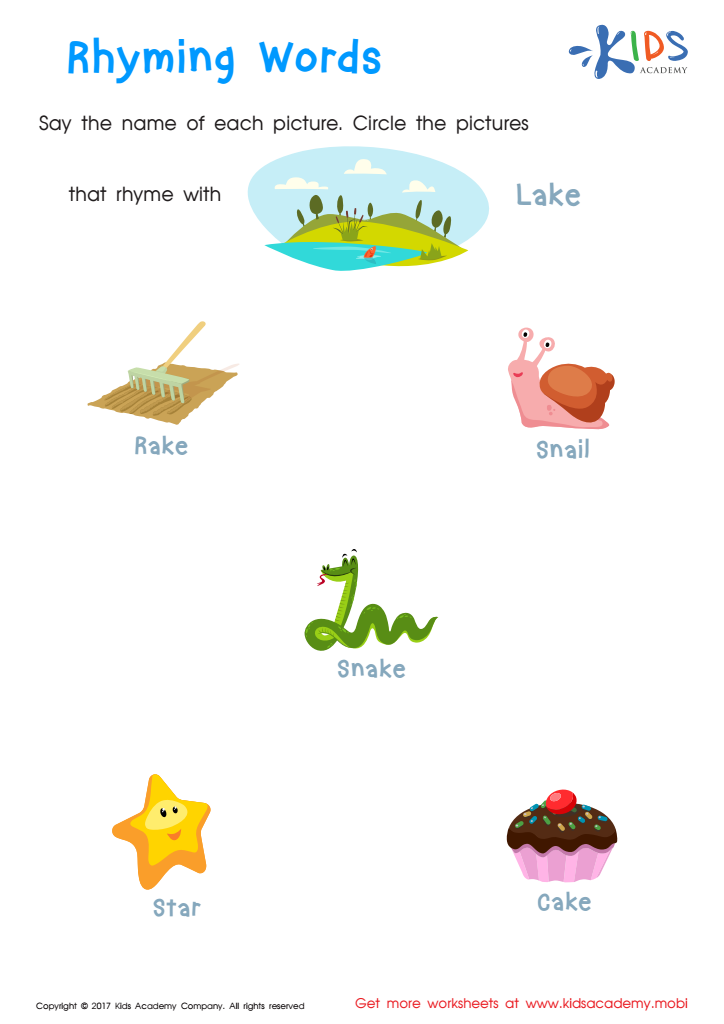
Rhyming Words Rhyming Worksheet
 Assign to My Students
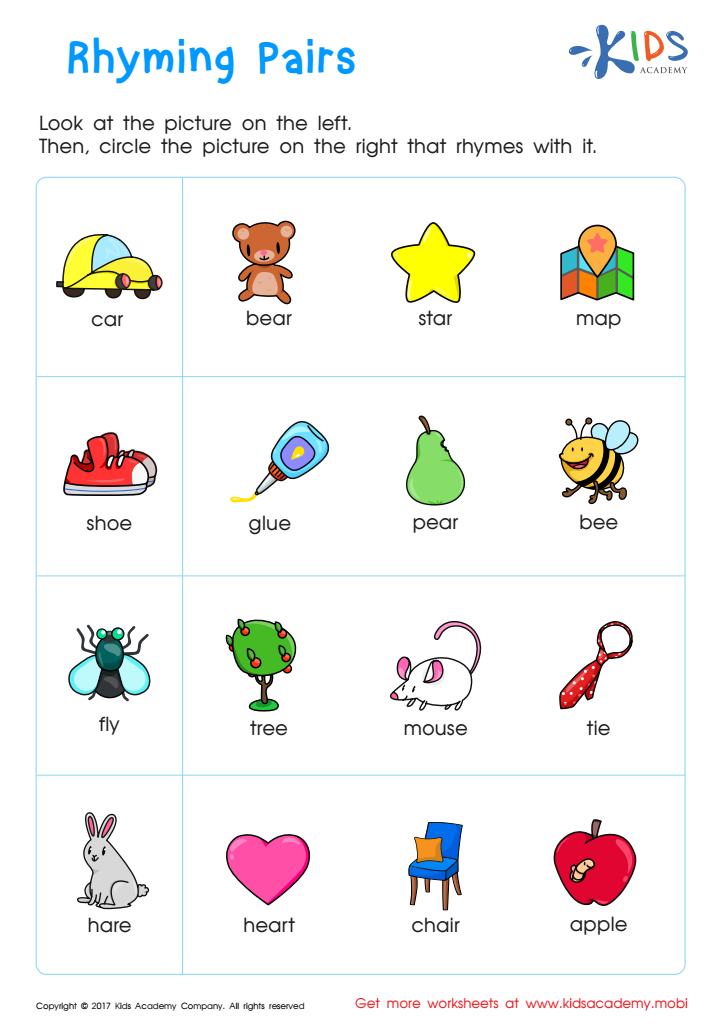
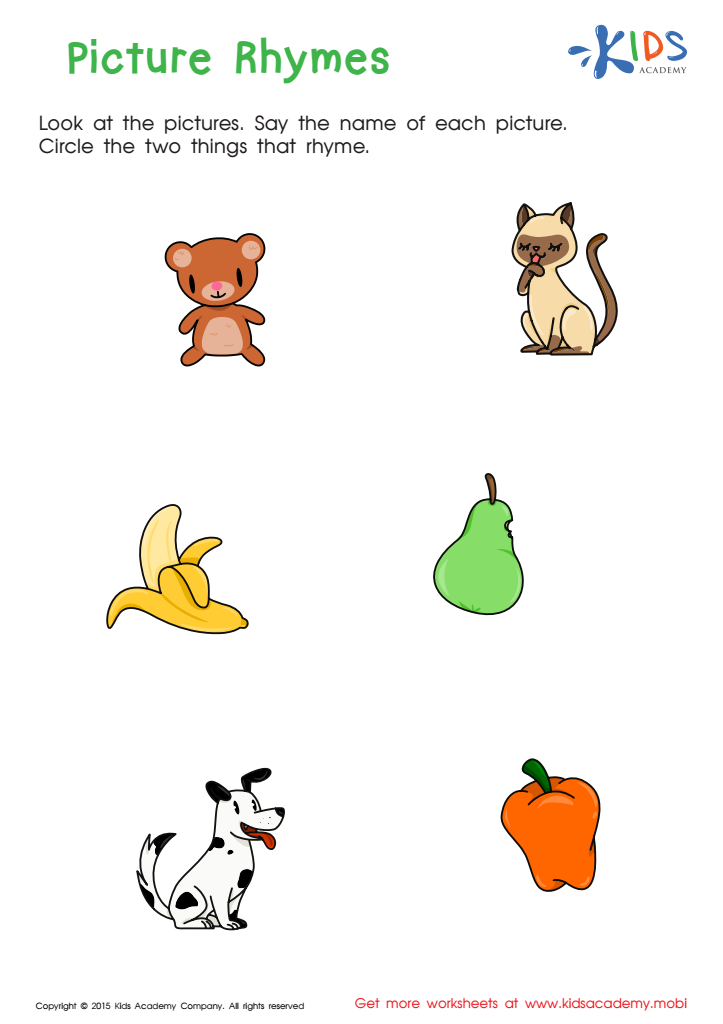
First Words: Picture Rhymes Worksheet








Rhyming skills play a crucial role in the development of reading abilities in children aged 6-8. First, rhyming helps children to develop phonemic awareness, which is the understanding that words are made up of individual sounds. This skill is foundational for decoding words and is a predictive indicator of future reading success. When children practice rhyming, they learn to identify similar sounds in different words, making it easier for them to break down unfamiliar words when reading.
Furthermore, engaging with rhymes fosters language development. Children expand their vocabulary and improve their verbal skills, which enhances their overall communication abilities. Rhyming also supports comprehension, as familiar rhythm and sound patterns in poetry and stories can make texts more engaging, enjoyable, and easier to understand.
Moreover, the enjoyment of nursery rhymes, songs, and word games can cultivate a love for reading. This intrinsic motivation is essential for lifelong learning. By recognizing the significance of rhyming skills, parents and teachers can incorporate playful, interactive approaches to develop these skills, laying a strong foundation for literacy that extends beyond the early grades. Ultimately, nurturing rhyming abilities ensures children become confident readers who appreciate language.








