Understanding adjectives Normal Reading Worksheets for Ages 6-8
3 filtered results
Difficulty Level
Grade
Age
-
From - To
Subject
Activity
Standards
Discover engaging "Understanding Adjectives" reading worksheets tailored for ages 6-8. Designed to enhance young learners' knowledge of descriptive words, these worksheets make grammar fun and accessible. Through colorful illustrations and interactive exercises, children will master the use of adjectives, enhancing their vocabulary and reading comprehension. Perfect for classroom and home use, these resources support essential language skills, making learning both enjoyable and effective. Visit Kids Academy to boost your child's reading journey with comprehensive, age-appropriate materials, designed to align with educational standards and foster a love for learning.
Favorites
With answer key
Interactive
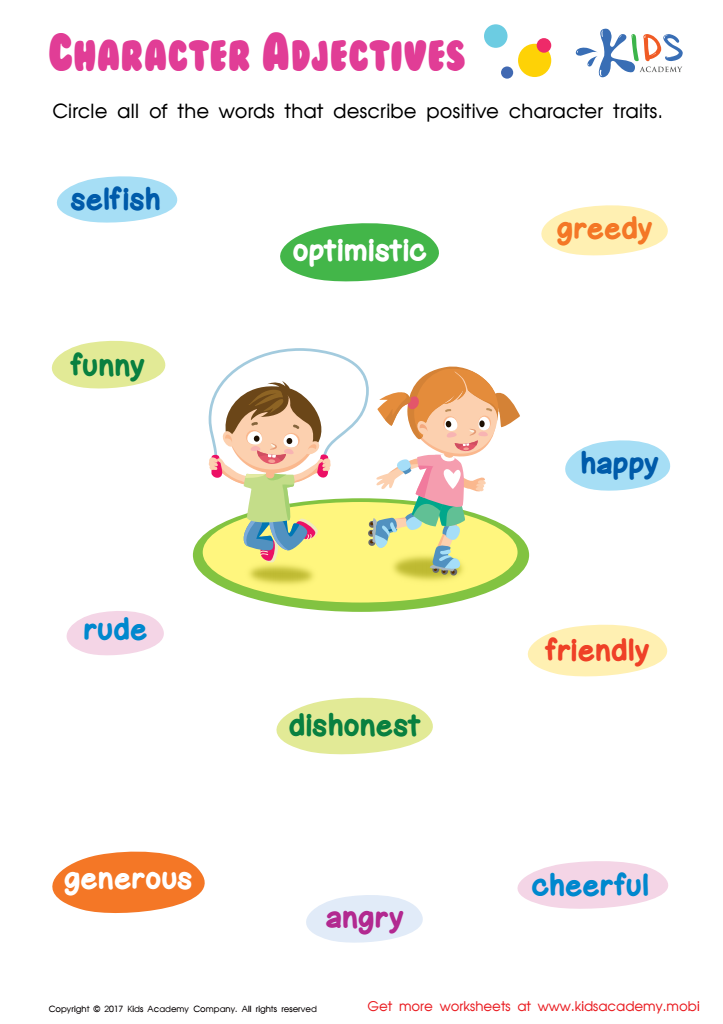
Character Adjectives Worksheet
Help your child express their feelings easily with this PDF worksheet! It focuses on character adjectives and increases their vocabulary, so they can confidently articulate positive emotions.
 Assign to My Students
Character Adjectives Worksheet
Worksheet
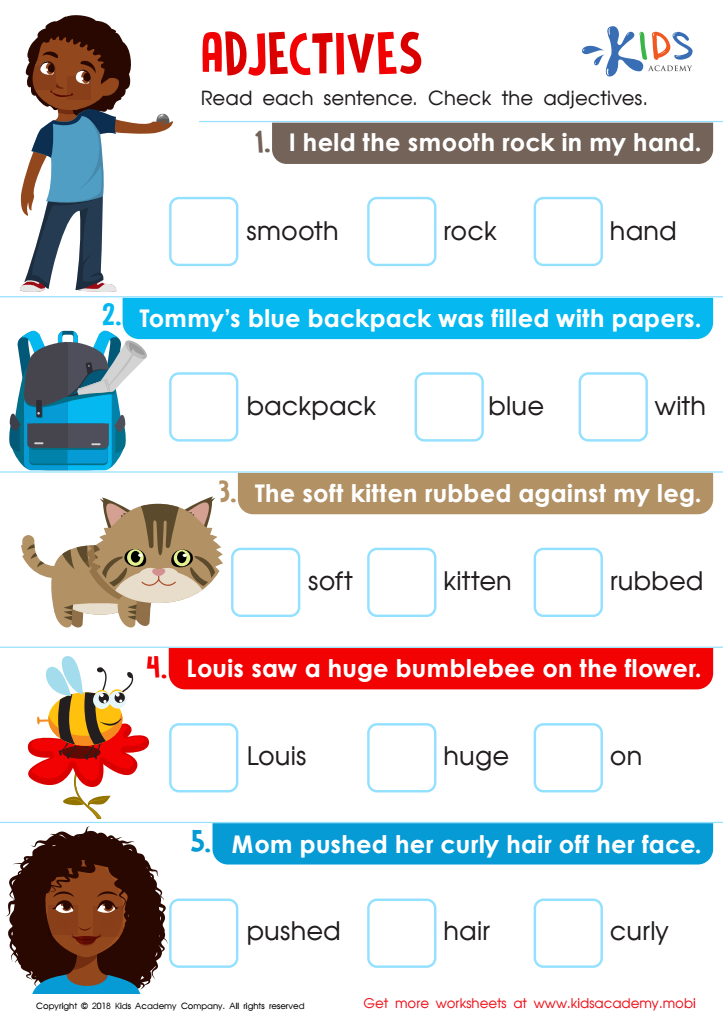
Adjectives Worksheet
Adjectives are words that describe a noun. Examples include "beautiful" and "good". Ask your students to use these adjectives in a sentence and have them identify the adjectives in five sentences on a worksheet. Point out that adjectives are essential to understand, and have them check their answers.
Adjectives Worksheet
Worksheet
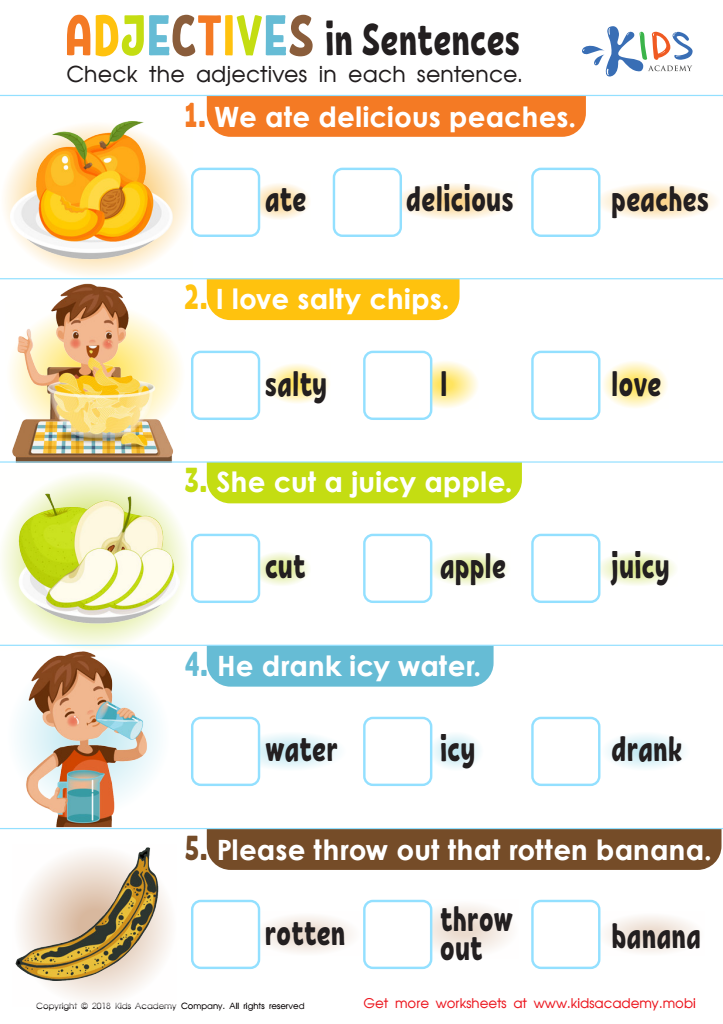
Adjectives in Sentences Worksheet
Our learners can find it hard to use writing to add detail, but adjectives can help. With this fun worksheet, kids can identify adjectives that describe food and drink. Guide them through each sentence, discussing the words and having them choose the one that gives information about the food/drink.
Adjectives in Sentences Worksheet
Worksheet
Join Kids Academy for Free
Who is primarily going to use this learning content?








Understanding adjectives is crucial for children aged 6-8 as it significantly enhances their language development and academic success. At this formative stage, children are expanding their vocabulary—learning how adjectives work can make this process richer and more nuanced. By grasping the concept of adjectives, children learn to describe objects, people, and experiences more vividly and accurately. This not only makes their communication clearer but also more engaging, promoting better interaction with peers and adults.
From an academic perspective, strong adjective usage supports reading comprehension and writing skills. As children read, adjectives help them paint mental pictures, aiding in text enjoyment and understanding. Writing exercises become more detailed and expressive when children can utilize a diverse range of adjectives, laying a solid foundation for future writing endeavors.
Moreover, understanding adjectives boosts critical thinking. When children learn to differentiate between descriptive words, they become more observant and better thinkers. This skill is transferrable across subjects, improving overall learning performance.
Finally, the joy of successful communication and expression fosters a child’s confidence and encourages a lifelong love of learning. Therefore, parents and teachers should actively care about and support the development of adjective usage as it is integral to a child’s holistic educational growth.