Vocabulary Enrichment Normal Reading Worksheets for Ages 6-8
3 filtered results
-
From - To
Discover our engaging Vocabulary Enrichment Normal Reading Worksheets designed specifically for children ages 6 to 8. These worksheets aim to enhance your child's vocabulary and reading skills through fun and interactive activities. Featuring age-appropriate exercises, our resources guide young learners in exploring new words, improving comprehension, and building a love for reading. Each worksheet focuses on critical learning skills, blending educational content with enjoyable tasks to keep kids motivated. With colorful designs and exciting exercises, these worksheets are an excellent tool for reinforcing vocabulary development at home or in the classroom. Help your child grow into a confident reader with our enriching resources!
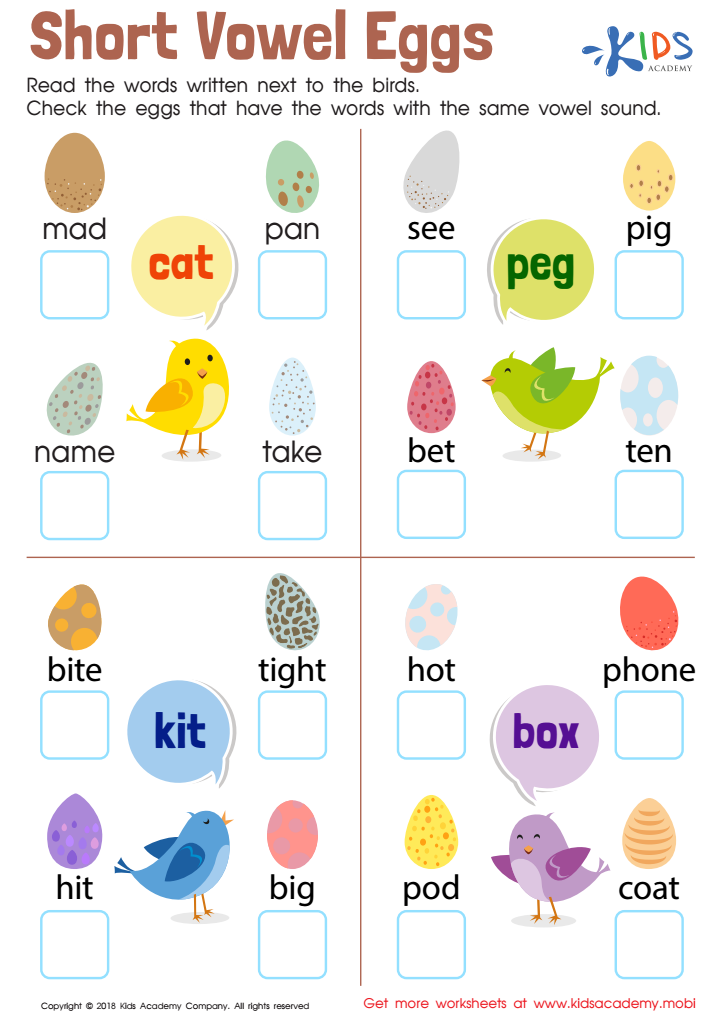
Short Vowel Eggs Worksheet
 Assign to My Students
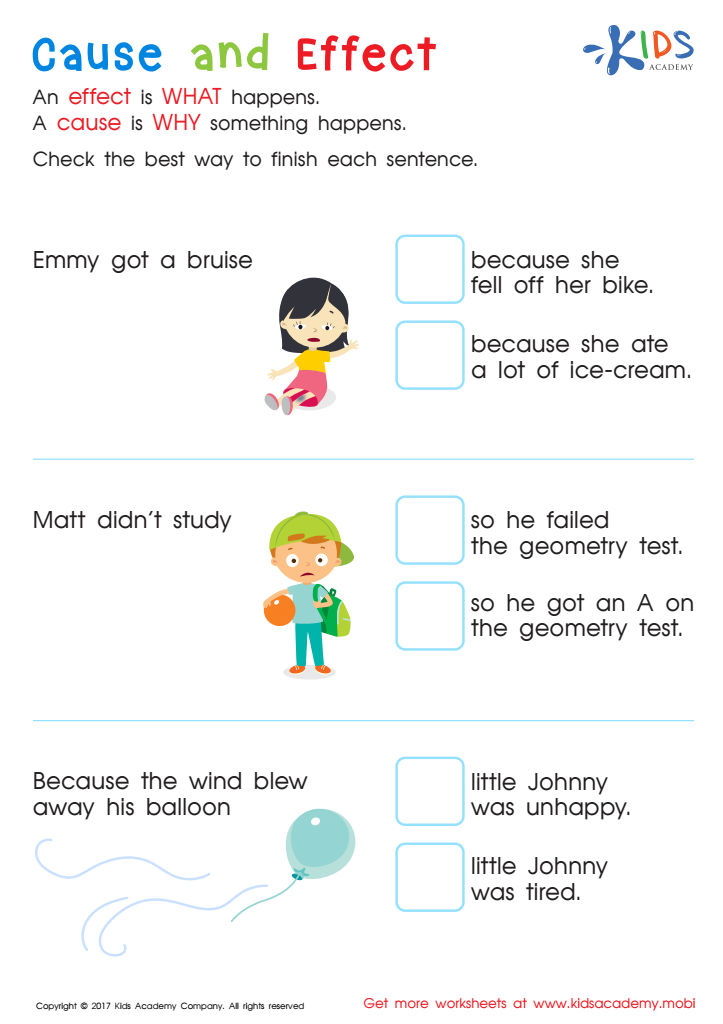
Cause and Effect Worksheet
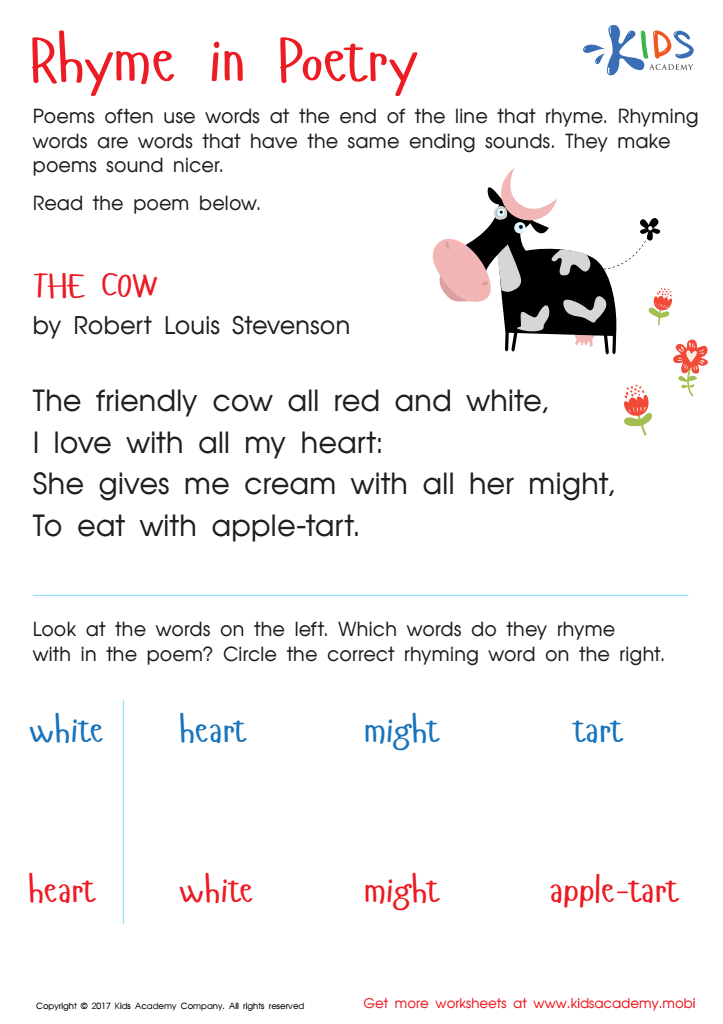
Rhyme In Poetry Worksheet








Vocabulary enrichment is crucial for children aged 6-8, as it serves as the foundation for their reading and overall academic success. During these formative years, children experience rapid cognitive development, and enhancing their vocabulary can significantly impact their comprehension and communication skills. Reading is not just about decoding words; it involves understanding context and meanings, which a rich vocabulary facilitates.
Parents and teachers should prioritize vocabulary enrichment because it directly influences children's confidence and enthusiasm towards reading. When children encounter unfamiliar words, it can lead to frustration and disinterest. By engaging in vocabulary-building activities, such as reading a diverse range of books, playing word games, and discussing new words, adults can create a supportive environment that fosters a love for language.
Moreover, a strong vocabulary supports critical thinking and expression, allowing children to articulate their thoughts and feelings more effectively. This skill extends beyond the classroom, contributing to better social interactions and problem-solving abilities in daily life. Ultimately, investing in vocabulary enrichment during these early years equips children with essential tools to navigate their educational journeys and future challenges, setting a solid foundation for lifelong learning. Thus, collective effort from parents and teachers is indispensable in this process.








