Historical Knowledge Normal Reading Comprehension Worksheets for Ages 6-8
5 filtered results
-
From - To
Discover our "Historical Knowledge Normal Reading Comprehension Worksheets" tailored for children ages 6-8! These engaging worksheets are designed to enhance young learners' reading skills while immersing them in fascinating historical narratives. Each worksheet features age-appropriate texts that ignite curiosity about significant events and figures in history. Questions encourage critical thinking and comprehension, helping students develop essential literacy skills in an enjoyable way. Perfect for classroom use or home education, our worksheets provide a fun and informative way to foster a love for history and reading. Visit our website to access a variety of printable resources that promote learning through exploration!
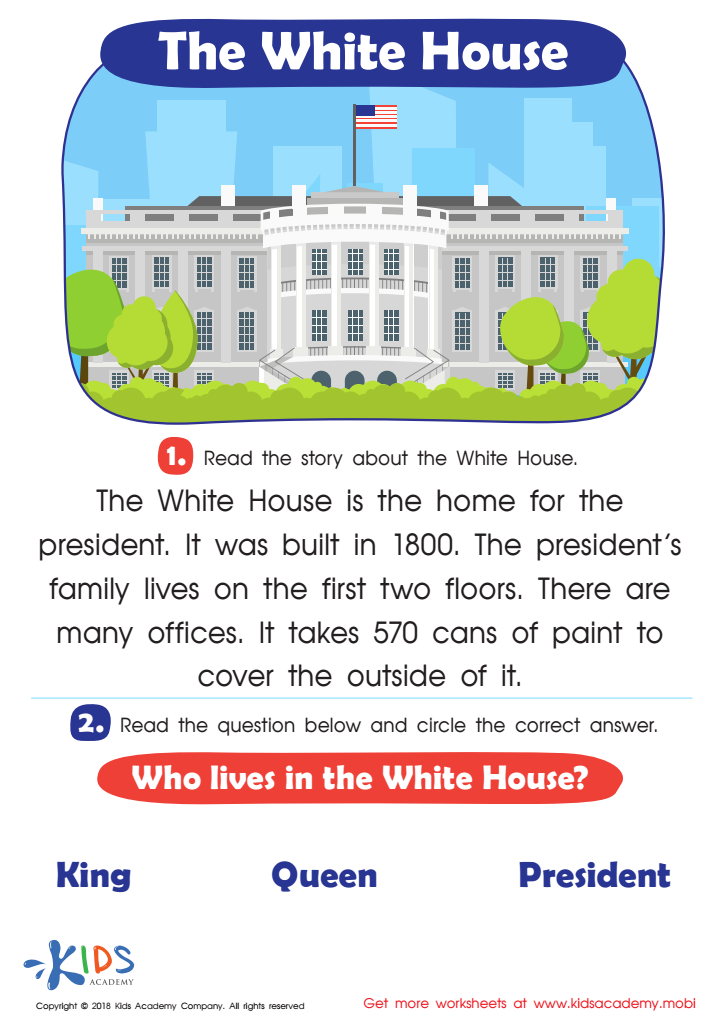
White House Worksheet
 Assign to My Students
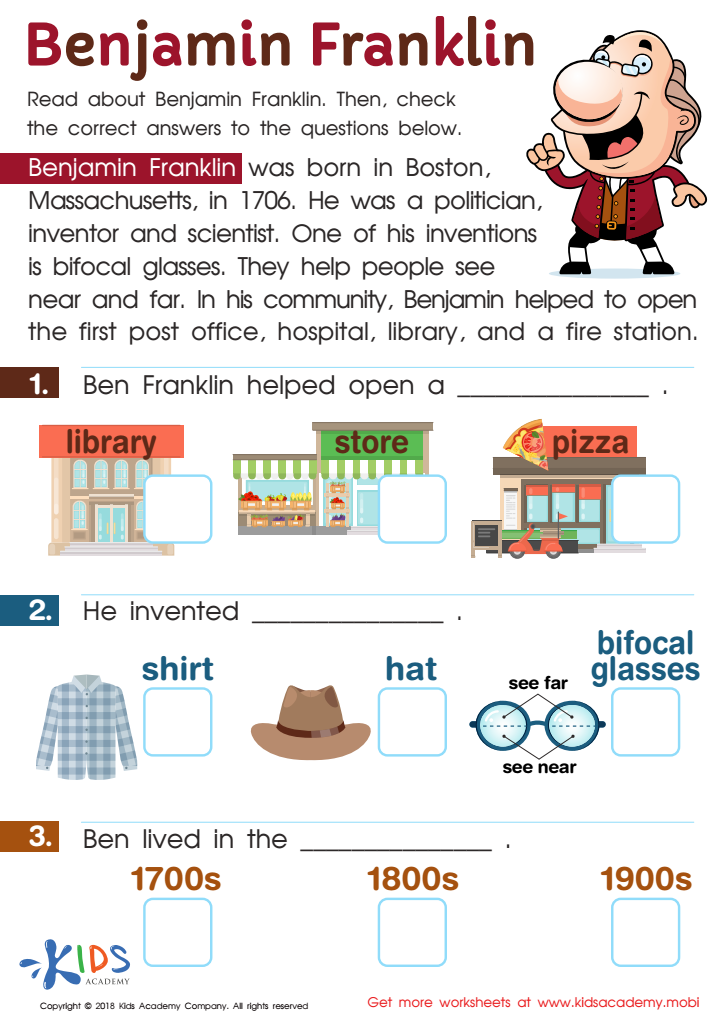
Benjamin Franklin Worksheet
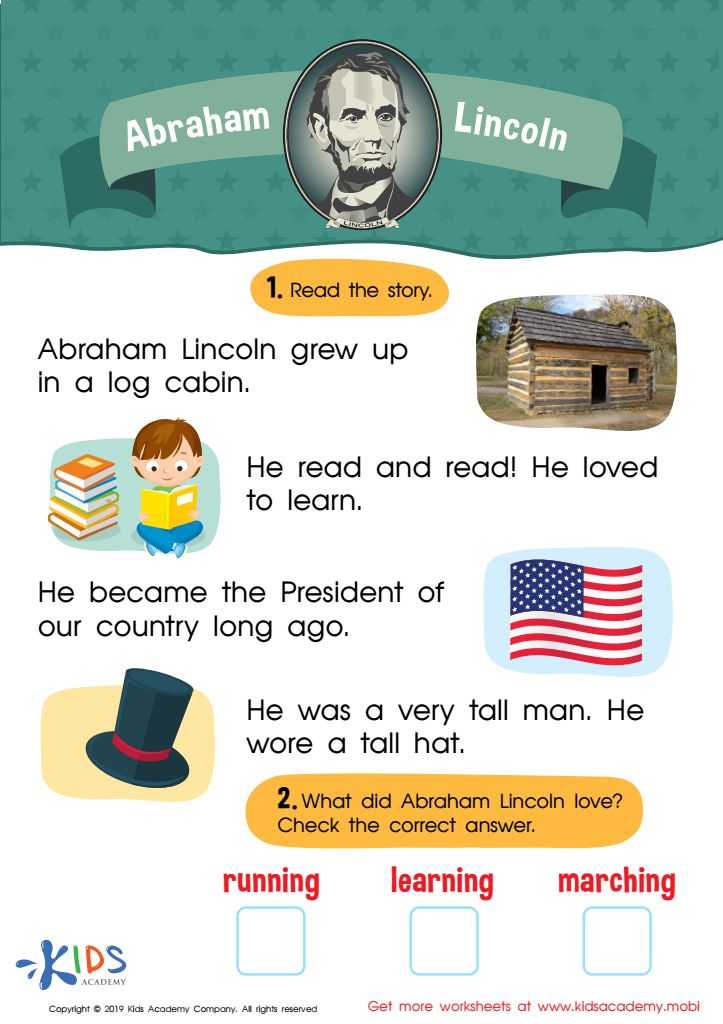
Abraham Lincoln Worksheet
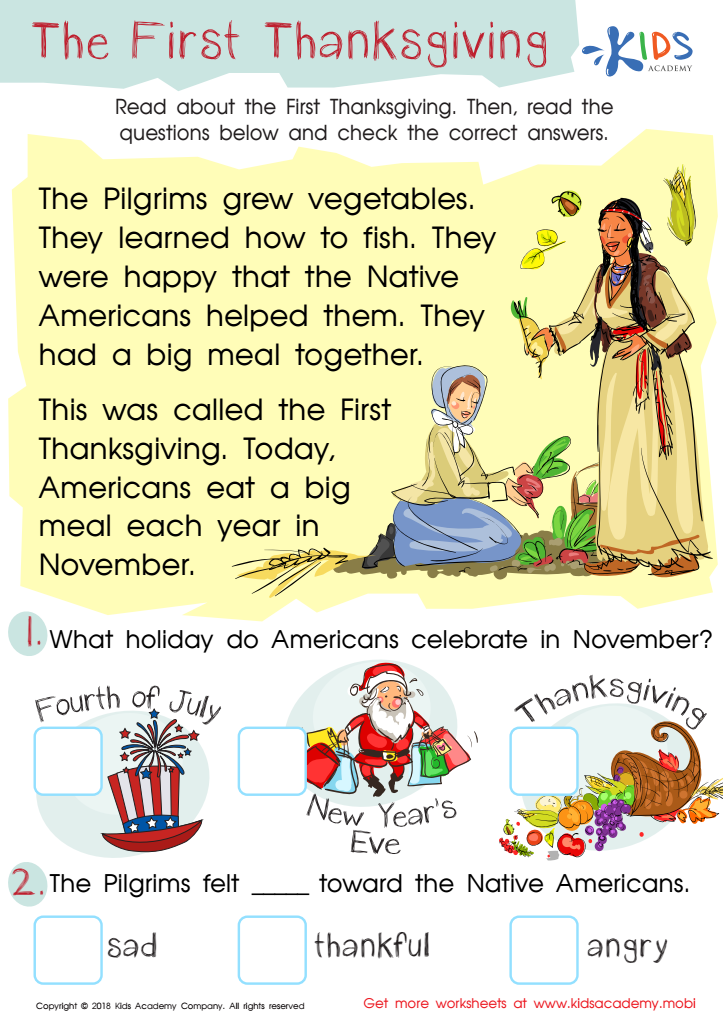
Assessment: First Thanksgiving Worksheet
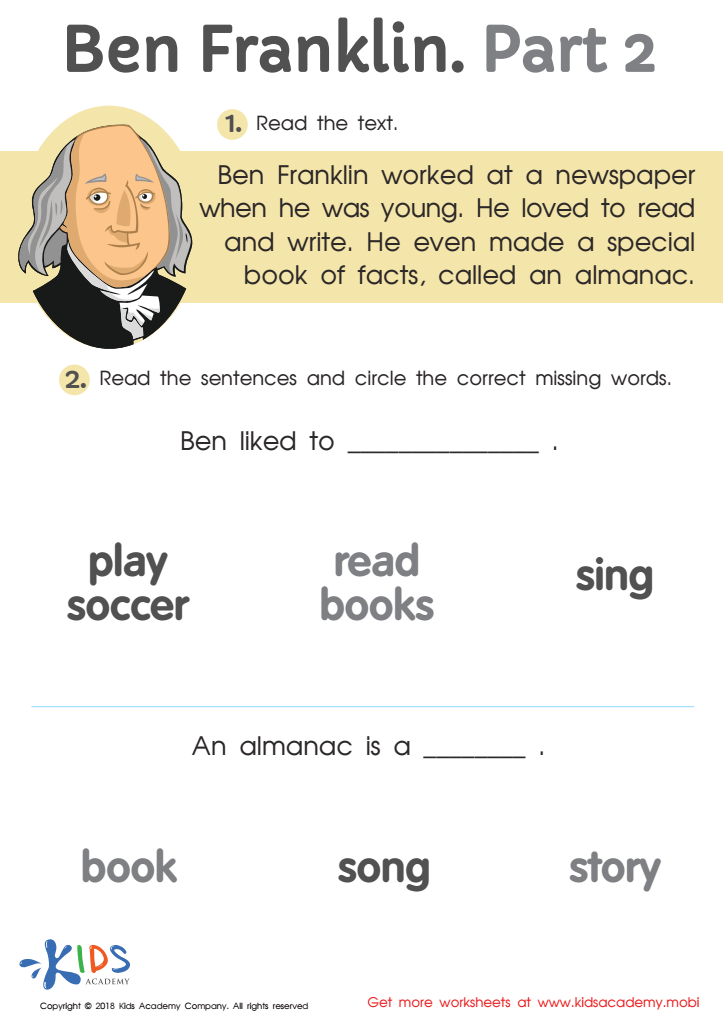
Ben Franklin Part 2 Worksheet








Historical knowledge is vital for reading comprehension among children aged 6-8 because it enriches their understanding of texts, enhances critical thinking, and fosters a sense of identity. At this developmental stage, children are beginning to grapple with abstract concepts and learn about the world around them. Exposure to historical topics not only broadens their vocabulary but also provides context for narratives they encounter in books. Engaging with historical concepts encourages children to make connections between the past and the present, fostering an appreciation for their own heritage and that of others.
For parents and teachers, focusing on historical knowledge cultivates curiosity and sparks discussions that encourage deeper comprehension. When children can relate to characters or events in stories, they are better equipped to interpret meaning, make inferences, and ask relevant questions. Moreover, by navigating diverse perspectives from history, children develop empathy and critical evaluation skills essential for decoding complex texts. This foundation is crucial as they progress into more sophisticated reading materials. Ultimately, integrating historical knowledge into early education not only enhances reading comprehension but also helps shape informed, engaged, and compassionate individuals who understand their role within a broader societal context.








