Understanding Sequences Normal Reading Comprehension Worksheets for Ages 6-8
3 filtered results
-
From - To
Discover the exciting world of sequences with our "Understanding Sequences Normal Reading Comprehension Worksheets" designed specifically for ages 6-8! These engaging worksheets help young learners enhance their reading comprehension skills by focusing on identifying, interpreting, and organizing information. Through fun and age-appropriate activities, children will learn to recognize the order of events in stories, enabling them to grasp essential concepts of sequence and chronology. Perfect for classroom use or at-home learning, our resources foster critical thinking and literacy skills. Unlock your child's potential in reading with worksheets that make learning enjoyable and effective! Start exploring sequences today!
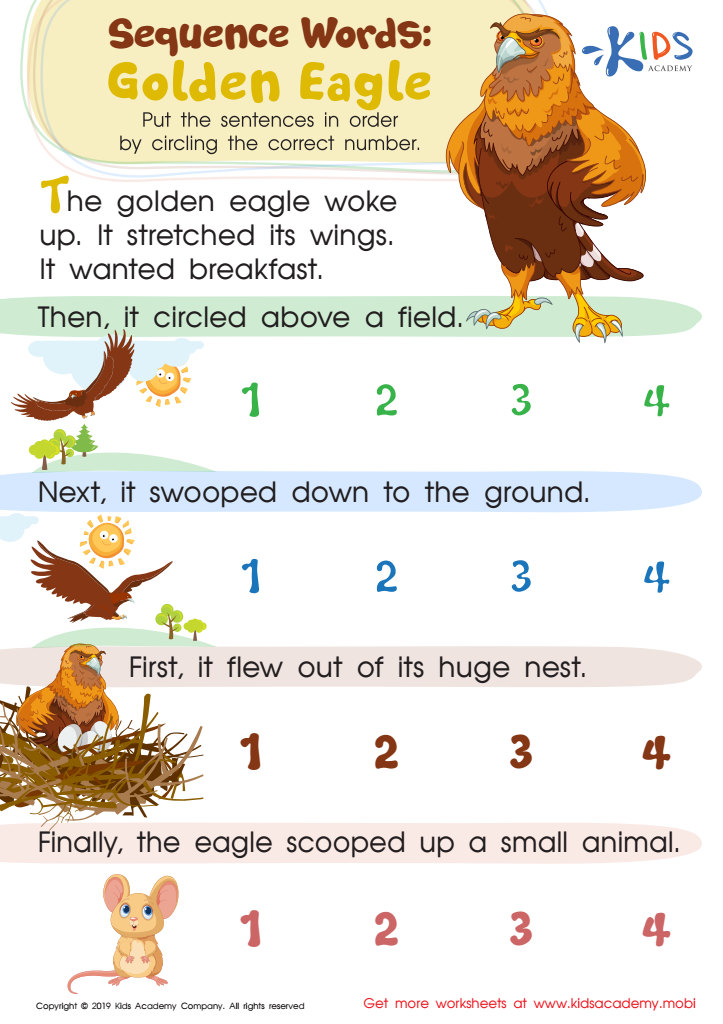
Sequence Word Eagle Worksheet
 Assign to My Students
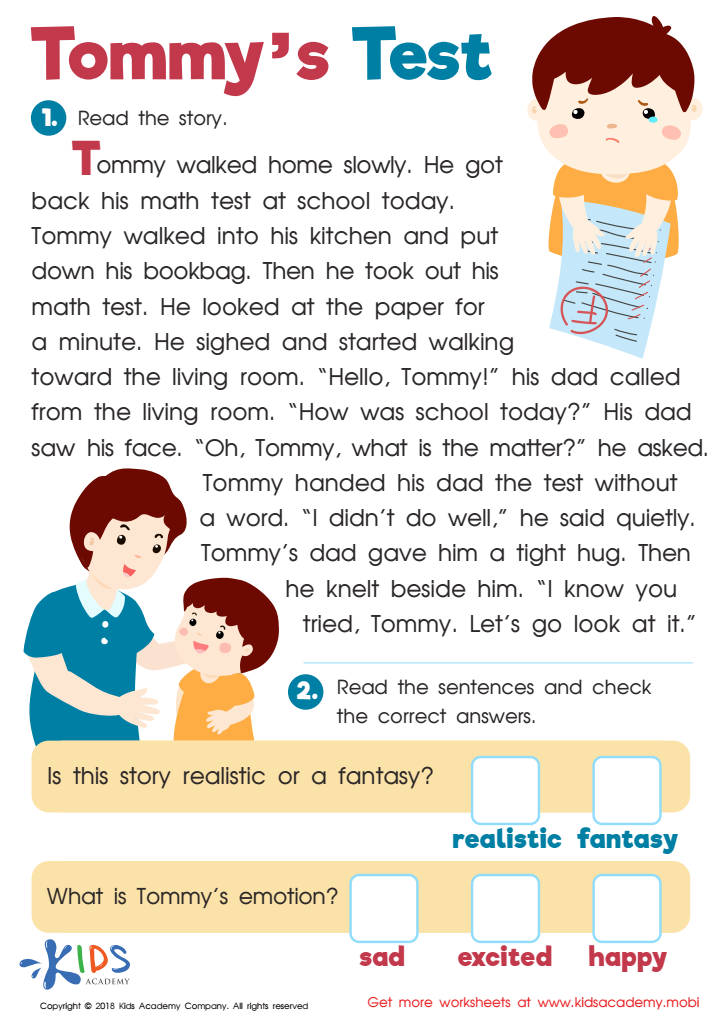
Tommys Test Worksheet
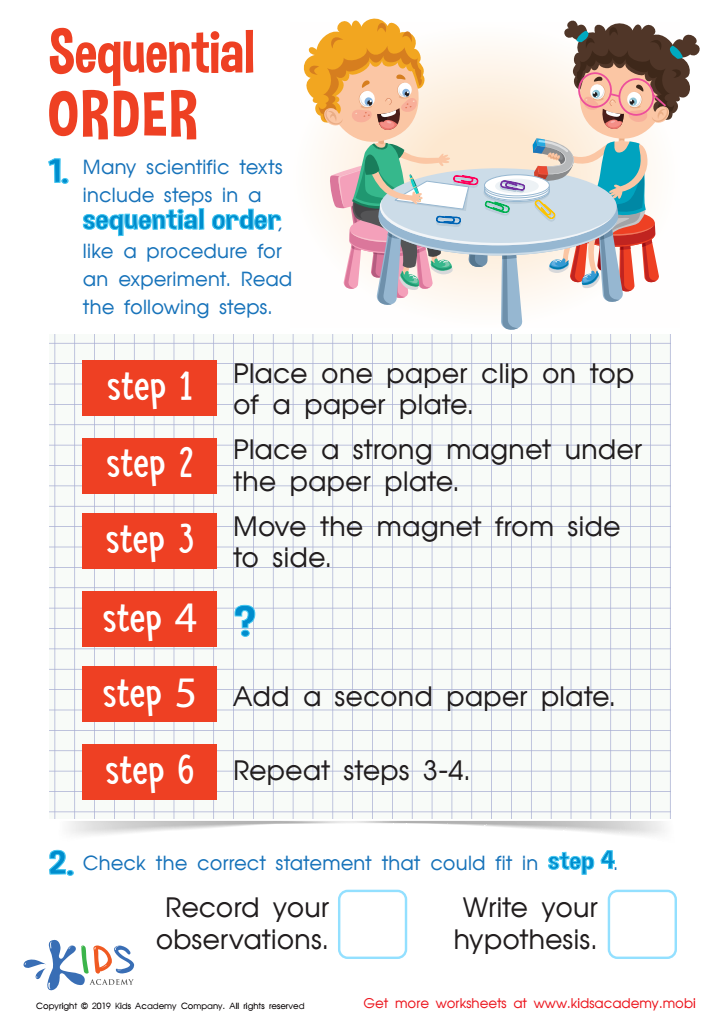
Sequencential Order Worksheet







Understanding sequences in reading comprehension is crucial for children aged 6-8, as it serves as a foundational skill for overall literacy development. When students grasp the concept of sequences, they learn to recognize the order in which events or ideas are presented in a text. This skill enhances their ability to follow narratives, solve problems, and analyze information effectively.
Parents and teachers should prioritize teaching sequential understanding because it helps children make connections between different parts of a story, which in turn fosters critical thinking and inference skills. Mastering sequence lays the groundwork for more complex comprehension strategies, enabling children to summarize or predict outcomes based on a story's progression.
Additionally, understanding sequences aids in improving vocabulary and syntax, as children become more adept at identifying transition words and narrative structures. Practicing this skill also boosts engagement, as children become more invested in a text when they can anticipate what will happen next. Ultimately, a strong grasp of comprehension sequences empowers young readers, equipping them with the necessary tools for academic success and lifelong learning. By focusing on this important skill, parents and teachers can support children's development and encourage a love for reading.








