Identifying story elements Normal Reading Fiction Worksheets for Ages 6-8
3 filtered results
-
From - To
Explore our “Identifying Story Elements” Normal Reading Fiction Worksheets, specially designed for children aged 6-8. These engaging worksheets help young readers recognize key story components such as characters, settings, plots, and conflicts. Featuring vibrant illustrations and age-appropriate language, each activity fosters comprehension skills and encourages critical thinking. As kids work through these exercises, they'll enhance their understanding of how stories are structured, making reading both fun and educational. Perfect for classroom use or at-home learning, these resources support early literacy development and ignite a lifelong love for reading. Download your worksheets today and watch your child’s storytelling ability flourish!
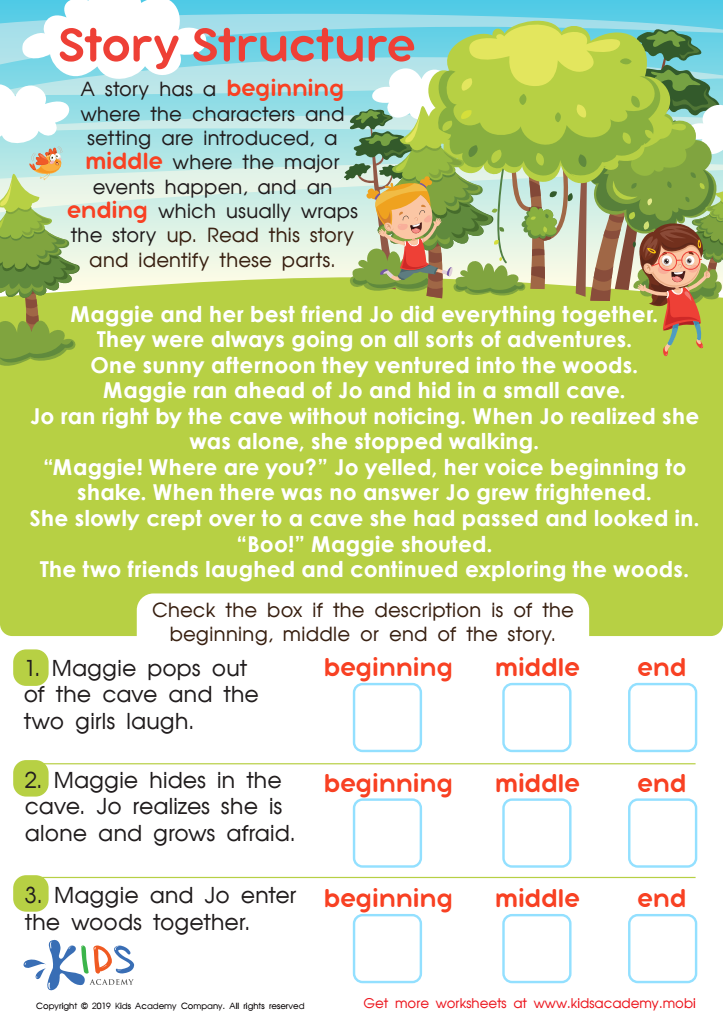
Story Structure Worksheet
 Assign to My Students
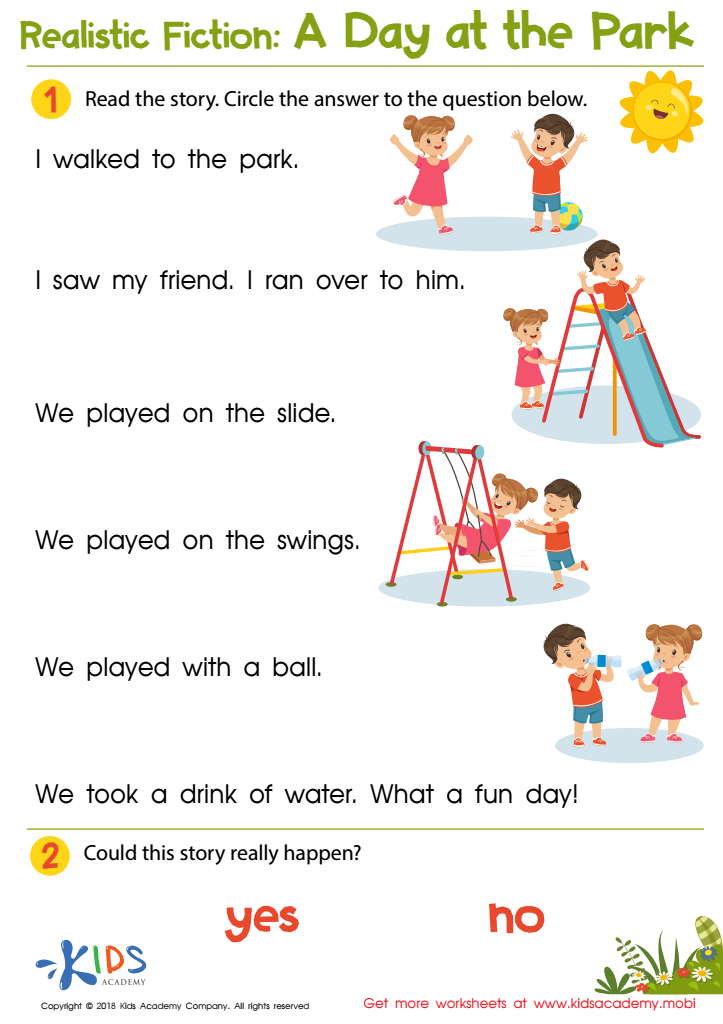
A Day at the Park Worksheet
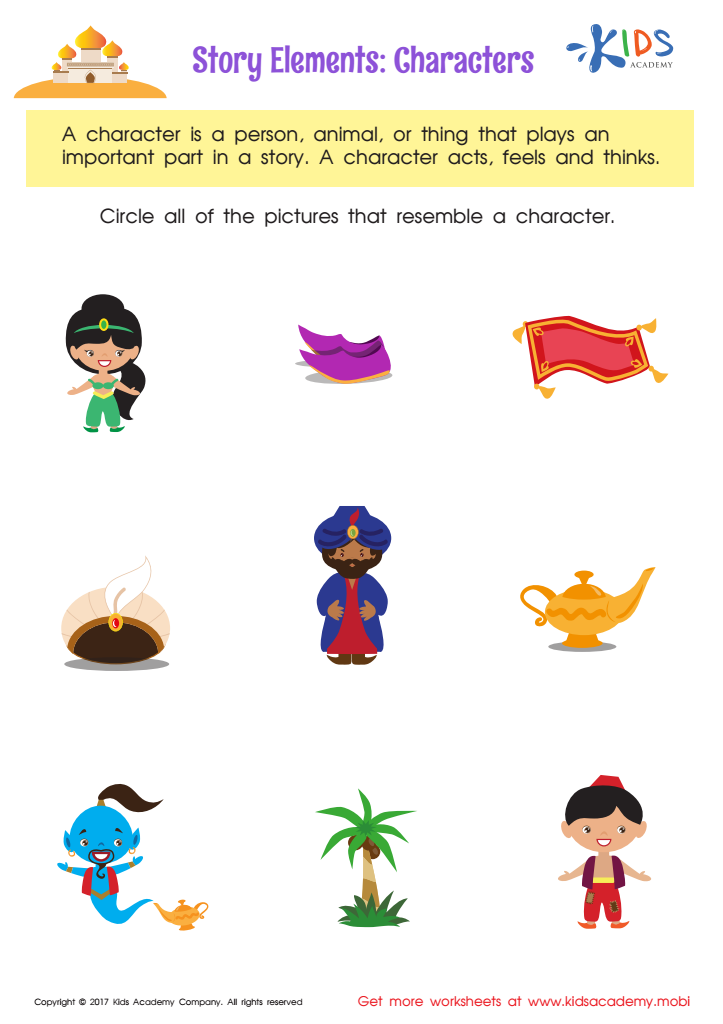
Story Elements Printable



.jpg)




Identifying story elements in fiction is crucial for children aged 6-8 as it lays the foundation for effective reading and comprehension skills. Story elements—such as characters, setting, plot, conflict, and theme—help young readers understand the structure of narratives, making it easier for them to connect with the material. When parents and teachers emphasize these elements, they foster critical thinking, as children analyze and discuss what they are reading.
Additionally, recognizing story elements enhances vocabulary and improves language skills. As children describe characters or plots, they build expressive language that enriches their writing and conversational abilities.
Engaging with story elements also fuels creativity and imagination. Children learn to envision scenes and empathize with characters, fostering a love for reading that promotes lifelong learning. Insights drawn from identifying these elements encourage discussions that further develop social skills and emotional intelligence.
Ultimately, this foundational skill equips children to tackle more complex texts in the future. By prioritizing the identification of story elements, parents and teachers set children on a path toward academic success and a deeper appreciation for literature. This investment not only boosts reading proficiency but also instills a sense of enjoyment in exploring stories.







