Moral lesson understanding Normal Reading Fiction Worksheets for Ages 6-8
5 filtered results
-
From - To
Our "Moral Lesson Understanding Normal Reading Fiction Worksheets for Ages 6-8" are thoughtfully designed to enhance young learners' comprehension skills while instilling essential life values. Through engaging fiction stories, these worksheets help children identify and understand significant moral lessons, fostering empathy and ethical thinking. Each worksheet includes reading passages followed by questions and activities that promote critical thinking and reflection on good behavior, honesty, kindness, and more. Ideal for developing both language arts proficiency and character education, these resources are perfect for parents and teachers aiming to support holistic development in young readers. Transform reading time into character-building with our fun, educational worksheets.
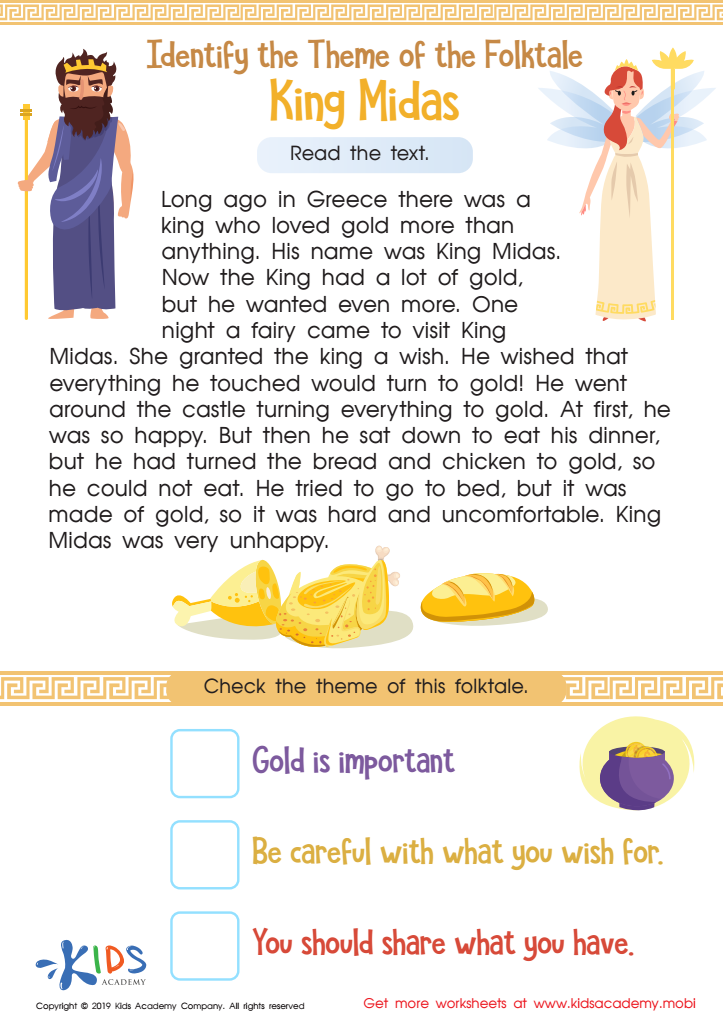
King Midas Worksheet
 Assign to My Students
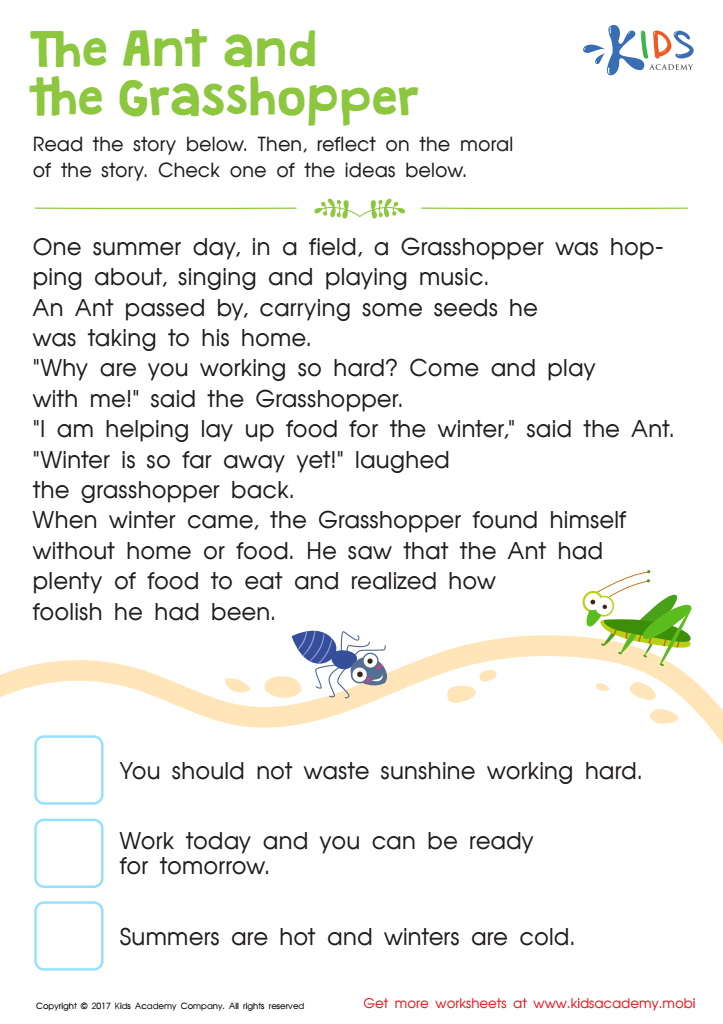
The Ant and The Grasshopper Printable
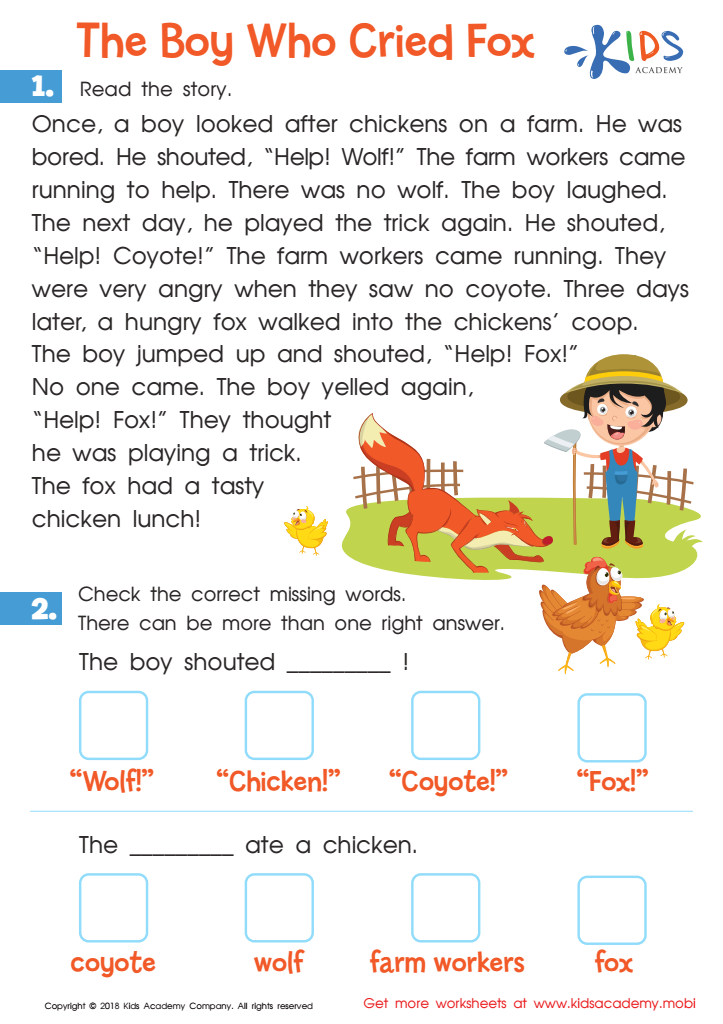
The Boy Who Cried Fox Worksheet
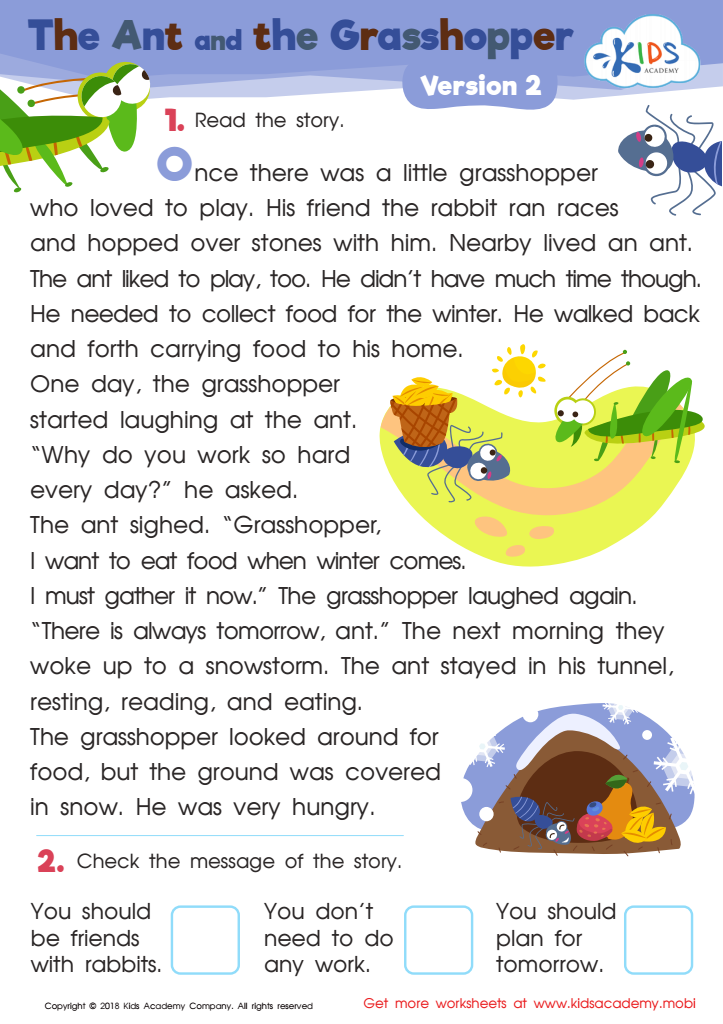
The Ant and The Grasshopper Version 2 Worksheet
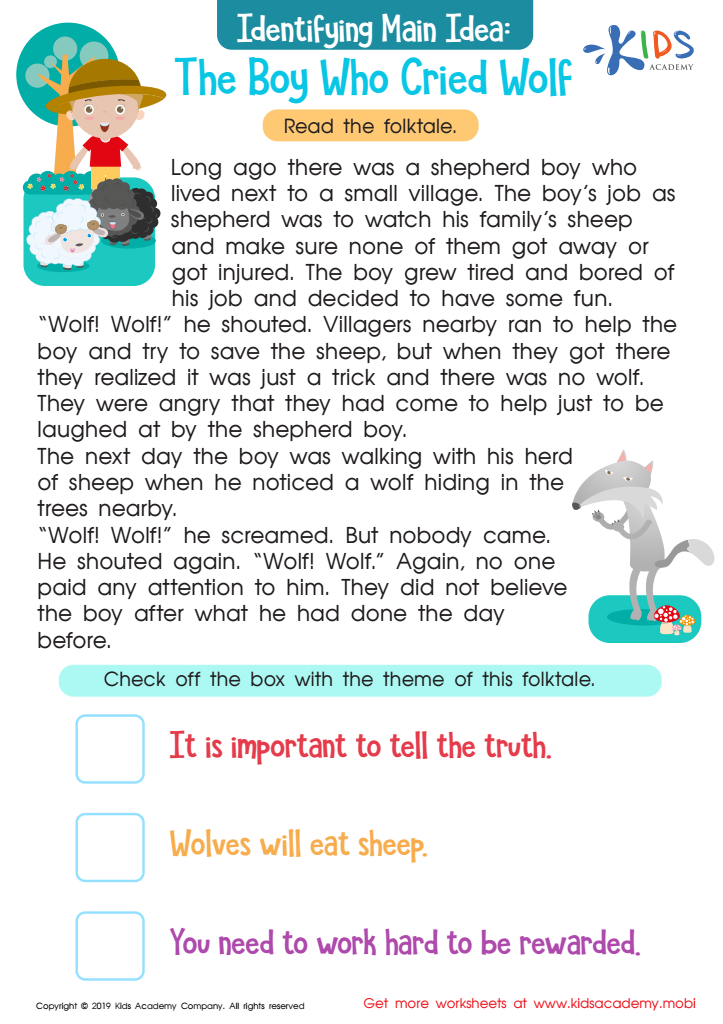
The Boy Who Cried Wolf Part 2 Worksheet







Moral lesson understanding in normal reading fiction for ages 6-8 is paramount for children’s holistic development. At these formative ages, children are not only honing their reading skills but also shaping their value systems. Stories equipped with moral lessons often cloak valuable teachings in engaging narratives that capture children's imagination. As readers journey with characters, they navigate real-life dilemmas and outcomes, fostering empathy, critical thinking, and ethical reasoning.
Parents and teachers should prioritize this because moral lessons absorbed through fiction have a lasting impact. When children witness characters showing kindness, honesty, or bravery, they internalize these virtues, promoting positive behavioral models. Moreover, discussing these stories enables meaningful conversations about right and wrong, deepening children's moral comprehension beyond abstract concepts into actionable understanding.
Reading fiction also enhances cognitive and emotional growth. As children relate to characters and scenarios, they improve their ability to understand different perspectives, reinforcing social skills essential for healthy relationships. Additionally, children who can comfortably resolve moral quandaries are often more confident and conscientious individuals.
Ultimately, nurturing moral lesson comprehension through fiction equips children with the wisdom to navigate their world thoughtfully and ethically, laying a strong foundation for their future contributions to society.







