Story analysis Normal Reading Fiction Worksheets for Ages 6-8
3 filtered results
-
From - To
Dive into the world of storytelling with our "Story Analysis Normal Reading Fiction Worksheets" designed for ages 6-8! These engaging worksheets foster critical thinking and comprehension by guiding young readers through the essential elements of fiction. Children will explore character development, plot structure, and thematic messages, enhancing their understanding of literature. Each worksheet encourages creativity and personal expression, making reading a fun and interactive experience. Perfect for classroom use or at-home learning, our resources help young learners improve their analytical skills while deepening their love for reading. Empower your child's reading journey with our thoughtfully crafted story analysis worksheets today!
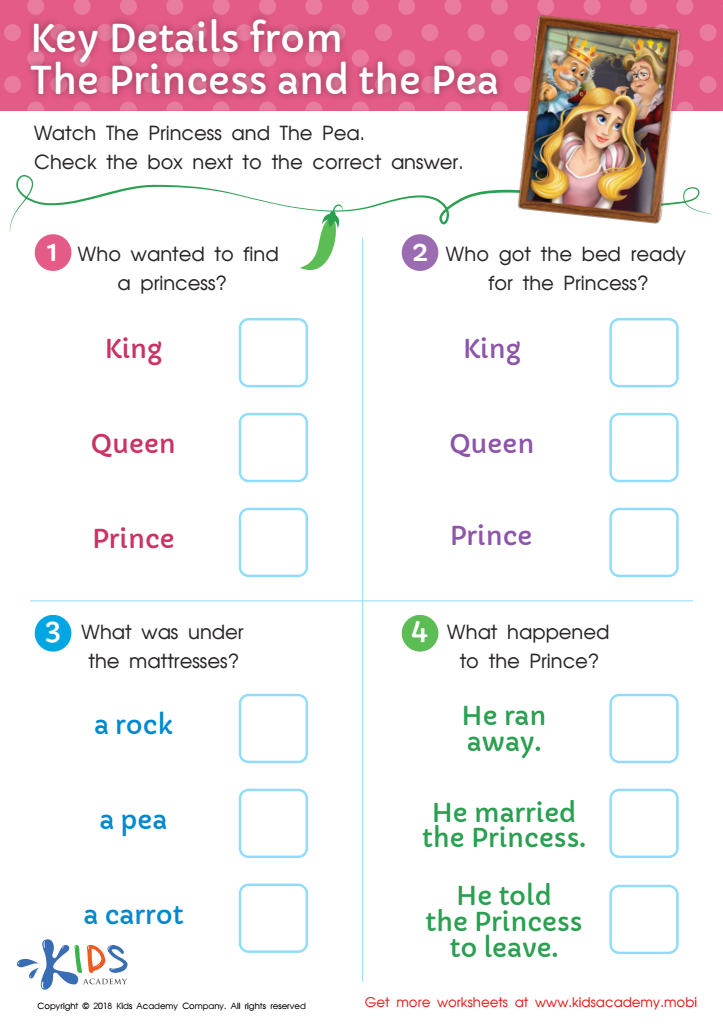
Key Details from the Princess and the Pea Worksheet
 Assign to My Students
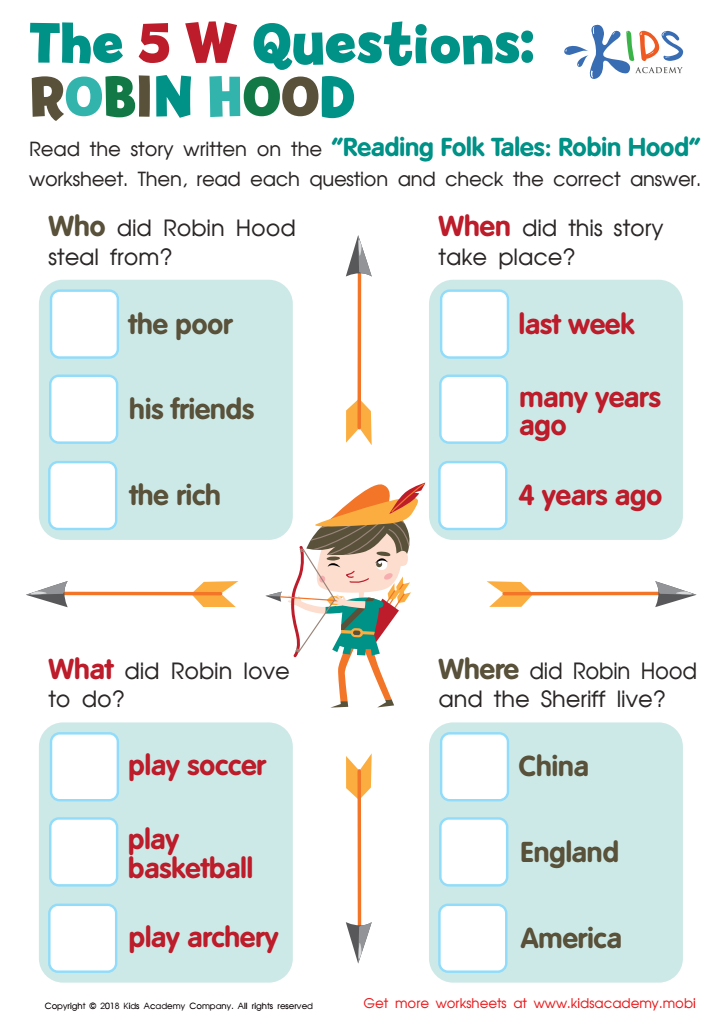
The 5 W Questions: Robin Hood Worksheet
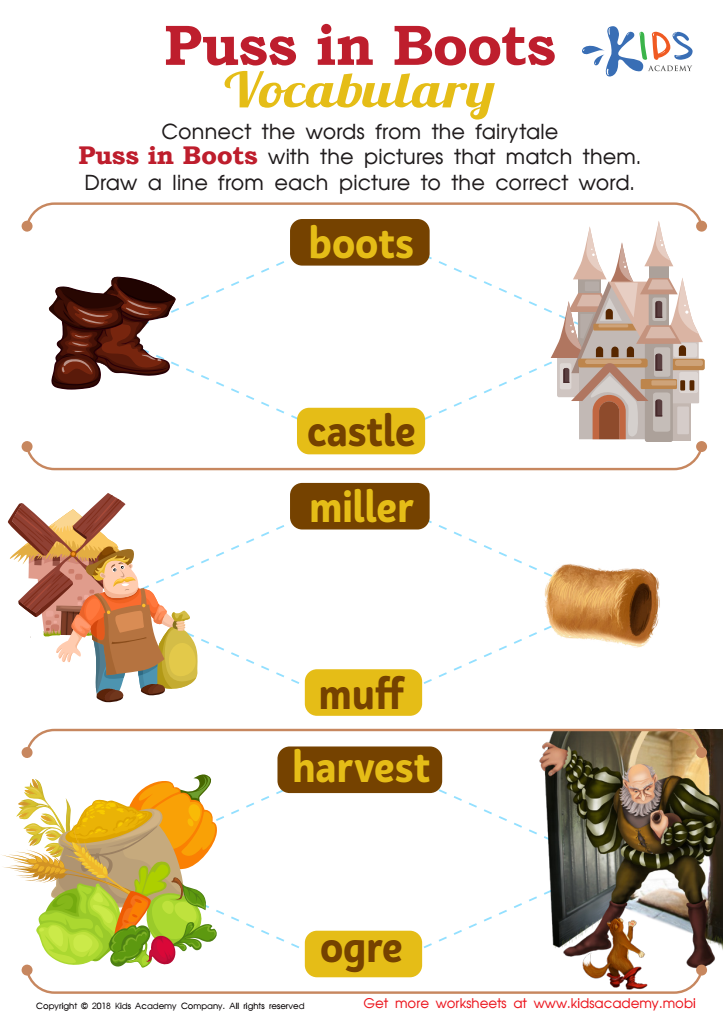
Puss in Boots Vocabulary Worksheet








Story analysis, particularly in normal reading fiction for ages 6-8, is crucial for the development of young learners. At this age, children are not only exploring the world of literature but also enhancing their critical thinking skills. By analyzing stories, children learn to identify themes, characters, and plots, encouraging them to make connections between their experiences and the narratives they read.
Parents and teachers should care about story analysis because it promotes active engagement with the text. As children discuss what they read, they develop language skills, expand their vocabulary, and practice articulating their thoughts. This engagement fosters comprehension, enabling them to understand the nuances of stories, such as moral lessons and emotional intelligence.
Moreover, story analysis cultivates creativity. Children learn to envision scenarios, predict outcomes, and even create their narratives. This imaginative exploration is essential for cognitive development and nurtures a passion for reading. It also builds empathy, as children consider different perspectives and emotions within the stories.
Ultimately, facilitating story analysis equips young learners with foundational skills necessary for academic success, personal growth, and a lifelong love of reading. By prioritizing this practice, parents and teachers can significantly impact a child's educational journey.







