Reading practice Normal Reading Non-Fiction Worksheets for Ages 6-8
4 filtered results
-
From - To
Enhance your child's reading skills with our engaging Non-Fiction Worksheets designed for ages 6-8. At Kids Academy, our meticulously crafted resources focus on real-world topics, building comprehension and critical thinking abilities. Each worksheet is tailored to captivate young minds, improve vocabulary, and foster a love for learning through age-appropriate content. Perfect for both school and home use, these tools support young readers in understanding informational text and developing essential reading strategies. Start your child's journey to becoming a proficient reader with our enjoyable, educational, and easy-to-use worksheets today.
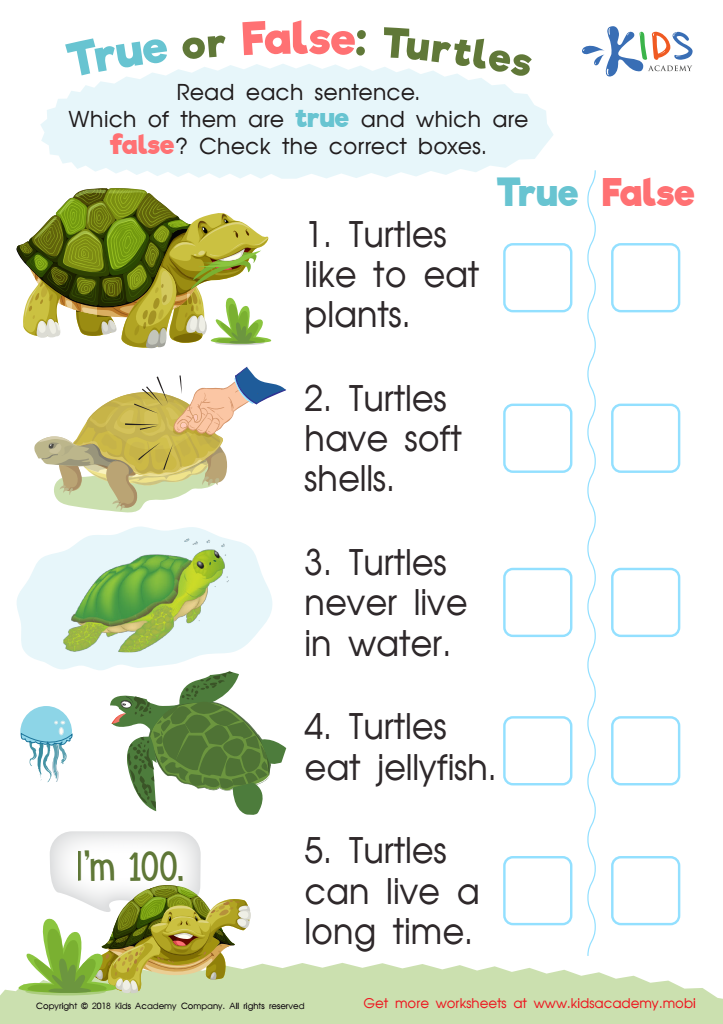
True or False: Turtles Worksheet
 Assign to My Students
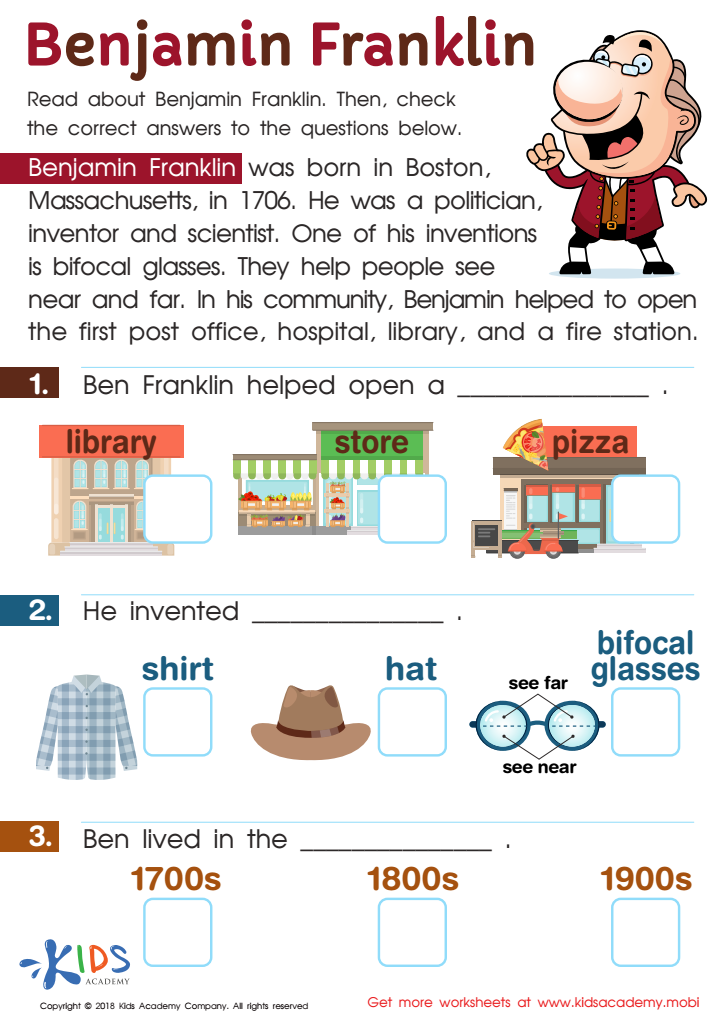
Benjamin Franklin Worksheet
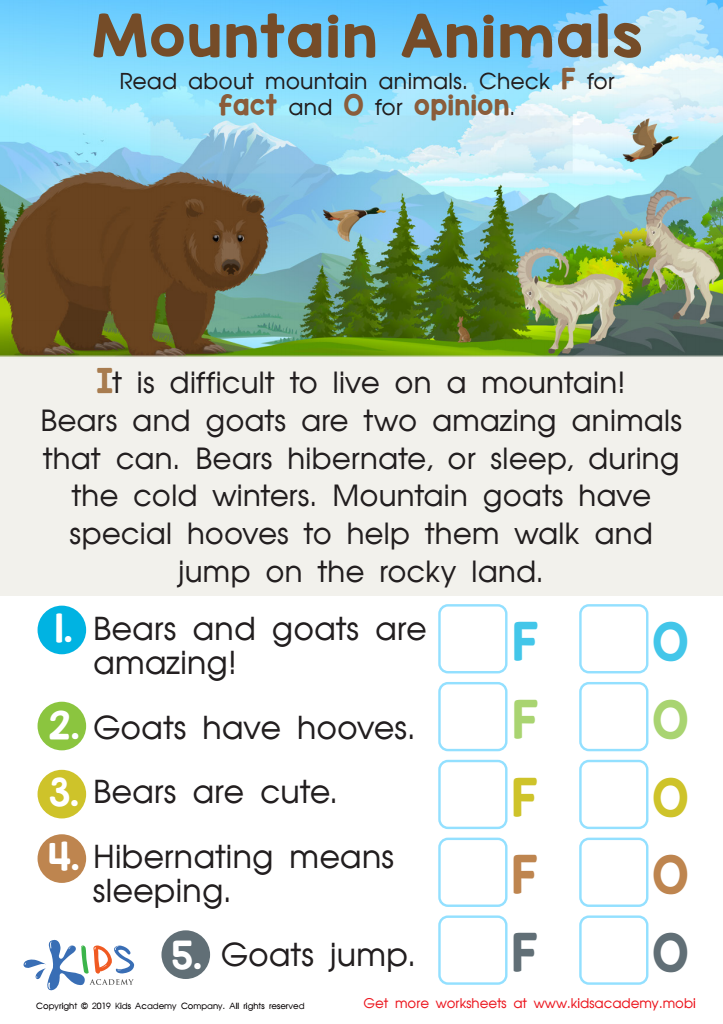
Mountain Animals Worksheet
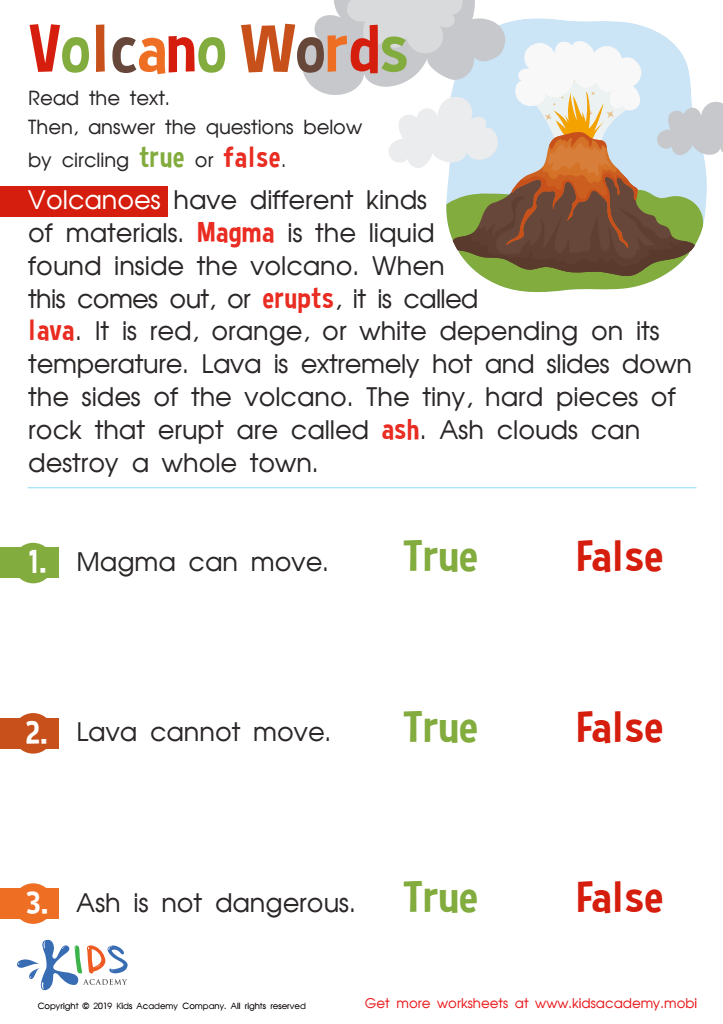
Volcano Words Worksheet








Reading practice in the early years is crucial for children's cognitive and emotional development, and reading non-fiction can be particularly beneficial for ages 6-8. This developmental window is a time when children are naturally curious about the world around them. Non-fiction books provide a wealth of information that can help satisfy their inquisitiveness while imparting essential knowledge about various topics. By introducing children to factual texts, parents and teachers can foster a love for learning and open doors to subjects like science, history, and geography.
Additionally, reading non-fiction helps develop critical thinking skills. It teaches children to differentiate between facts and opinions and encourages them to make sense of real-world information. This kind of reading also builds vocabulary and comprehension skills, essential tools for overall academic success.
Furthermore, non-fiction can conect to children's interests more directly. For example, a child fascinated by dinosaurs or space will find non-fiction books on these subjects engaging parts of the text-intensive STEM challenges.
Regular reading practice, through a mix of fiction and non-fiction, also establishes a routine that can enhance focus and attention span. For these reasons, integrating non-fiction reading into daily activities at home and school is pivotal. Parents and teachers should encourage this practice to nurture well-rounded, knowledgeable, and critically-minded individuals.