Recognizing Patterns Normal Science Worksheets for Ages 6-8
3 filtered results
-
From - To
Discover fun and engaging Recognizing Patterns Normal Science Worksheets tailored for ages 6-8! Designed to spark curiosity, these worksheets help young learners identify and understand patterns in the natural world. Children will enhance their observational skills while exploring exciting topics, from animal behaviors to weather changes. Each activity is crafted to encourage critical thinking and makes science accessible and enjoyable. Perfect for both classroom settings and at-home learning, these worksheets support seamless skill development in a playful format. Join us in nurturing a love for science in your child through interactive and impactful learning experiences!
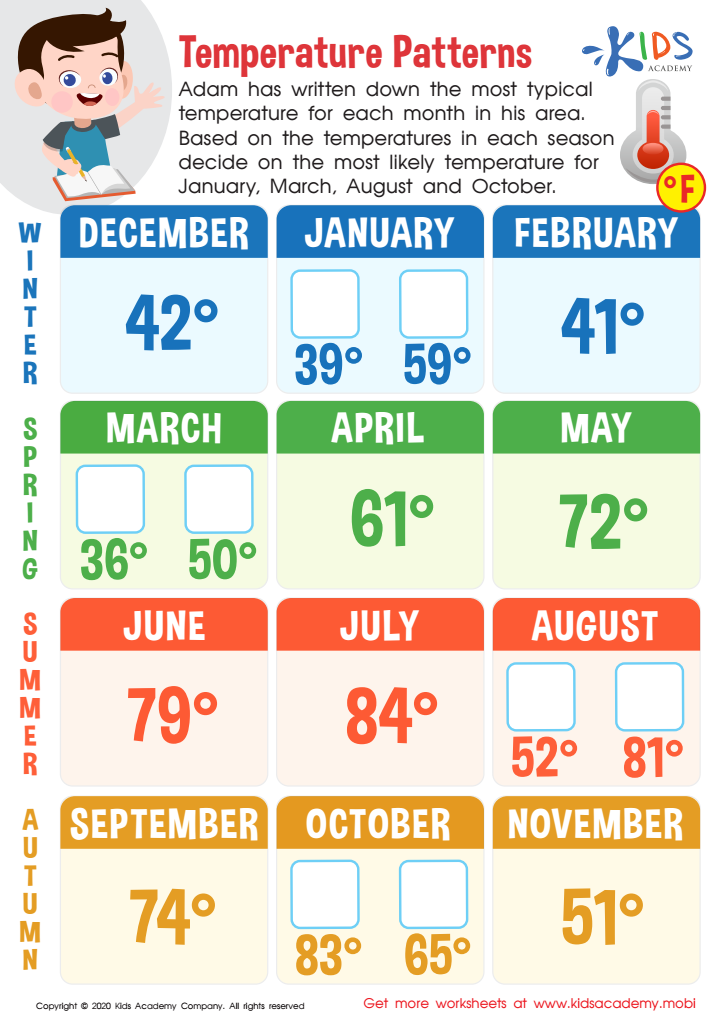
Temperature Patterns Worksheet
 Assign to My Students
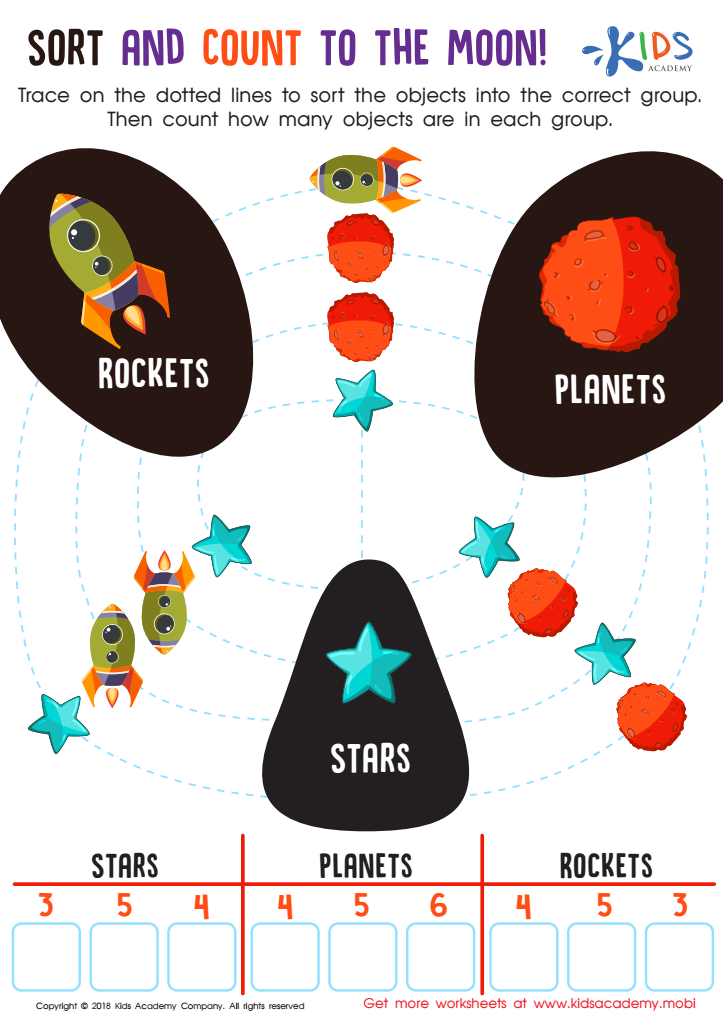
Sort and Count to the Moon Worksheet
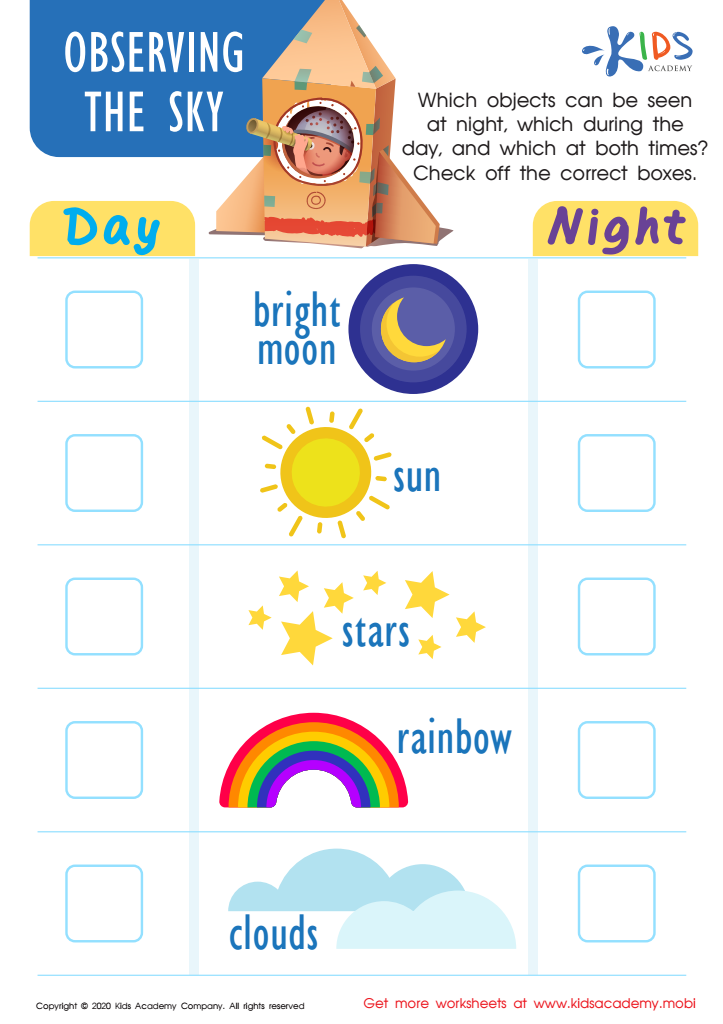
Observing the Sky Worksheet






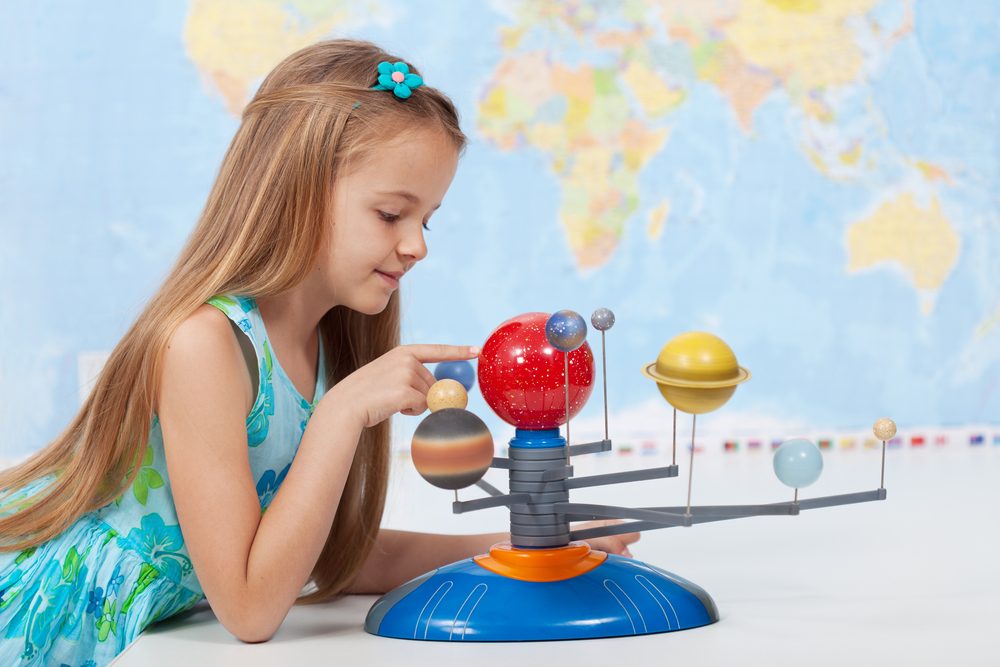
Recognizing patterns is fundamental in the early development of critical thinking skills among children aged 6-8. By identifying patterns, children begin to make connections in their learning and apply their knowledge across various subjects. This skill enhances their ability to predict outcomes, solve problems, and explore relationships in numbers, shapes, and even in everyday life.
For parents and teachers, fostering this ability is crucial for several reasons. Firstly, it lays the groundwork for future mathematical concepts such as addition, subtraction, and even more complex operations. Understanding patterns can make abstract ideas more tangible, helping children grasp their significance in real-world situations.
Additionally, recognizing patterns is a key component of scientific inquiry. It encourages observational skills, guiding students to explore and understand their environment in a structured way. For example, students can learn about seasons, weather changes, and animal behaviors through pattern recognition.
Ultimately, promoting pattern recognition nurtures a child's cognitive development, encouraging curiosity and creativity. It empowers them to be active learners who can critically analyze information. By valuing this skill, parents and teachers can significantly impact children’s academic journey, setting the stage for lifelong learning and discovery.







