Understanding constellations Normal Science Worksheets for Ages 6-8
3 filtered results
-
From - To
Uncover the wonders of the night sky with our "Understanding Constellations" science worksheets, specially designed for ages 6-8. These engaging, printable worksheets from Kids Academy gently introduce young learners to the basics of astronomy. Children will explore various constellations, learn to identify star patterns and their stories, and develop essential observational skills. Our fun and interactive approach ensures that science becomes an exciting adventure. Perfect for classroom or homeschooling use, these worksheets offer a fantastic way to spark curiosity in young scientists and deepen their appreciation of the universe. Unlock the magic of the stars today!
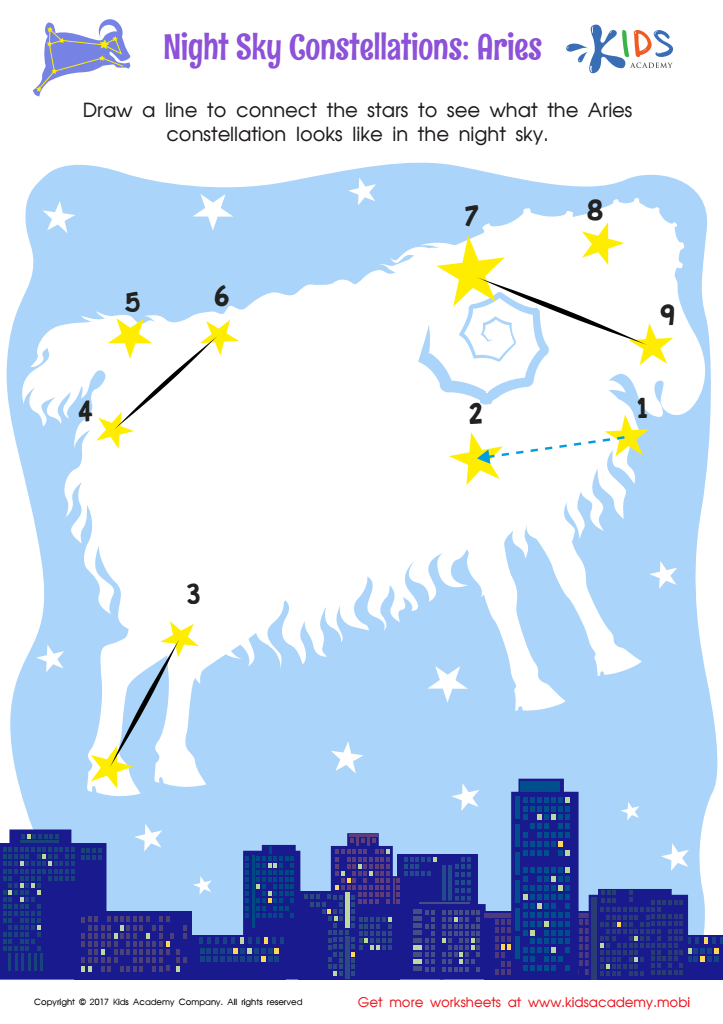
Night Sky Constellations: Aries Worksheet
 Assign to My Students
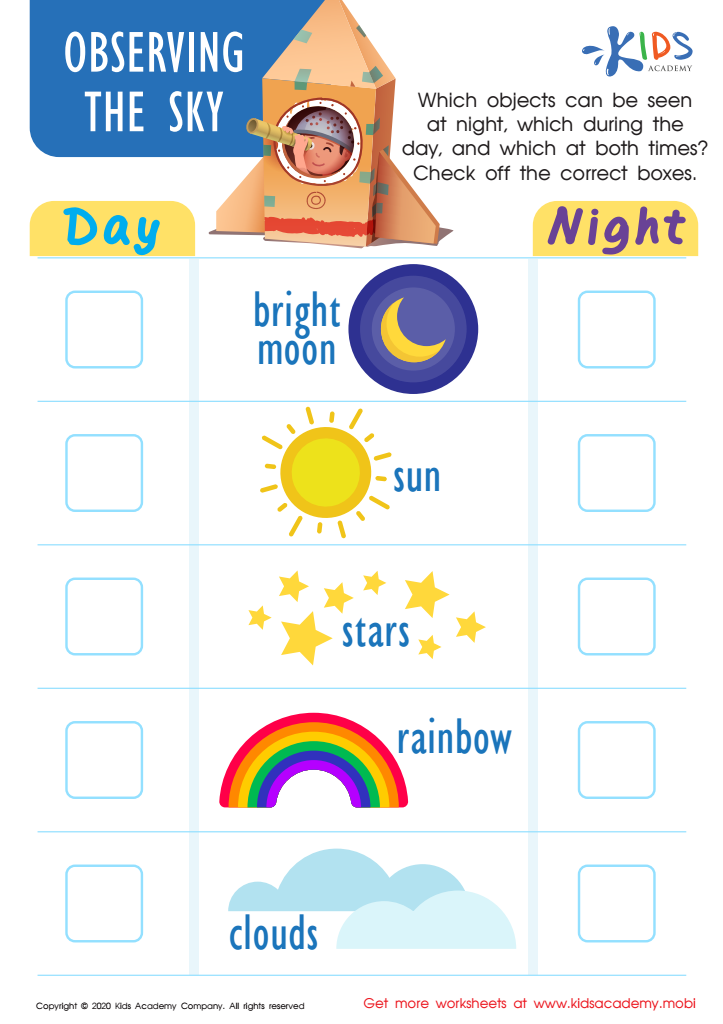
Observing the Sky Worksheet
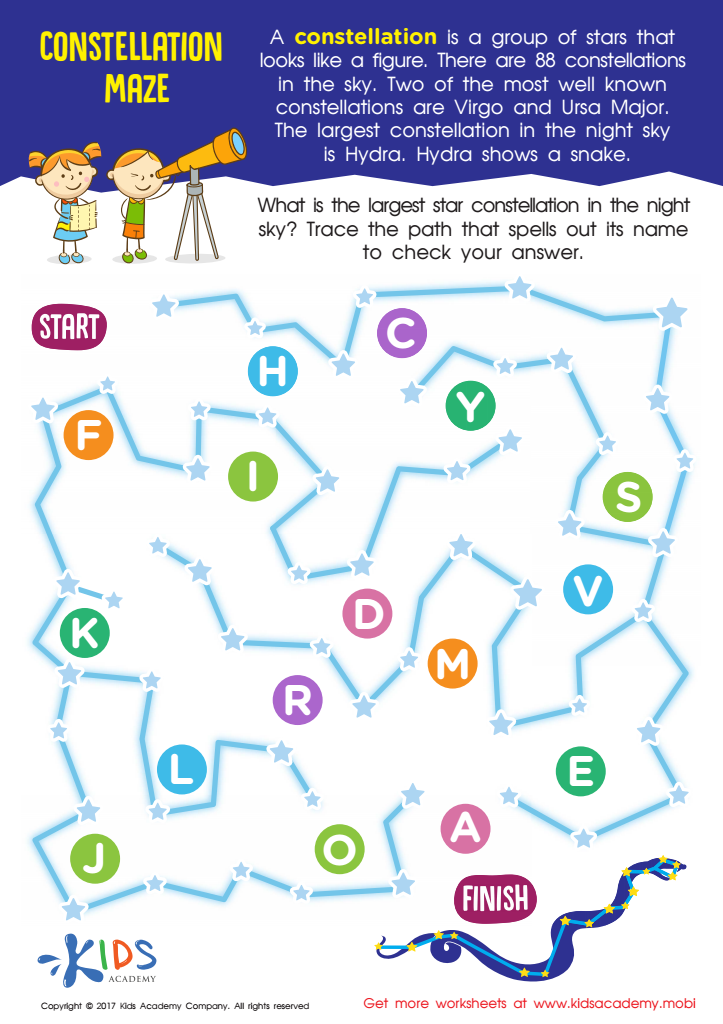
Constellations Worksheet








Understanding constellations at an early age is much more than learning about the stars; it's an engaging way to build a child's curiosity and foundational knowledge in science. For parents and teachers, teaching constellations offers numerous benefits.
First and foremost, it enhances a child's imagination and storytelling skills. Constellations come with rich mythological stories that captivate young minds. This storytelling aspect fosters creativity and helps children develop language and comprehension skills.
Secondly, learning about constellations introduces basic astronomical concepts. Kids start to grasp what stars are, recognize patterns in the sky, and understand that Earth is part of a larger universe. This early exposure can spark a lifelong interest in science, paving the way for a deeper understanding of more complex scientific topics later on.
Furthermore, it teaches critical observational skills. Identifying constellations requires looking for patterns and observing the night sky closely. These skills translate into improved attention to detail and better problem-solving abilities.
Lastly, lessons about constellations allow for family and class bonding activities. Stargazing becomes an enjoyable and educational activity for families, and teachers can incorporate it into a comprehensive science curriculum that includes hands-on learning.
By nurturing an early interest in constellations, parents and teachers support children's academic growth, imaginative development, and foster a lasting curiosity about the natural world.







