Understanding forces Normal Science Worksheets for Ages 6-8
6 filtered results
-
From - To
Explore our "Understanding Forces" science worksheets designed for children aged 6-8! These engaging resources aim to introduce young learners to the fundamental concepts of force and motion. Filled with exciting activities, students will explore themes like pushing and pulling, gravity, and friction through fun illustrations and relatable scenarios. Each worksheet encourages hands-on practice, promoting critical thinking and scientific inquiry. Ideal for home or classroom use, our worksheets enhance learning while making science accessible and enjoyable. Equip your child with essential knowledge on physical forces and spark their curiosity about the world around them with our thoughtfully crafted materials!
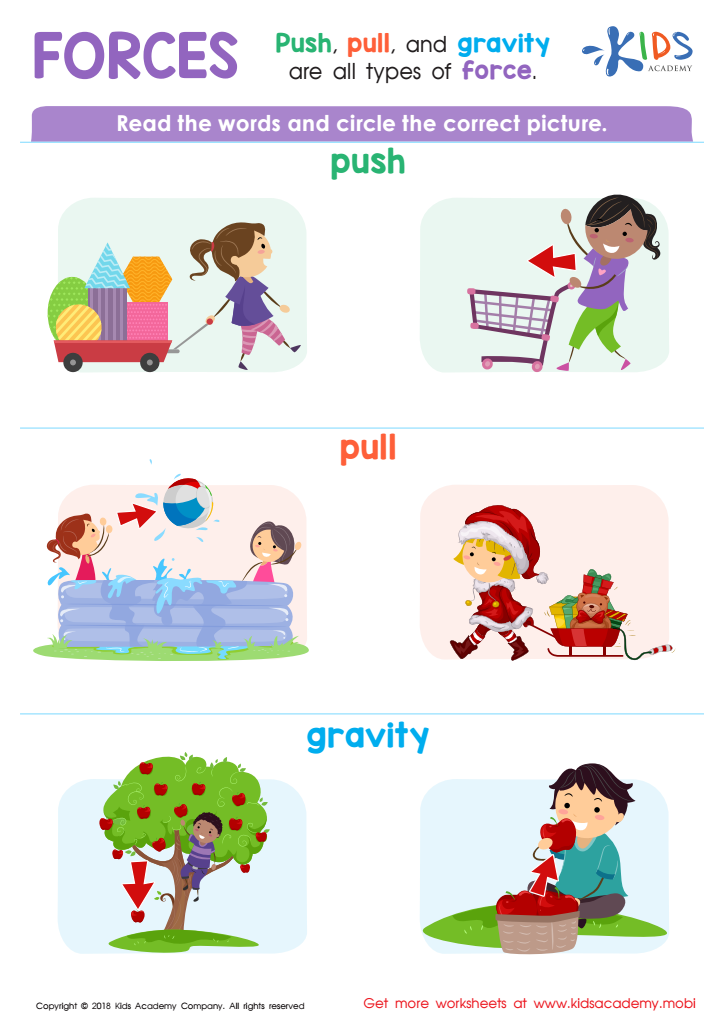
Forces Worksheet
 Assign to My Students
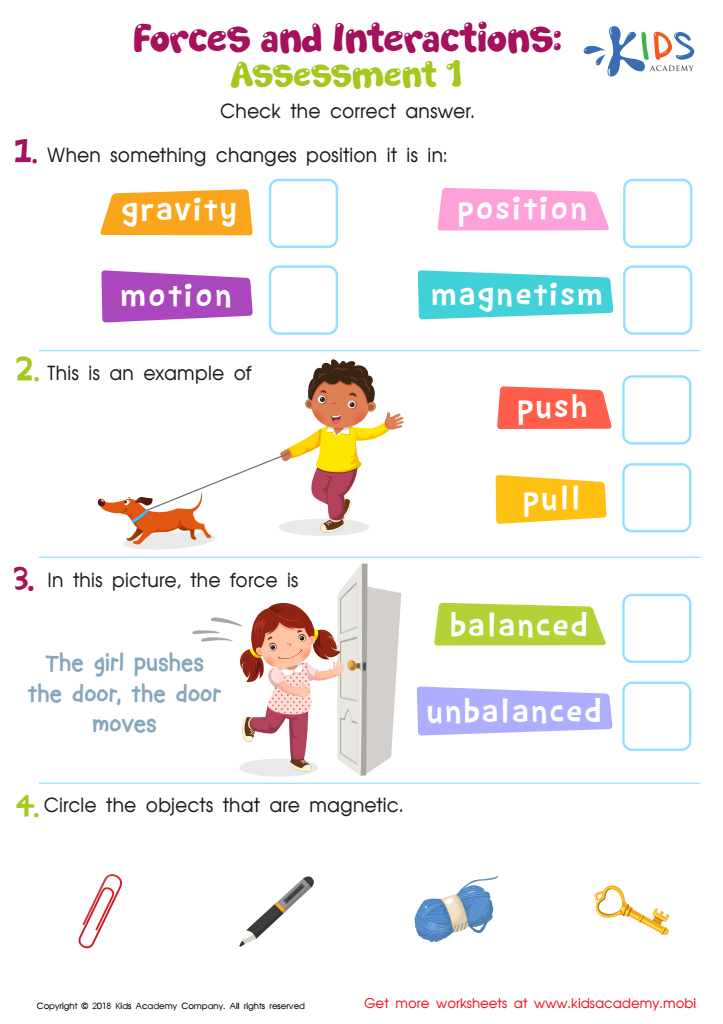
Forces and Interactions Printable
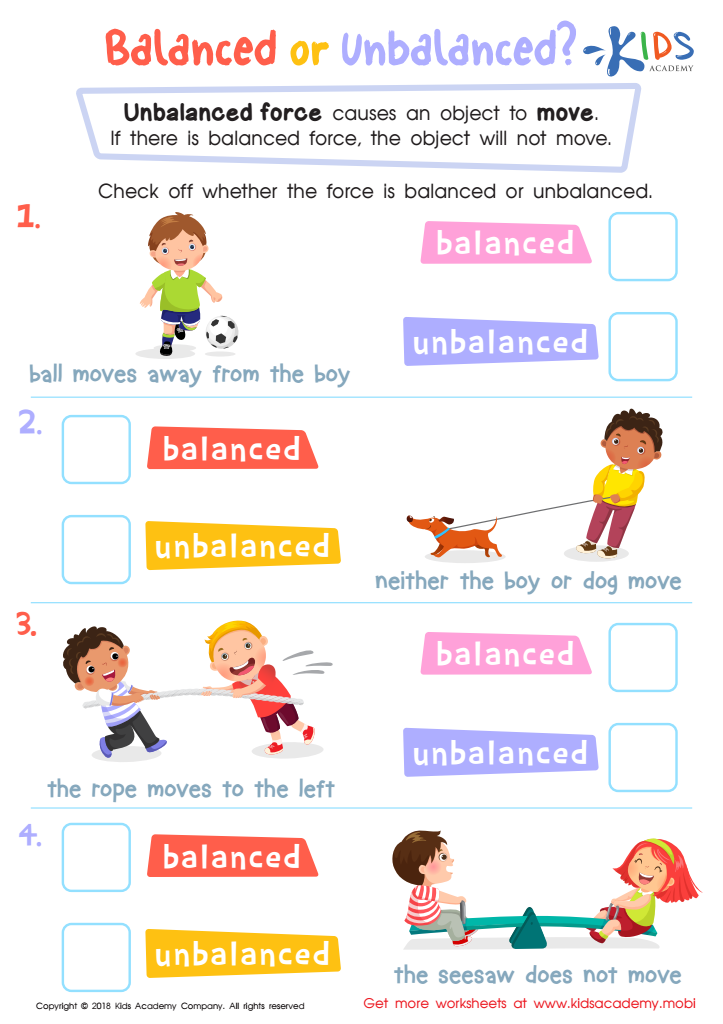
Balanced or Unbalanced Science Worksheet
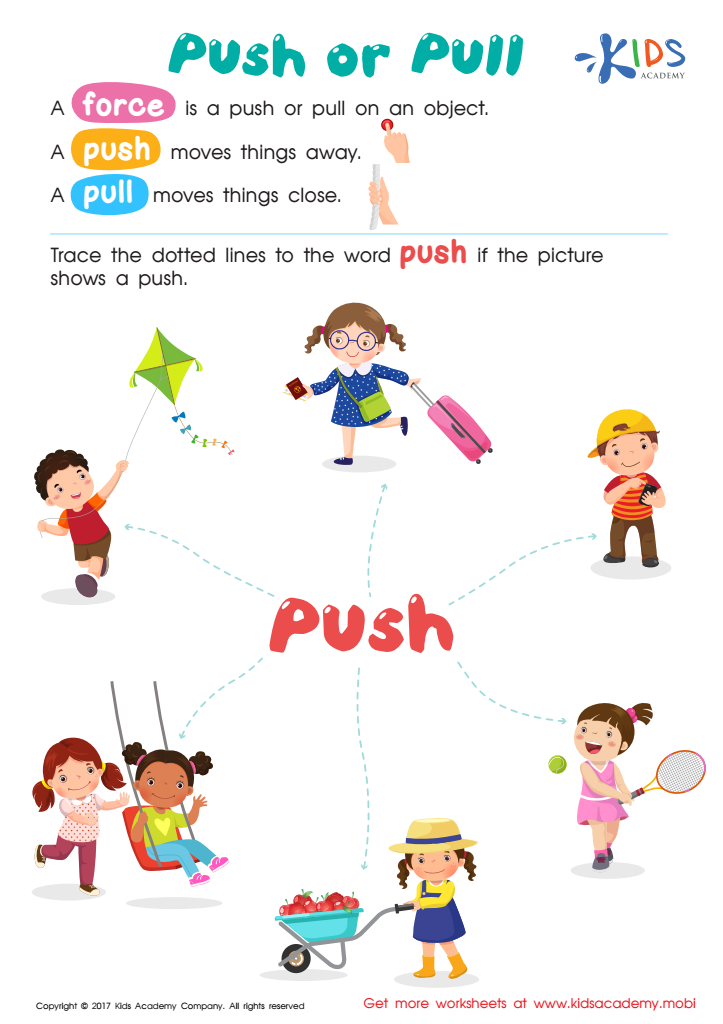
Push or Pull Worksheet
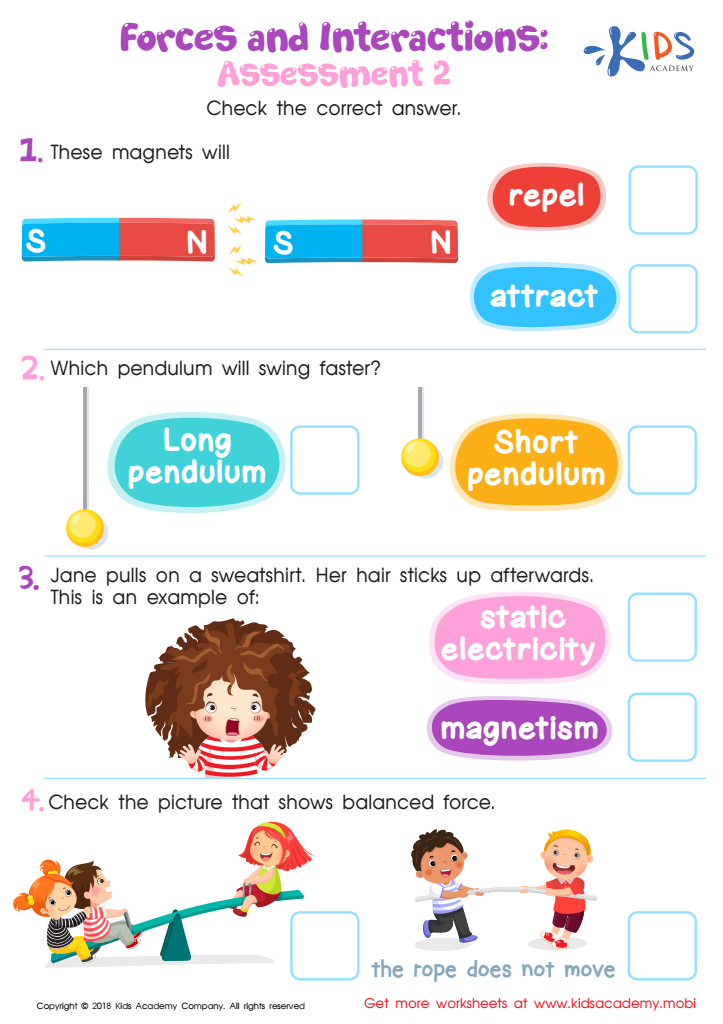
Forces and Interactions Worksheet For 3rd Grade
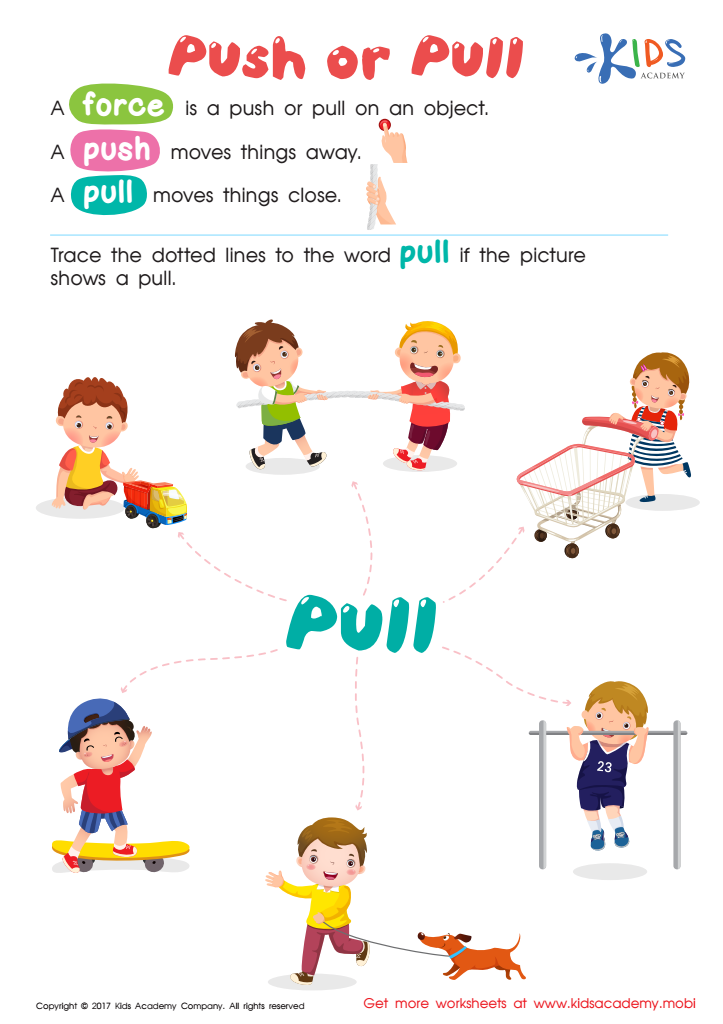
Pull or Push Worksheet



.jpg)




Understanding forces is foundational for children, particularly between the ages of 6-8, as it influences their everyday experiences and future learning in science. At this age, children are naturally curious about their environment and how things work. Introducing the concept of forces not only aligns with their exploratory nature but also helps them develop critical thinking skills.
Forces, such as push and pull, are behind everyday activities like moving objects, riding a bicycle, or watching a ball roll. Engaging with these concepts in a hands-on manner empowers children to connect theory with practical experience. Parents and teachers should emphasize this understanding as it nurtures a scientific mindset where exploration and questioning are encouraged.
Moreover, understanding forces lays the groundwork for more complex topics in physics and engineering later on. It fosters creativity and problem-solving abilities, helping children become confident learners who can tackle challenges.
Furthermore, discussions around forces can incorporate elements of teamwork, communication, and even social-emotional learning as children collaborate on experiments or projects. By investing time in teaching these concepts, parents and teachers are promoting well-rounded educational experiences that can spark lifelong interest in science and technology.







