Understanding photosynthesis Normal Science Worksheets for Ages 6-8
3 filtered results
-
From - To
Discover the incredible process of photosynthesis with our engaging Normal Science Worksheets designed for ages 6-8! These interactive worksheets simplify the concept of how plants convert sunlight, water, and carbon dioxide into food, making learning fun and accessible for young minds. Kids will explore key ideas through a variety of activities, including illustrations, fill-in-the-blanks, and quizzes that reinforce understanding. Ideal for teachers and parents alike, these worksheets encourage curiosity about nature and the environment while improving foundational science skills. Help your child develop a love for science with our creative and educational resources on photosynthesis!
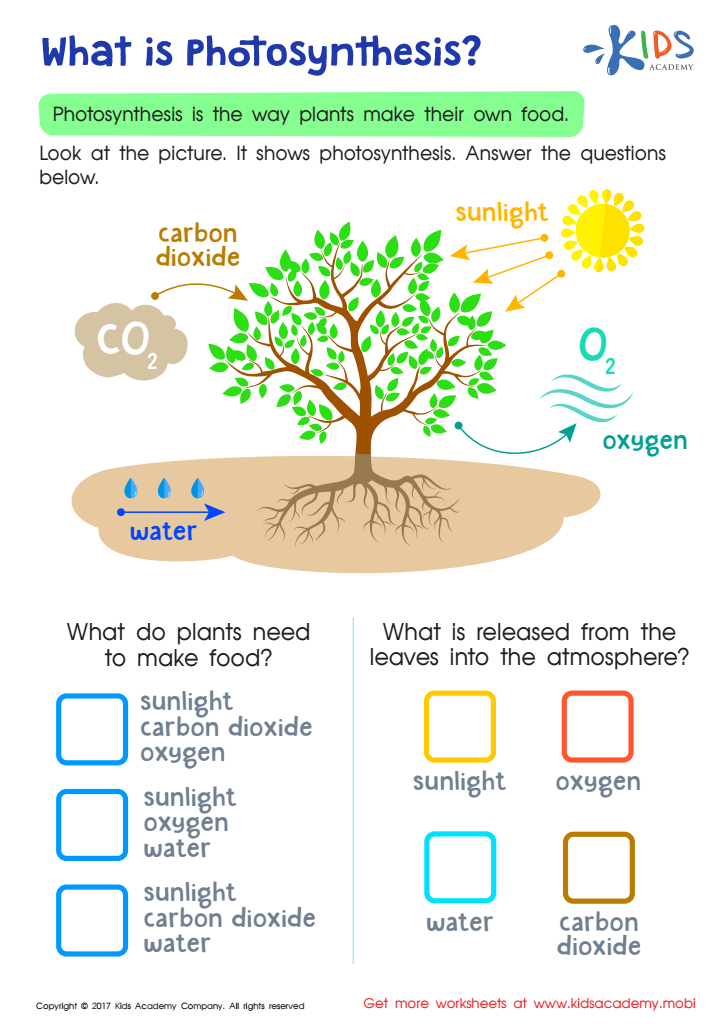
What is Photosynthesis Printable
 Assign to My Students
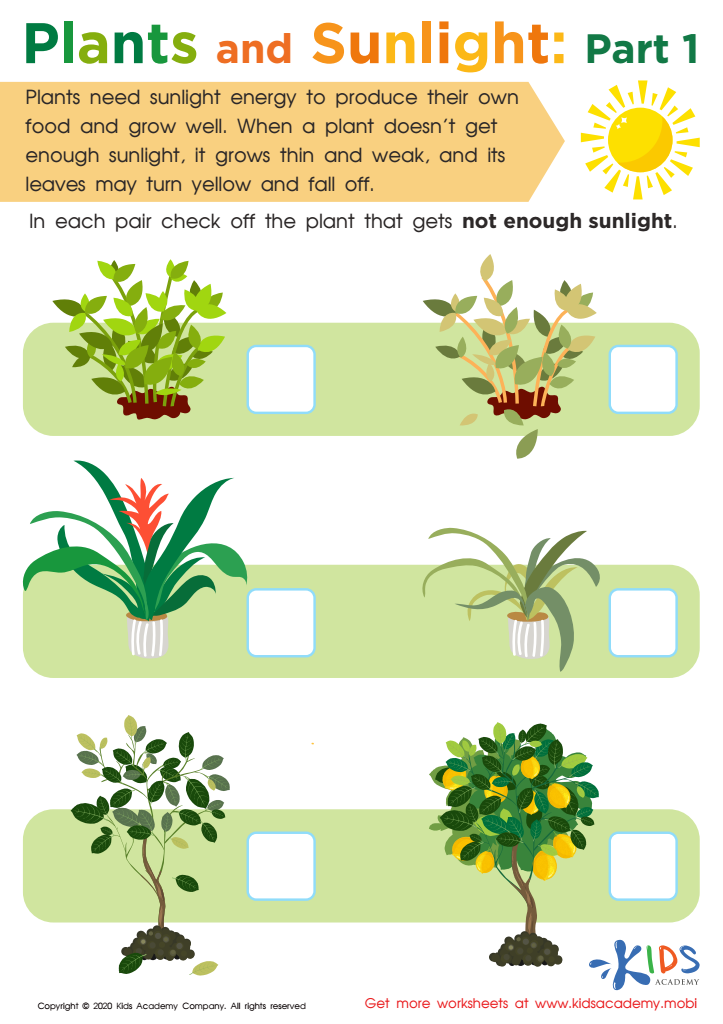
Plants and Sunlight: Part 1 Worksheet
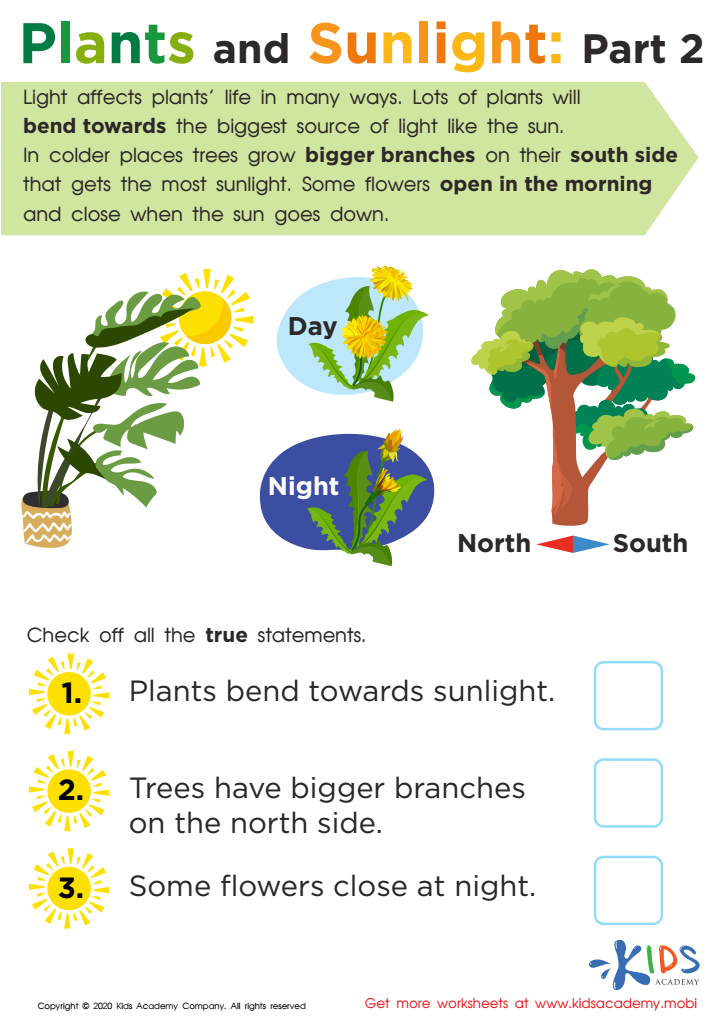
Plants and Sunlight: Part 2 Worksheet







Understanding photosynthesis is crucial for children aged 6-8 as it lays the foundation for their comprehension of nature and the environment. Teaching young learners about photosynthesis helps them grasp the vital process by which plants convert sunlight, carbon dioxide, and water into food and oxygen. This knowledge fosters an appreciation for the natural world and encourages curiosity about how living organisms interact with their surroundings.
Parents and teachers should care because this understanding nurtures scientific thinking and inquiry skills early on. By introducing concepts like energy transfer, ecosystems, and the interdependence of life, children develop a sense of responsibility toward the environment. They learn that plants are not just sources of beauty and shade; they are essential for life on Earth, releasing oxygen that humans and animals need to survive.
Furthermore, engaging students with hands-on activities related to photosynthesis—like growing plants or observing leaves—can spark enthusiasm for science and foster a love for learning. By making these concepts accessible and fun, parents and teachers ignite a lifelong curiosity that can inspire future environmental stewardship and critical thinking skills. In essence, integrating photosynthesis into early education cultivates informed, responsible citizens for a sustainable future.







