Understanding pollination Normal Science Worksheets for Ages 6-8
3 filtered results
-
From - To
Discover the fascinating world of pollination with our engaging Normal Science Worksheets designed for children aged 6-8! These worksheets feature vibrant illustrations and easy-to-understand activities that will help young learners grasp the essential process of pollination in plants. Through interactive exercises, kids will explore how bees and other pollinators play a vital role in the ecosystem, enhancing their scientific literacy. Our thoughtfully crafted materials encourage curiosity and creativity, making learning about plant reproduction fun and accessible. Perfect for home or classroom use, these worksheets are an excellent resource for supporting early science education. Start your adventure in understanding pollination today!
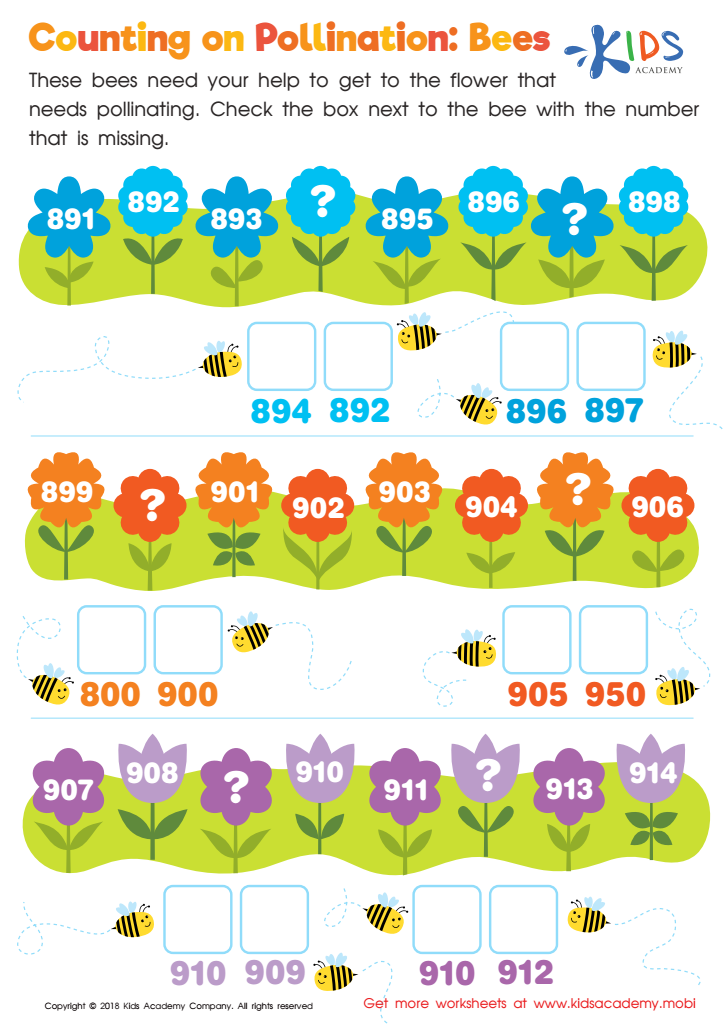
Counting on Pollination: Bees Worksheet
 Assign to My Students
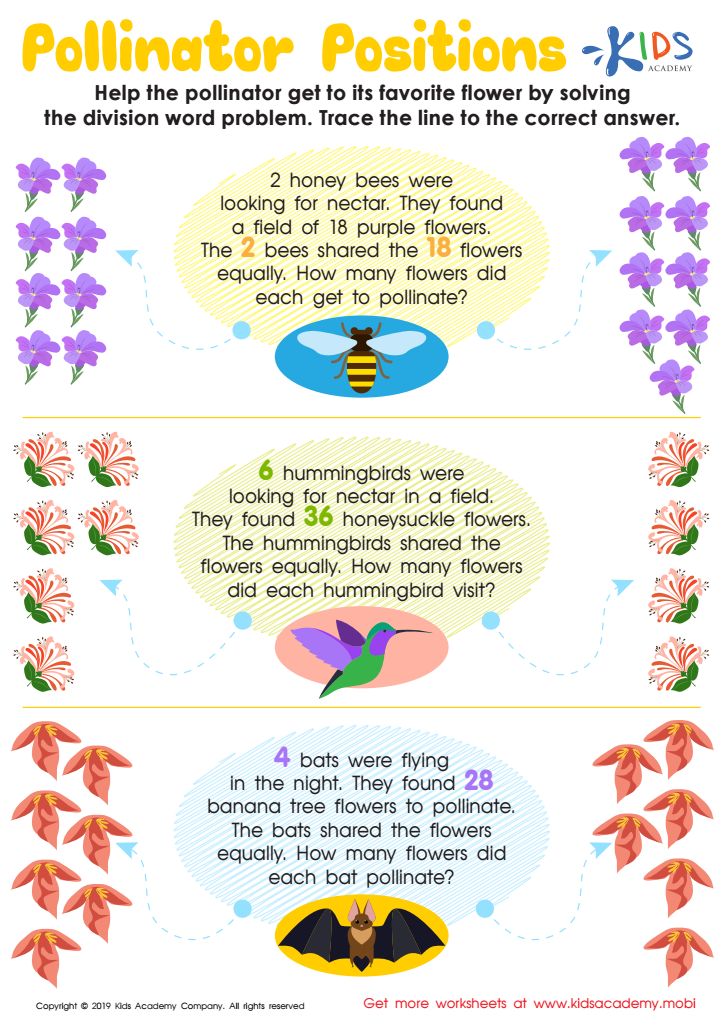
Pollinator Positions Worksheet
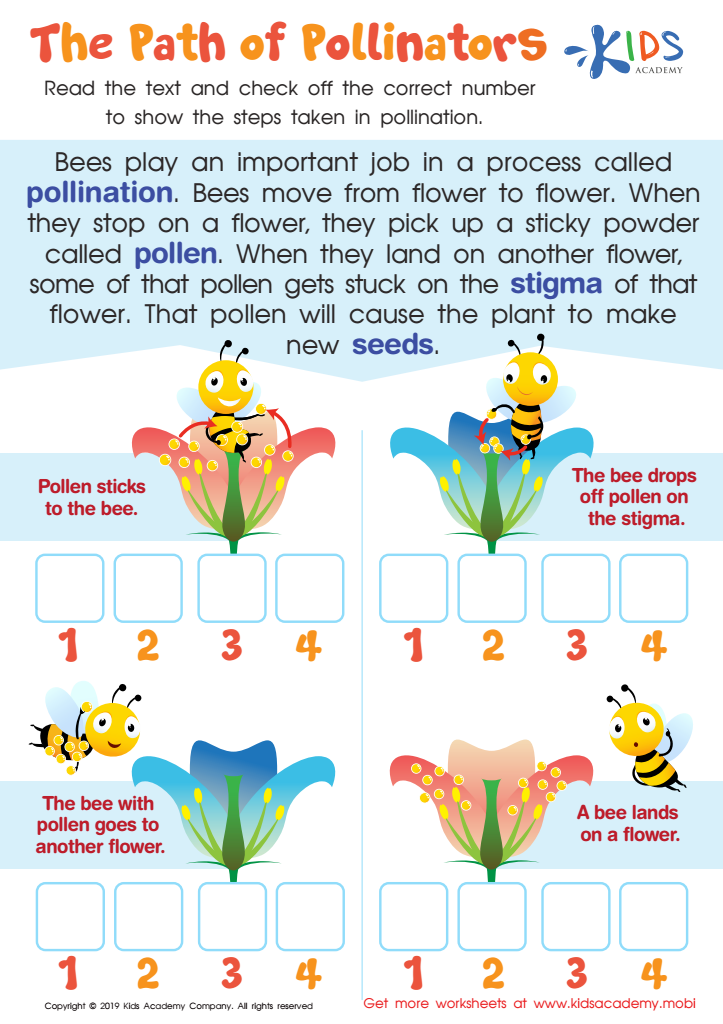
The Path of Pollinators Worksheet







Understanding pollination is crucial for both parents and teachers when educating children aged 6-8 about the natural world. Pollination is a vital process that helps plants reproduce, leading to the growth of fruits, vegetables, and flowers. When children learn about pollination, they develop a deeper appreciation for ecosystems and the interdependence of living organisms. This fosters a sense of responsibility and care for the environment as they recognize the essential role that insects, especially bees and butterflies, play in their daily lives.
Additionally, incorporating the concept of pollination into the curriculum can make learning engaging and relatable. Through hands-on activities, kids can observe pollinators in action, creating memorable educational experiences. These lessons not only introduce basic scientific concepts but also stimulate curiosity, encouraging children to ask questions and explore the world around them.
Moreover, as many children have limited exposure to nature, these educational insights can inspire a love for the outdoors, leading to healthier lifestyle choices. Altogether, understanding pollination equips children with essential knowledge about biodiversity, agriculture, and conservation, laying the groundwork for future environmental stewardship and scientific literacy. Parents and teachers play a vital role in nurturing this understanding, which benefits both children and the planet.







