
Weather identification Normal Science Worksheets for Ages 6-8
3 filtered results
Difficulty Level
Grade
Age
-
From - To
Subject
Activity
Standards
Discover our engaging "Weather Identification Normal Science Worksheets" tailored for children aged 6-8! These worksheets are designed to make learning about weather fun and interactive, helping young learners identify various weather conditions. Through colorful illustrations and simple activities, kids will explore concepts such as sunny, rainy, cloudy, and snowy weather. Perfect for classroom use or at-home practice, these resources encourage observation and critical thinking skills. Empower your students to connect with the natural world while developing their science knowledge. Download our printable worksheets today and inspire curiosity in the fascinating world of weather! Ideal for early grade educators and parents alike.
Favorites
With answer key
Interactive
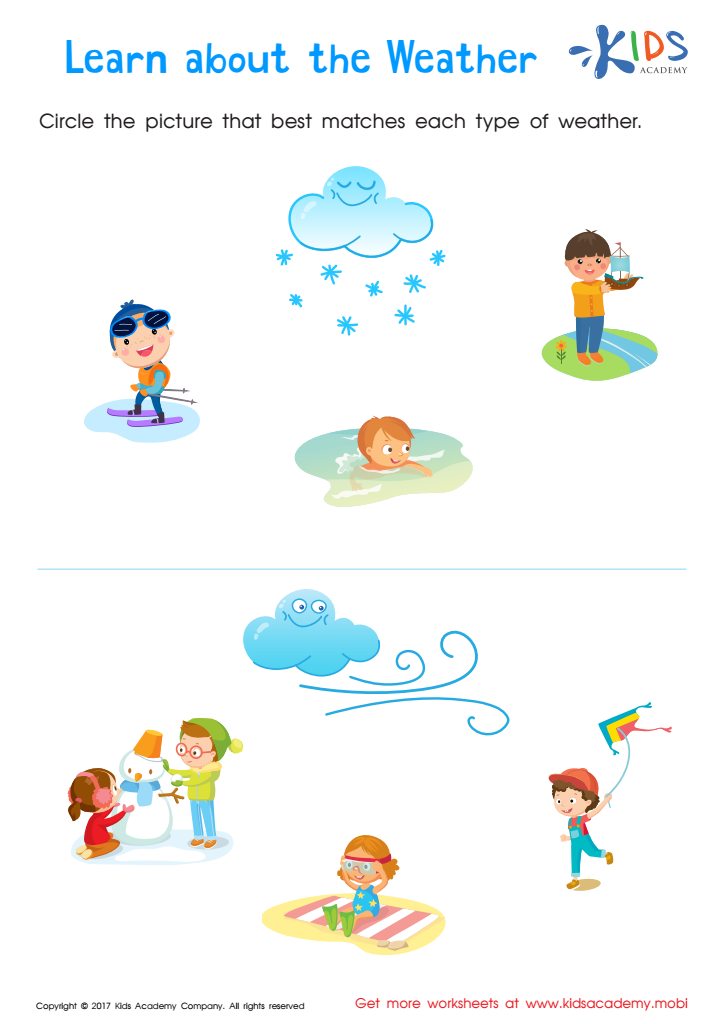
About the Weather Printable
This worksheet is perfect for reinforcing knowledge about changing weather and activities that suit each season. Help your child use their life experiences to observe the weather and complete the worksheet. Fun and colorful, it's a great way to learn about weather and seasons. Let's get started!
 Assign to My Students
About the Weather Printable
Worksheet
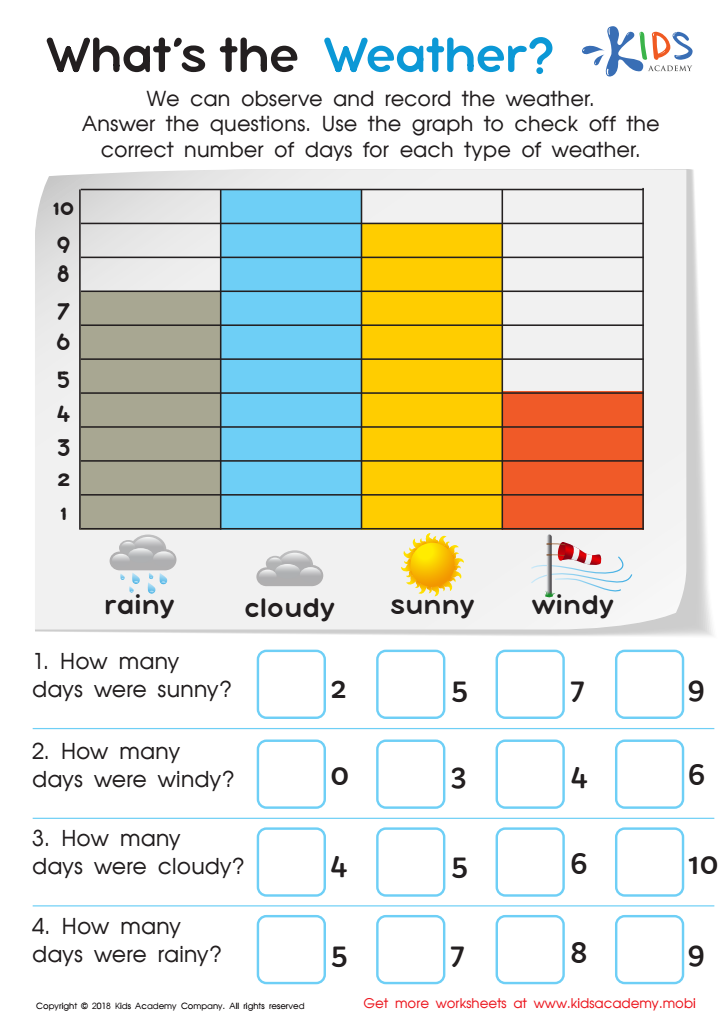
What's the Weather? Worksheet
Check the weather outside. Help kids learn and practice science and math by tracking different types of days using this printable worksheet. Have them count bars next to weather types like cloudy, sunny, windy, and rainy. Answer the questions and take the lesson further by creating a bar graph to show the monthly weather.
What's the Weather? Worksheet
Worksheet
Join Kids Academy for Free
Who is primarily going to use this learning content?






Weather identification is a fundamental aspect of science that engages young learners aged 6-8 and cultivates their curiosity about the world around them. For parents and teachers, fostering an understanding of the weather promotes critical thinking and observational skills. As children learn to identify different weather patterns—like sunny, rainy, cloudy, or snowy—they become more aware of their environment, developing analytical skills that are crucial for scientific inquiry.
Moreover, understanding weather promotes safety awareness. By recognizing signs of severe weather, such as thunderstorms or snowstorms, children are better equipped to respond appropriately, ensuring their own safety and that of others.
This knowledge also connects to broader educational themes, such as earth science, environmental stewardship, and even mathematics, through discussing temperature, measurement, and data collection. By incorporating natural phenomena into discussions, educators can create interdisciplinary connections that enhance students' learning experiences.
Lastly, engaging in weather identification can foster family bonding. Parents can participate in weather-related activities, like creating charts or observing weather changes, turning learning into a fun, shared experience. Ultimately, effective weather identification education nurtures inquisitive minds and responsible citizens—key goals for any parental or teaching role.







