Understanding forces Normal Physical Science Worksheets for Ages 6-8
6 filtered results
-
From - To
Unleash your child's curiosity with our "Understanding Forces" worksheets designed for kids aged 6-8. These engaging and educational printables from our physical science collection introduce young learners to fundamental concepts of forces, including push, pull, gravity, and friction. Each worksheet is crafted to build foundational skills and enhance understanding through fun, hands-on activities and simple explanations. Perfect for both classroom and home use, these worksheets encourage critical thinking and scientific exploration. Help your child discover the exciting world of physical science and strengthen their grasp of everyday forces with our expertly crafted learning resources!
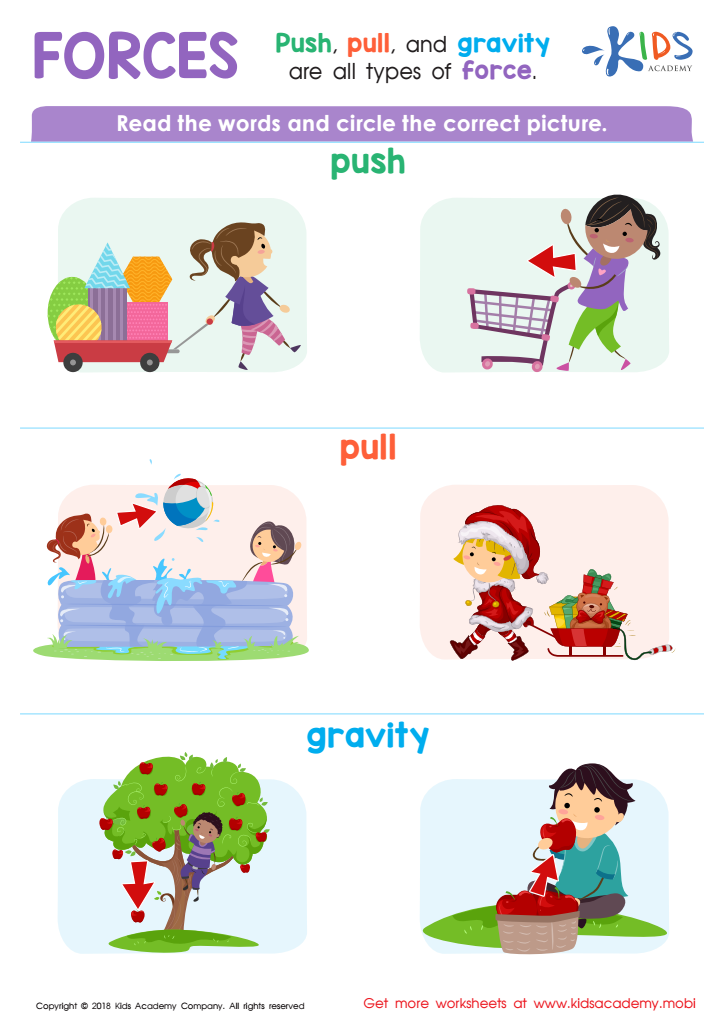
Forces Worksheet
 Assign to My Students
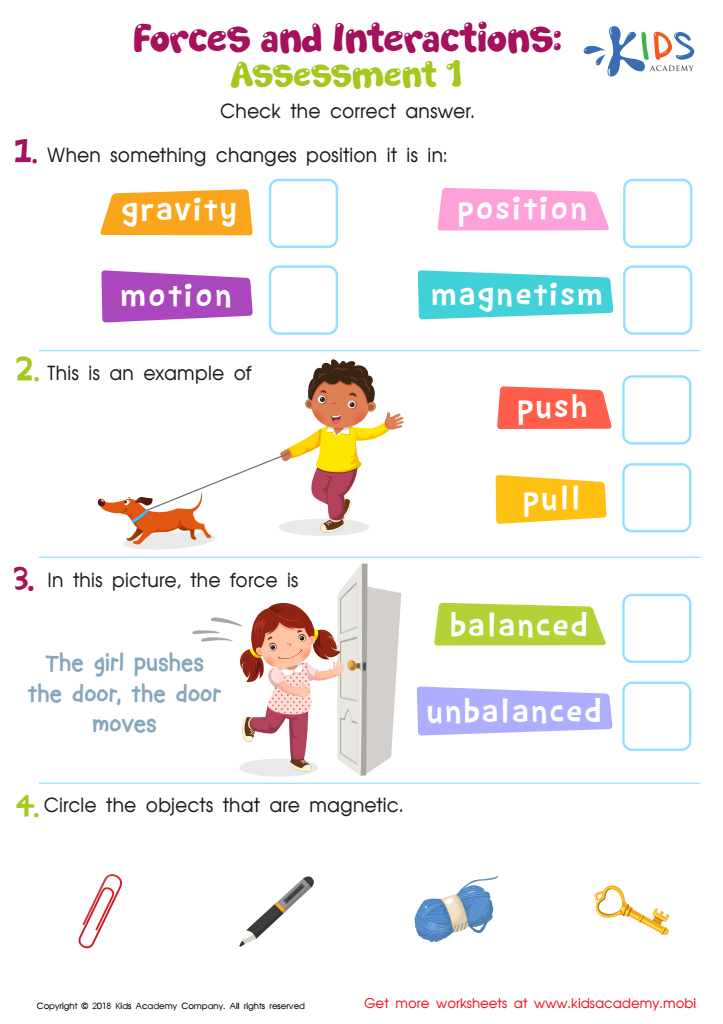
Forces and Interactions Printable
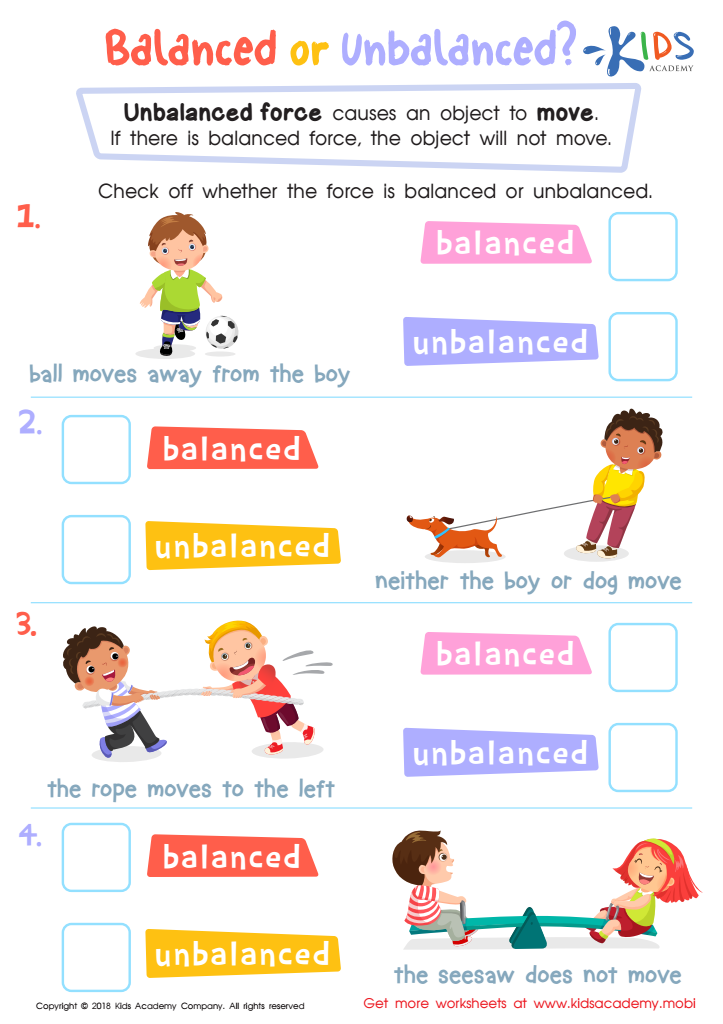
Balanced or Unbalanced Science Worksheet
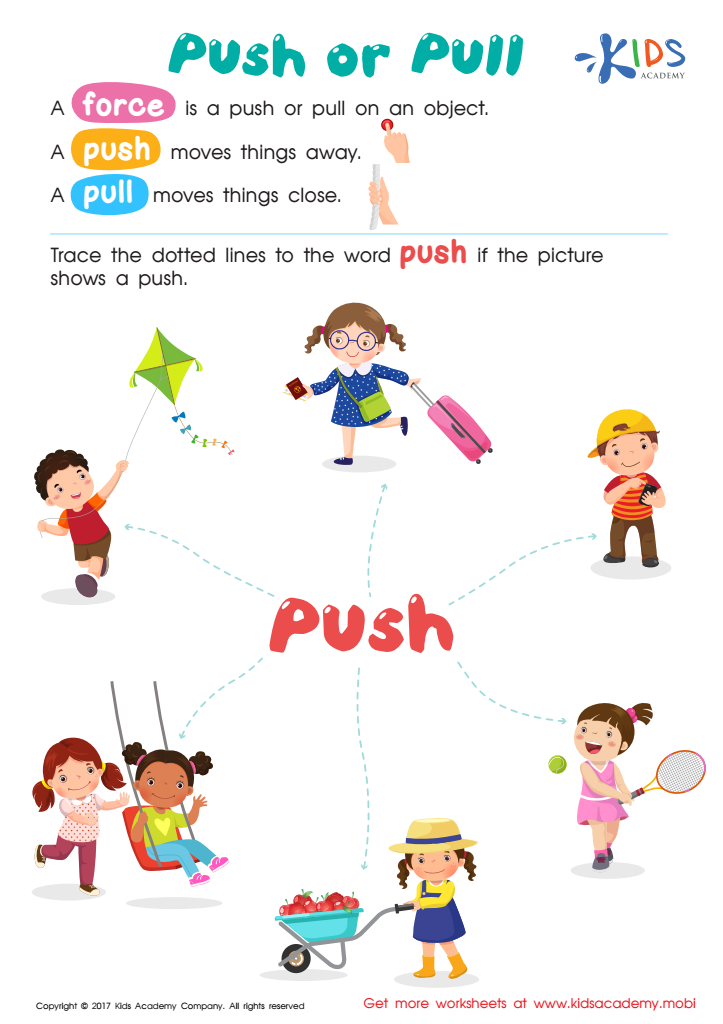
Push or Pull Worksheet
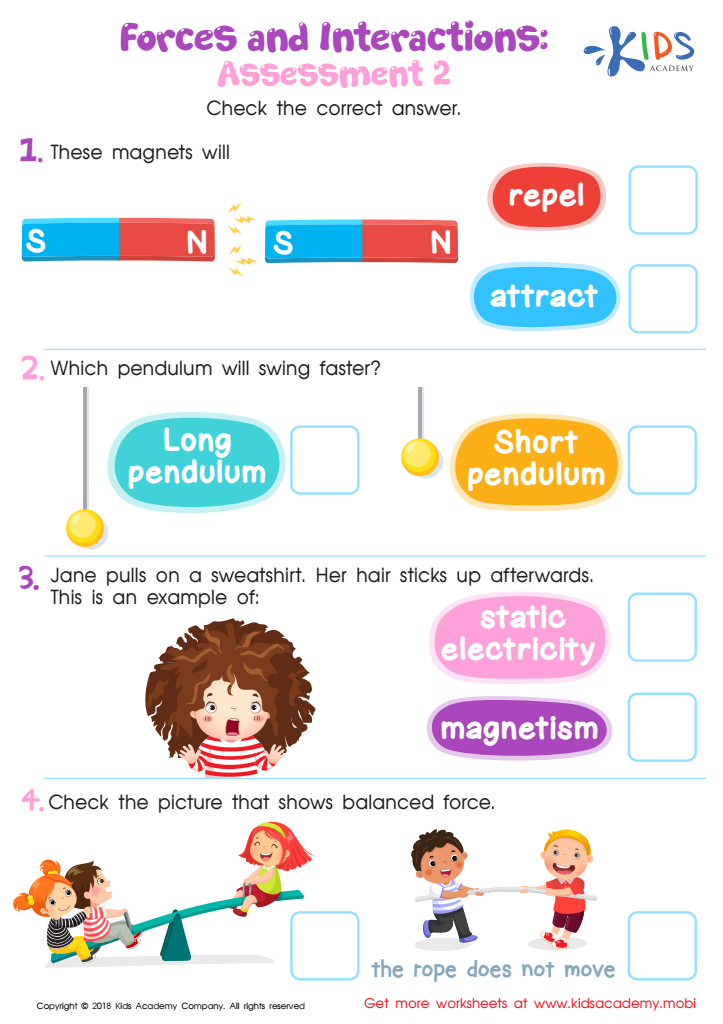
Forces and Interactions Worksheet For 3rd Grade
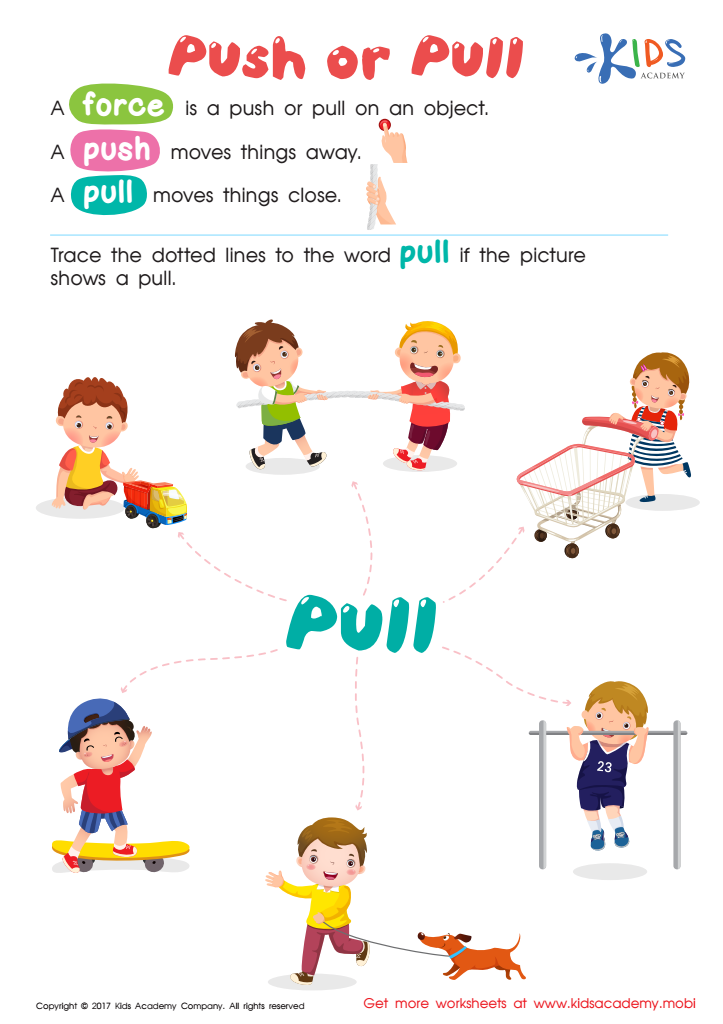
Pull or Push Worksheet







Parents and teachers should prioritize teaching forces in physical science to children ages 6-8 because foundational understanding in this area is crucial for cognitive and intellectual development. At this age, children's brains are highly receptive to new information, and learning about forces like push, pull, gravity, and friction can cultivate a keen interest in how the world works. Understanding these basic principles forms the building blocks for more advanced scientific concepts they will encounter in later years.
Moreover, introducing these concepts early helps students develop critical thinking and problem-solving skills. By participating in hands-on activities and experiments, kids learn to make predictions, observe outcomes, and draw conclusions—skills transferable across all subjects and life scenarios.
Furthermore, conversations about forces often mean talking about everyday phenomena, making learning engaging and relatable. For instance, explaining why a ball stops rolling or a book stays on a shelf can make science tangible and practical.
Engaging with physical science can also spark curiosity and creativity, encouraging children to explore further and potentially nurturing a lifelong passion for STEM (Science, Technology, Engineering, Math).
Lastly, understanding forces and basic physical principles supports safety awareness. Knowing why certain objects fall or how pushing and pulling affect them can help youngsters navigate their surroundings more safely.







