
Vocabulary enhancement Normal Physical Science Worksheets for Ages 6-8
6 filtered results
Difficulty Level
Grade
Age
-
From - To
Subject
Activity
Standards
Enhance your child’s understanding of physical science with our Vocabulary Enhancement Normal Physical Science Worksheets designed for ages 6-8. At Kids Academy, our expertly crafted worksheets make learning fun and effective, helping young learners to effortlessly grasp essential scientific terms. Each activity is tailored to build a strong foundation in physical science concepts while expanding crucial vocabulary. Engaging and interactive, our resources support children in exploring topics like matter, energy, motion, and force, ensuring they develop critical thinking and language skills. Empower your child's educational journey with tools that inspire a love for science and words!
Favorites
With answer key
Interactive
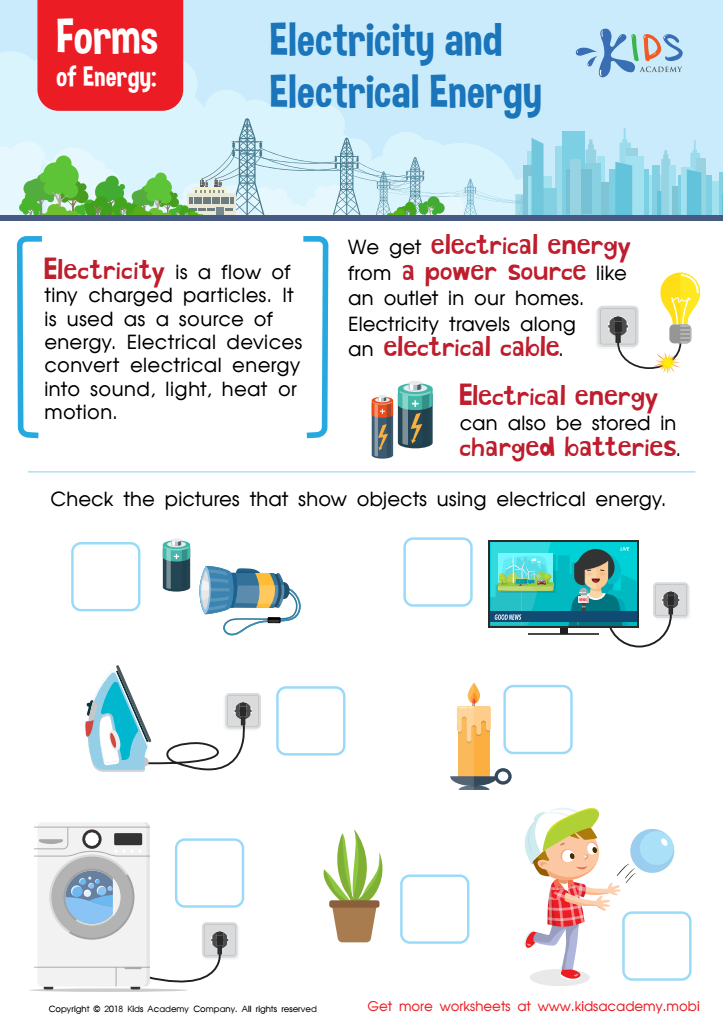
Forms of Energy Worksheet
This fun worksheet will help kids understand electricity. Kids identify objects powered by batteries or outlets. Perfect for 3rd Grade, this worksheet will fascinate them as they learn about this form of energy.
 Assign to My Students
Forms of Energy Worksheet
Worksheet
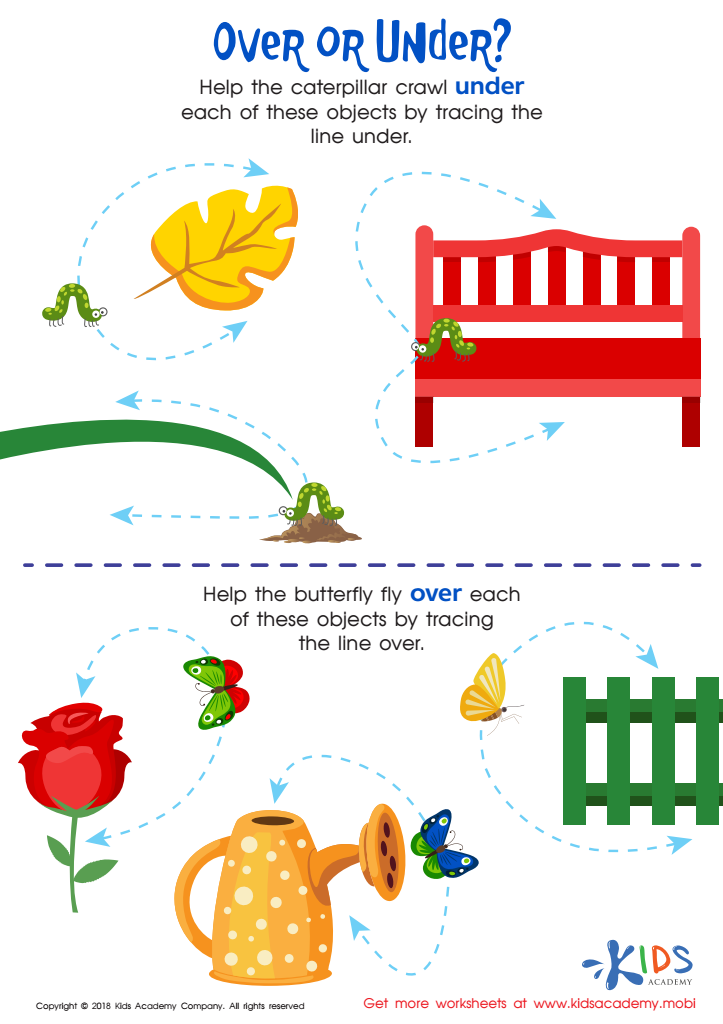
Over or Under? Worksheet
Math for young kids isn't just about numbers and counting, but also spatial concepts like geometry. This worksheet helps students learn "over" and "under" by tracing the movement of caterpillars and butterflies. Downloadable for free, it's an effective teaching tool for early learners.
Over or Under? Worksheet
Worksheet
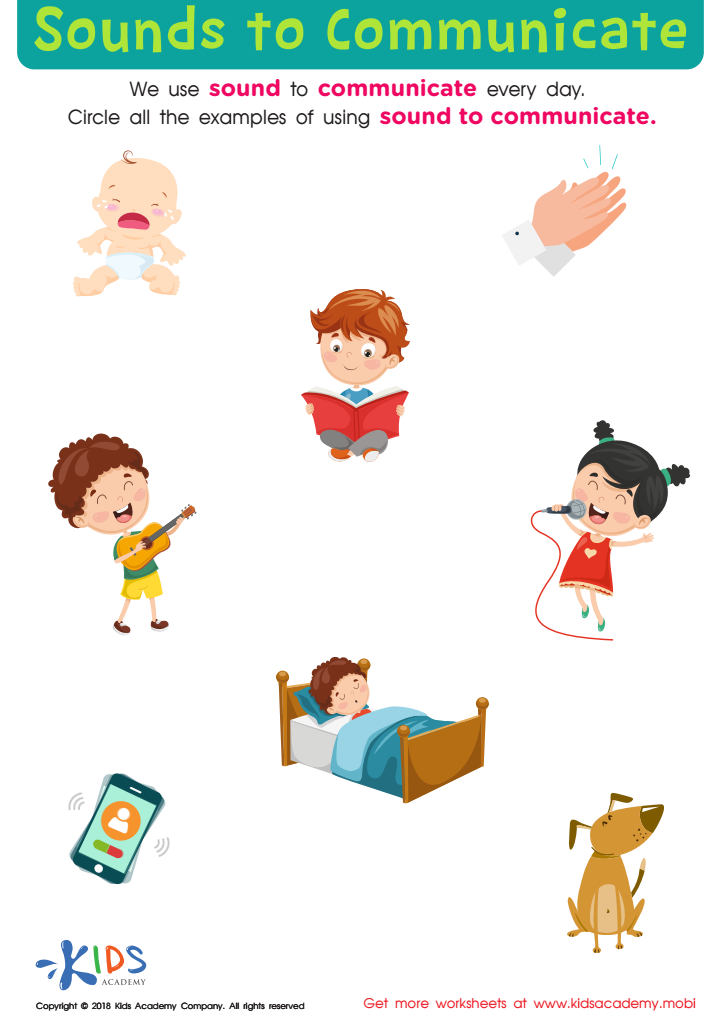
Sounds to Communicate Worksheet
Sounds are important for communication. Ask your students to name sounds people, animals and things make. Then, review this worksheet with them and see if they can identify the activities. Ask them to circle examples of sounds used to communicate.
Sounds to Communicate Worksheet
Worksheet
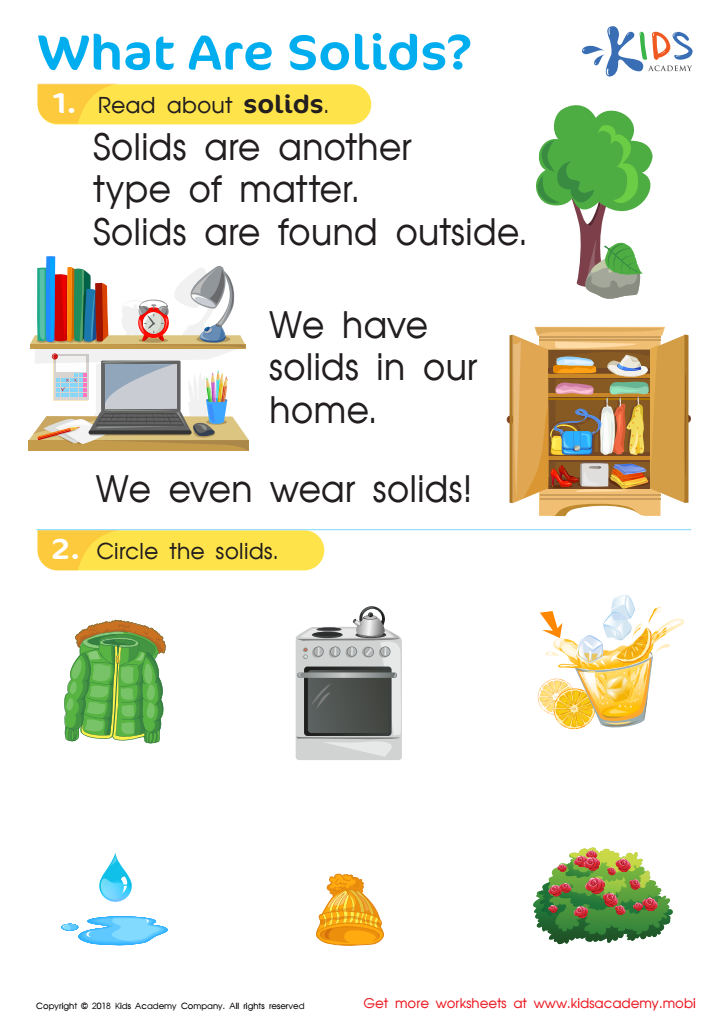
What Are Solids? Worksheet
Help your kids understand matter's three forms - solid, liquid, and gas - with examples. Ask them to give their own and where to find them. Then, read and discuss the worksheet's facts about solids. Afterward, have them circle the solids among the provided objects.
What Are Solids? Worksheet
Worksheet
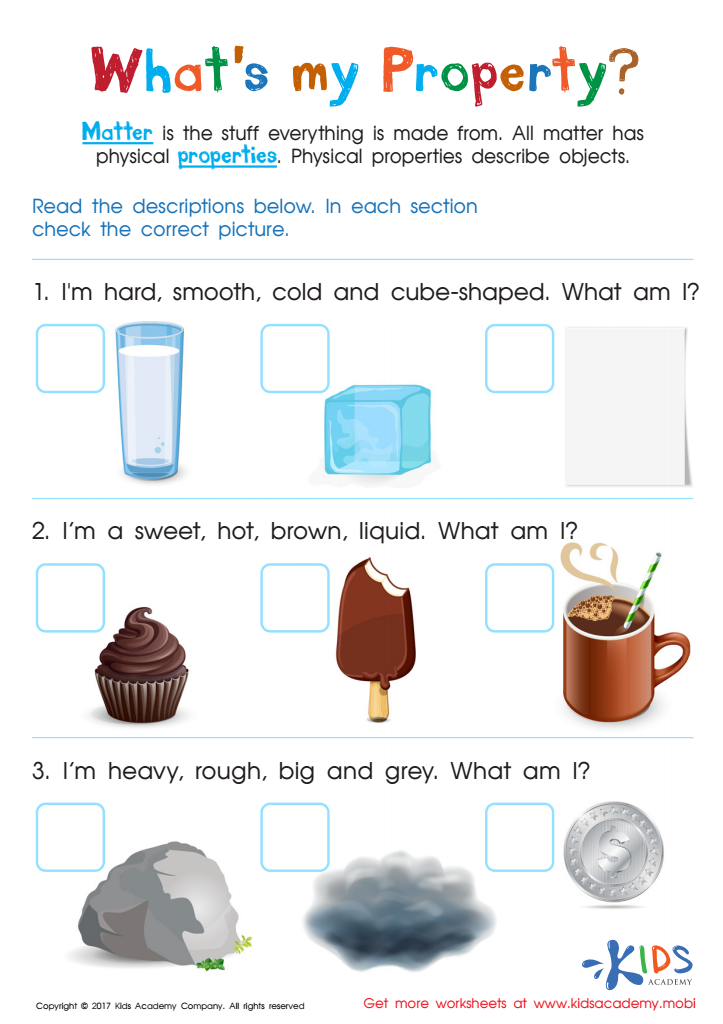
Physical Properties Of Matter Worksheet
This physical properties of matter worksheet helps them explore liquids, gases and solids in an engaging way. Try it today! (80 words)
Physical Properties Of Matter Worksheet
Worksheet
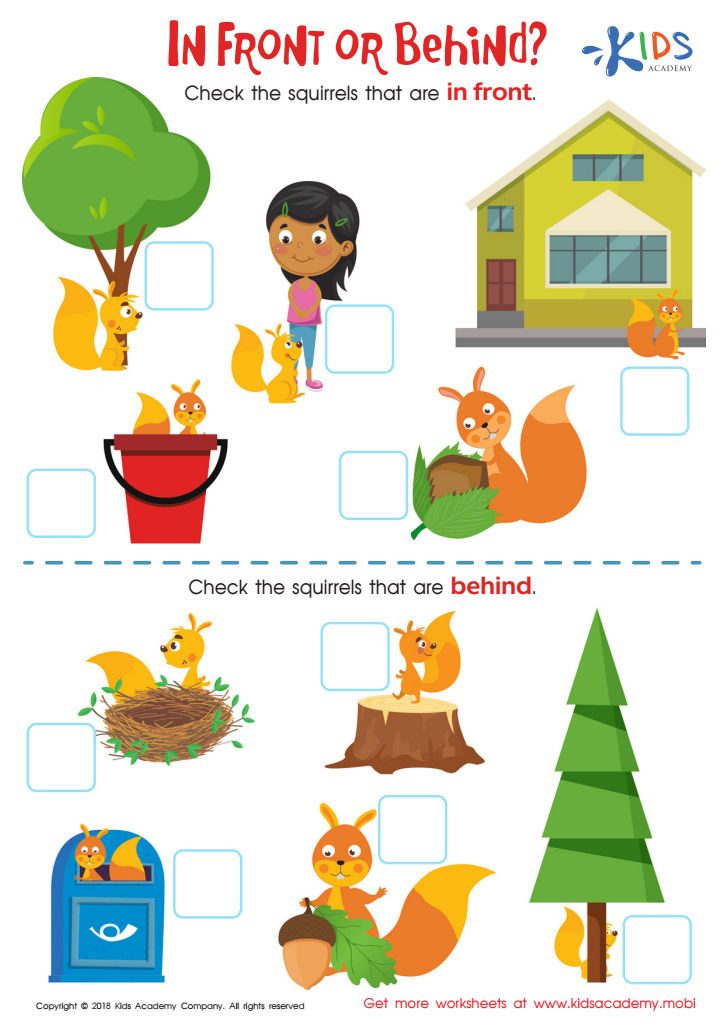
In Front or Behind: Part 2 Worksheet
Teach positional words "front" and "behind" with this fun worksheet! Students identify where the squirrel is in relation to the object - in front or behind. It's a great exercise to practice early geometry skills and understanding object movement.
In Front or Behind: Part 2 Worksheet
Worksheet
Join Kids Academy for Free
Who is primarily going to use this learning content?




.jpg)



Enhancing vocabulary in the context of normal physical science for children aged 6-8 is crucial for several reasons. At this developmental stage, children's brains are like sponges, and they can absorb and process new information rapidly. Introducing scientific vocabulary helps scaffold their cognitive development and enhances their ability to grasp complex concepts later on.
Firstly, a strong vocabulary helps children articulate their thoughts clearly and improves their overall communication skills. For physical science, understanding and using terms like "gravity," "solid," "liquid," and "magnetism" allow children to describe and make sense of the natural world around them. This foundational knowledge is essential for future science education, where complex concepts build on simpler ones learned early on.
Moreover, vocabulary enrichment can foster a child's curiosity and love for learning. When children can name what they observe, whether it's the phases of the moon or the properties of different materials, they become more engaged and interested. This engagement can lead to better academic performance across subjects since language skills are crucial for reading comprehension and problem-solving.
Teachers and parents who focus on vocabulary enhancement in physical science contribute significantly to a child's intellectual growth. This investment lays the groundwork for critical thinking, innovative problem-solving, and lifelong learning, equipping children with the tools they need for future academic and personal success.







