Observational skills Normal Space Worksheets for Ages 6-8
3 filtered results
-
From - To
Unlock your child's potential with our exceptional Observational Skills Normal Space Worksheets for Ages 6-8. Carefully designed to foster curiosity about the cosmos, these printable worksheets provide engaging activities that develop critical observation and analytical skills. From identifying celestial bodies to comprehending spatial relationships, each exercise ignites a passion for astronomy while reinforcing scientific fundamentals. Ideal for classroom or home use, these worksheets ensure children grasp key concepts in a fun, interactive manner. Equip your child with the tools they need to excel in science, and watch their love for space exploration soar!
Visit: [insert link] to download now!
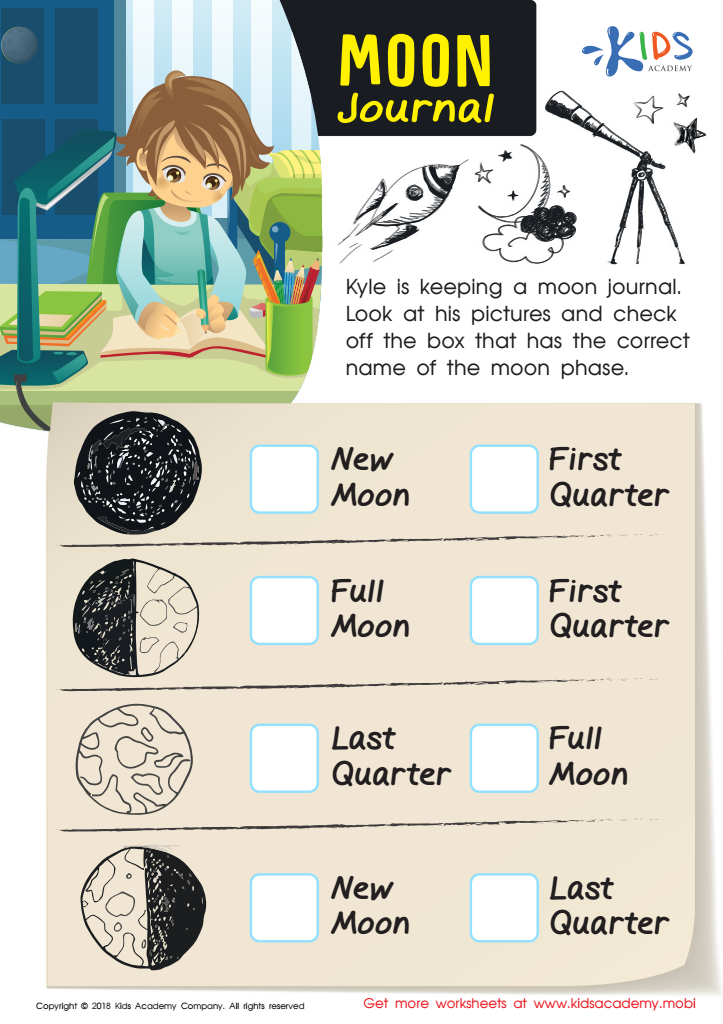
Moon Journal Worksheet
 Assign to My Students
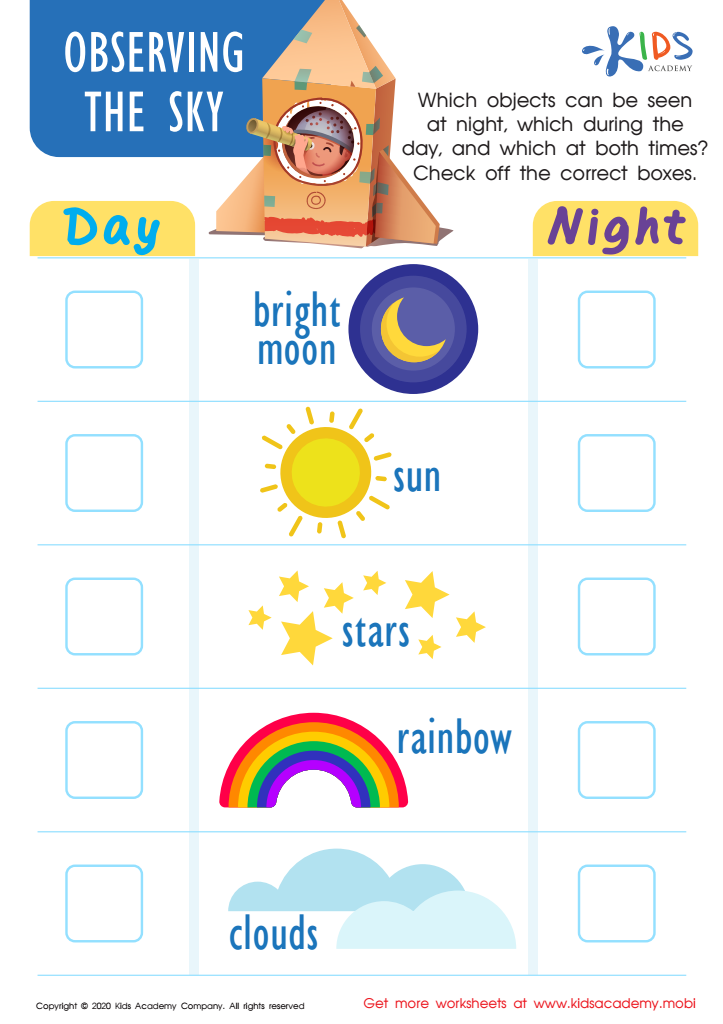
Observing the Sky Worksheet
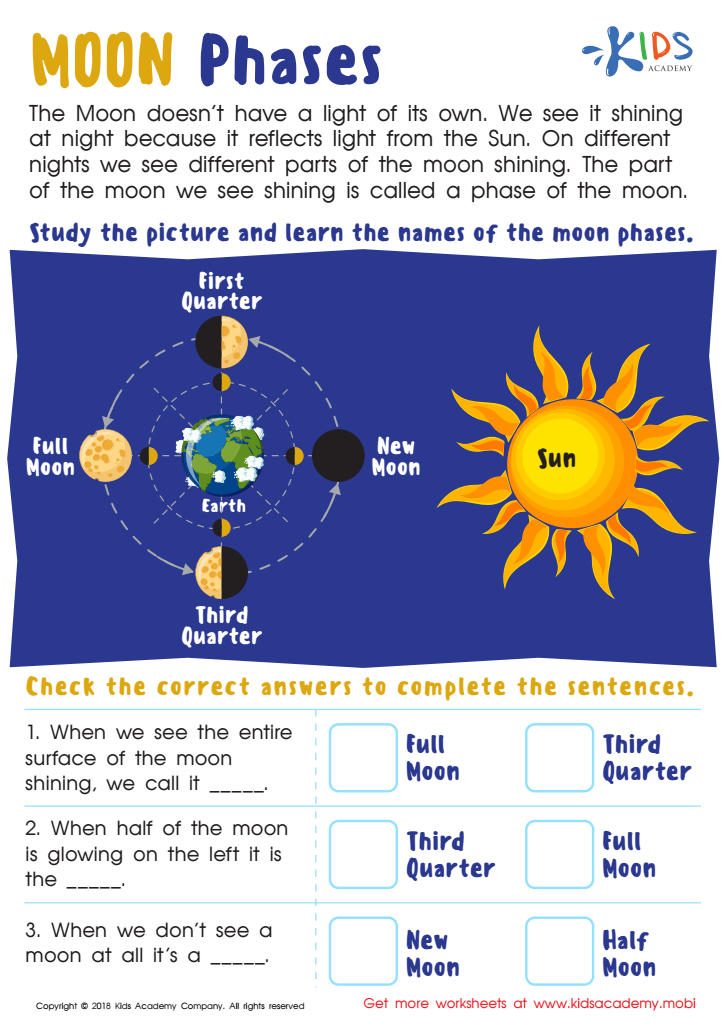
Moon Phases Worksheet





.jpg)

Observational skills are a critical component of early childhood development for children aged 6-8. These skills enable kids to notice and make sense of the world around them, fostering curiosity, attention to detail, and critical thinking abilities. For parents and teachers, encouraging these skills is essential for several reasons.
Firstly, strong observational skills can enhance academic performance. Children who are good observers are better at noticing details in texts, understanding complex instructions, and grasping concepts in subjects like math and science. For example, a child might more accurately count objects, read with greater comprehension, or better understand science experiments through careful observation.
Secondly, observational skills contribute to social development. Kids who observe well can pick up on social cues and body language, helping them navigate social interactions more effectively. This awareness can lead to improved relationships with peers and adults, fostering a more inclusive and empathetic classroom or home environment.
Lastly, developing these skills nurtures creativity and problem-solving. By observing the natural world, art, and various phenomena, children can draw inspiration and cultivate innovative thinking. Activities like nature walks, art projects, and simple explorations can sharpen their observational abilities, laying a strong foundation for lifelong learning and adaptability.
Overall, nurturing observational skills in children aged 6-8 provides them with essential tools for both academic success and personal growth.







