
Understanding moon phases Normal Space Worksheets for Ages 6-8
3 filtered results
Difficulty Level
Grade
Age
-
From - To
Subject
Activity
Standards
Discover the fascinating world of moon phases with our expertly designed Normal Space Worksheets for ages 6-8! Created to align with curriculum standards, these engaging worksheets provide young learners with an interactive and educational experience. Through fun activities and easy-to-follow instructions, children will explore the different phases of the moon, enhancing their understanding of natural science. Ideal for classroom use or at-home learning, our worksheets help promote critical thinking, observation, and inquiry skills. Ignite curiosity and develop a deeper appreciation for space with our moon phase worksheets, perfect for budding astronomers! Visit us to explore more educational resources today.
Favorites
With answer key
Interactive
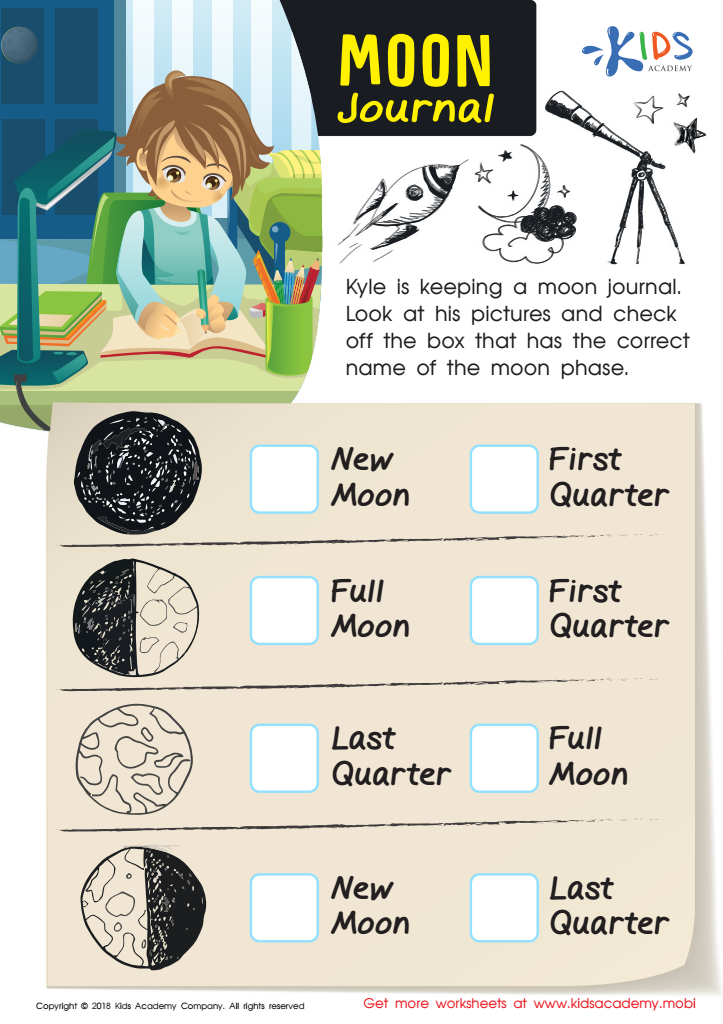
Moon Journal Worksheet
Observe the moon and its 8 phases with your child by downloading this free PDF worksheet from Kids Academy! Review the moon phases with them then help them label Kyle's moon journal. Select the right moon phase for each picture to complete the page!
 Assign to My Students
Moon Journal Worksheet
Worksheet
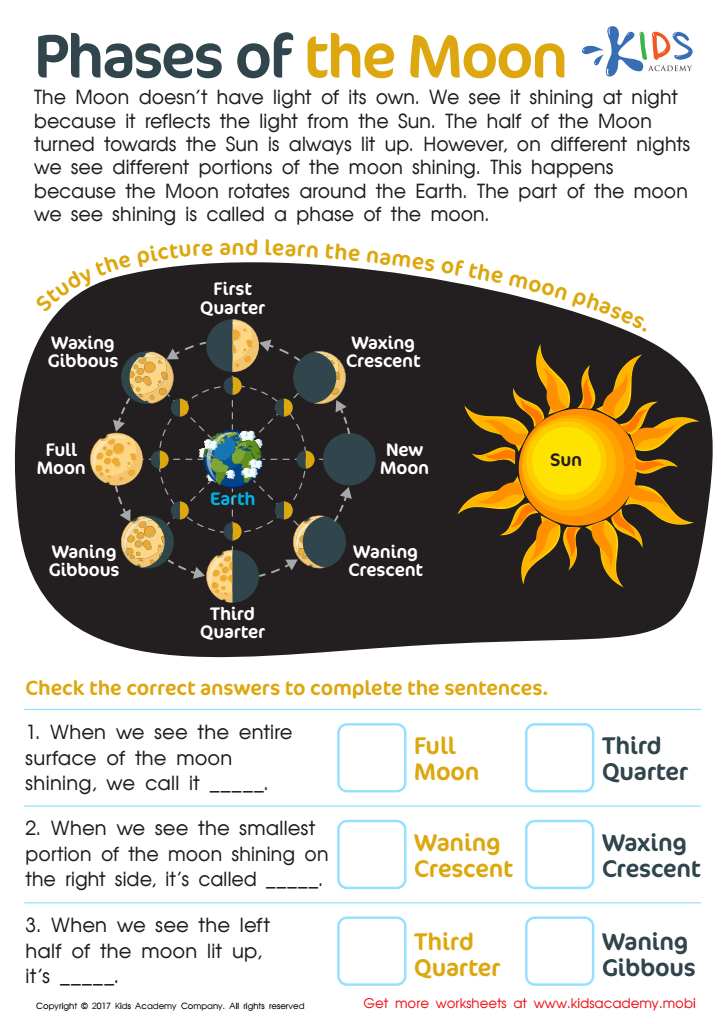
Phases of The Moon Worksheet
It'll show kids the fascinating phases and journey the moon takes around Earth. They'll be amazed to learn it's not always shining!
Phases of The Moon Worksheet
Worksheet
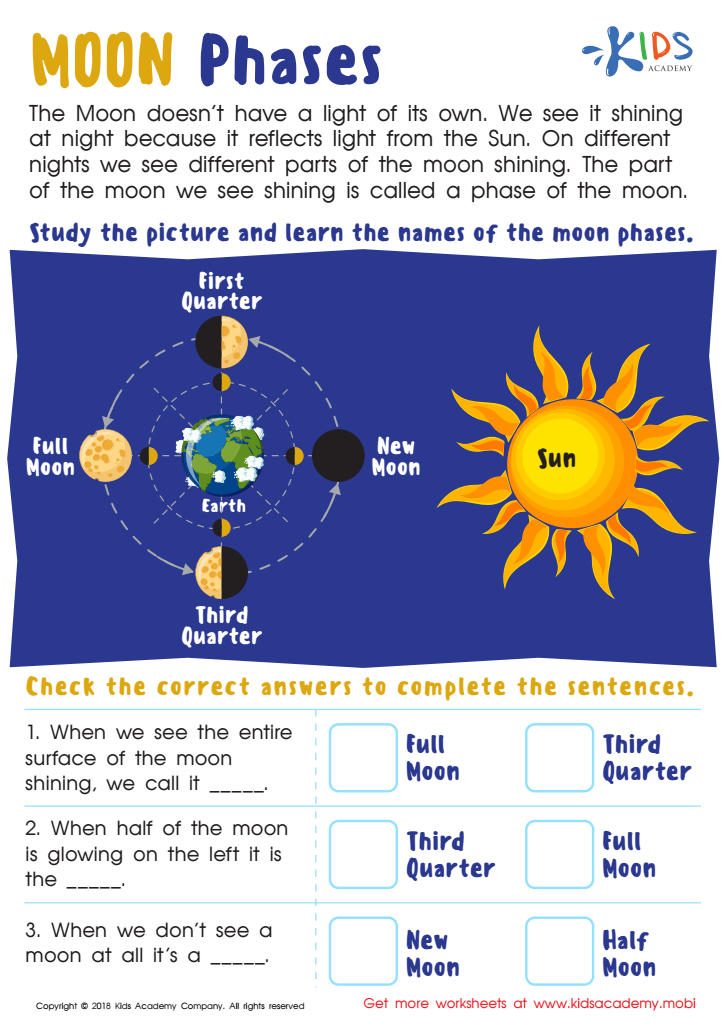
Moon Phases Worksheet
Gaze up at the night sky and the moon's appearance may change from night to night. Encourage your child to learn more about the sun, the moon, and space with this science worksheet. Have them read the text then study the picture. Finally, read the sentences and check the answers to identify the moon's phases.
Moon Phases Worksheet
Worksheet
Join Kids Academy for Free
Who is primarily going to use this learning content?





Understanding moon phases is an excellent entry point for children ages 6-8 to grasp basic scientific concepts and develop an appreciation for the natural world. For parents and teachers, supporting this learning can have enormous benefits.
First, it fosters curiosity and a sense of wonder. The moon is a constant presence in the night sky, and learning about its phases helps children connect to larger astronomical cycles. Encouraging this curiosity can inspire lifelong interests in science and exploration.
Second, understanding moon phases integrates multiple subjects. It combines aspects of science (astronomy, earth sciences), math (cycles, sequences), and even art (drawing moon phases). This multidisciplinary approach makes learning more engaging and comprehensive.
Third, learning about the moon's cycles helps children develop their observational and critical thinking skills. Tracking the moon's phases can engage children's natural instincts to notice patterns, sequences, and changes in their environment, reinforcing essential cognitive skills.
Fourth, teaching moon phases connects to cultural literacy, as the moon has been a significant symbol in stories, calendars, and traditions worldwide. This cultural context helps children appreciate both scientific and humanistic perspectives.
Ultimately, understanding moon phases is not just about science; it helps build a foundation for inquisitive, interdisciplinary learning that benefits children in multiple ways.







