Identification skills Normal Social Studies Worksheets for Ages 6-8
3 filtered results
Difficulty Level
Grade
Age
-
From - To
Subject
Activity
Standards
Discover our engaging Social Studies worksheets specifically designed for ages 6-8 to enhance identification skills. Each worksheet offers interactive activities that help young learners identify countries, states, landmarks, and cultural symbols. With vibrant visuals and age-appropriate content, our resources make learning fun while building essential geography knowledge. Perfect for early grade classrooms or homeschooling, these worksheets support children in recognizing and understanding the world around them. Foster critical thinking and spatial awareness as students explore maps, flags, and more. Prepare your child for academic success with our identification skills worksheets, tailored for an educational adventure in Social Studies.
Favorites
With answer key
Interactive
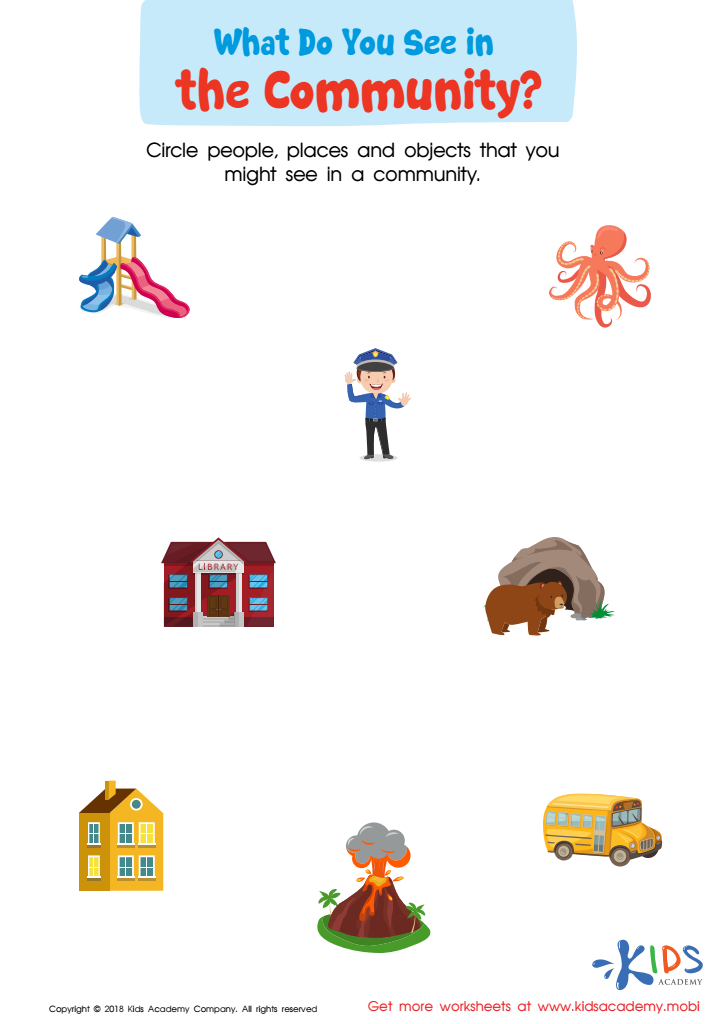
What Do You See in the Community Worksheet
This free social studies PDF can help your children learn about their local community. They'll identify its members, places and objects using engaging and recognizable pictures. As they trace circles around them, they'll also practice fine motor skills. It's a great way to introduce social science concepts and help them understand the importance of community.
 Assign to My Students
What Do You See in the Community Worksheet
Worksheet
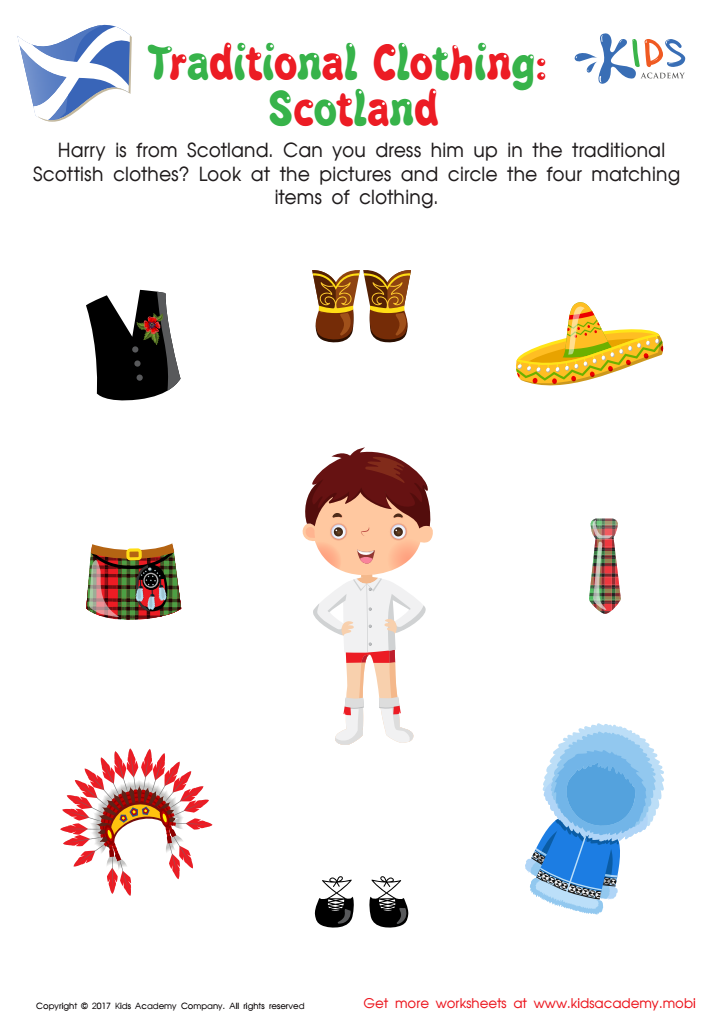
Traditional Clothing in Scotland Worksheet
Explore Scotland's traditional clothing without leaving home! This engaging worksheet will help your kid gain a new appreciation for different cultures. They'll have a blast learning about Scotland's clothing!
Traditional Clothing in Scotland Worksheet
Worksheet
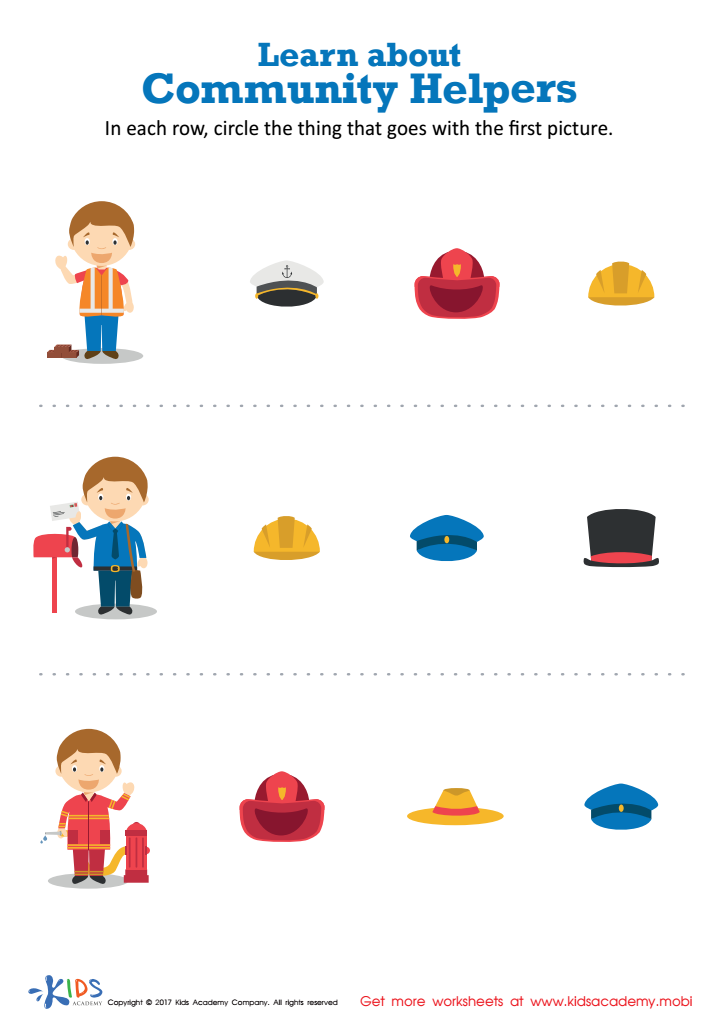
Learn about Community Helpers Printable
Introduce your little one to the amazing and hard-working people in the community with this free worksheet. It will help them use matching and observational skills to match the correct hat to its worker and recognize community helpers. Perfect for early learners, this worksheet uses familiar images to help them gain a deeper appreciation for their community helpers!
Learn about Community Helpers Printable
Worksheet
Join Kids Academy for Free
Who is primarily going to use this learning content?




.jpg)


Parents and teachers should care deeply about developing identification skills in social studies for children aged 6-8 because these formative years are crucial for cognitive and social development. Identification skills involve recognizing and naming social, cultural, geographical, and historical elements, which serve as foundational knowledge for young learners.
Firstly, these skills help children understand their world better. By identifying significant places, symbols, and figures, kids begin to make sense of their surroundings and heritage, which fosters a sense of belonging and identity. Understanding their community and cultural norms also builds social awareness, teaching them to appreciate diversity and develop empathy for others.
Secondly, identification skills enhance cognitive development. Recognizing patterns, symbols, and categories requires critical thinking and problem-solving abilities. Children start observing details, making connections, and organizing information in a meaningful way, which lays the groundwork for more complex learning tasks in later grades.
Moreover, proficiency in these skills promotes academic success across subjects. For instance, understanding geographical maps can improve reading comprehension and mathematics, as it involves spatial reasoning and symbol recognition.
Lastly, social studies skills prepare children for active citizenship. By learning about roles, responsibilities, and historical events, young students begin to understand societal values and their role within a community.
In sum, nurturing identification skills in early social studies empowers children to become knowledgeable, empathetic, and thoughtful individuals, setting the stage for lifelong learning and responsible citizenship.