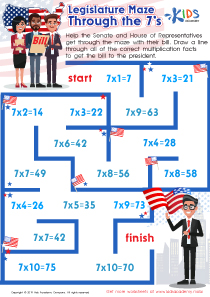
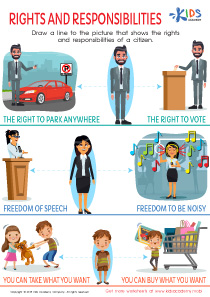
Spatial awareness Normal Social Studies Worksheets for Ages 6-8
5 filtered results
-
From - To
Discover our engaging Spatial Awareness Normal Social Studies Worksheets for Ages 6-8, designed to enhance young learners' understanding of their physical and social environments. These worksheets focus on essential skills such as map reading, directions, and position identification, allowing children to develop critical thinking as they explore spatial relationships. Each activity is visually appealing and age-appropriate, ensuring a fun learning experience. Perfect for classrooms or homeschooling, our worksheets encourage independence and confidence in navigating spaces. Help your child strengthen their spatial awareness and lay the foundation for future learning in geography and social studies! Explore our collection today!
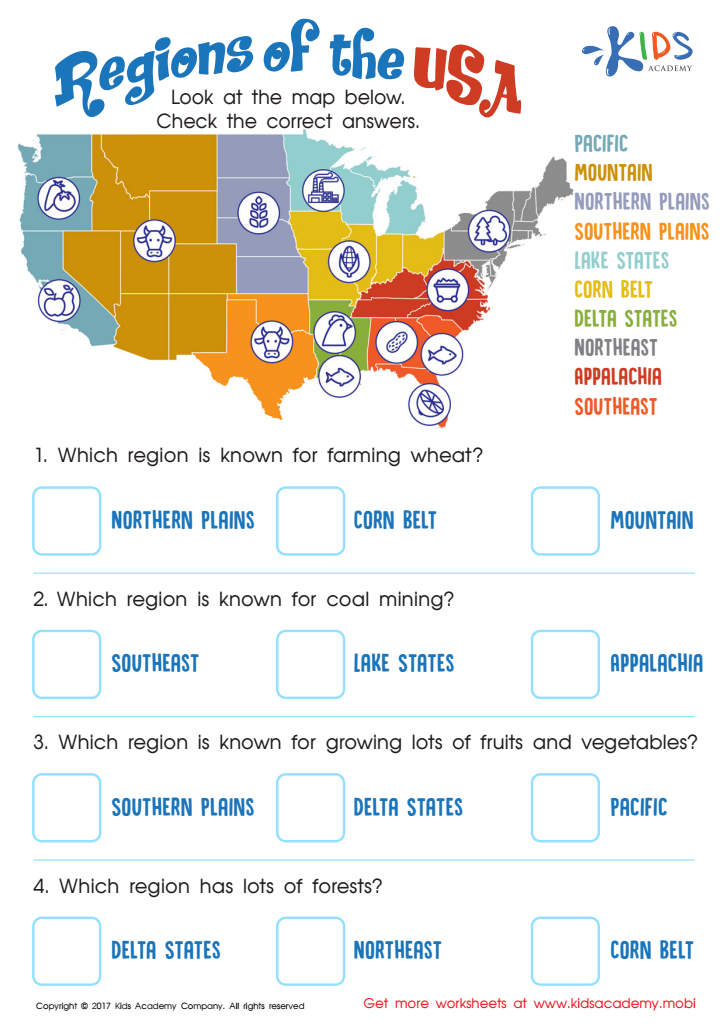
Regions of the USA Worksheet
 Assign to My Students
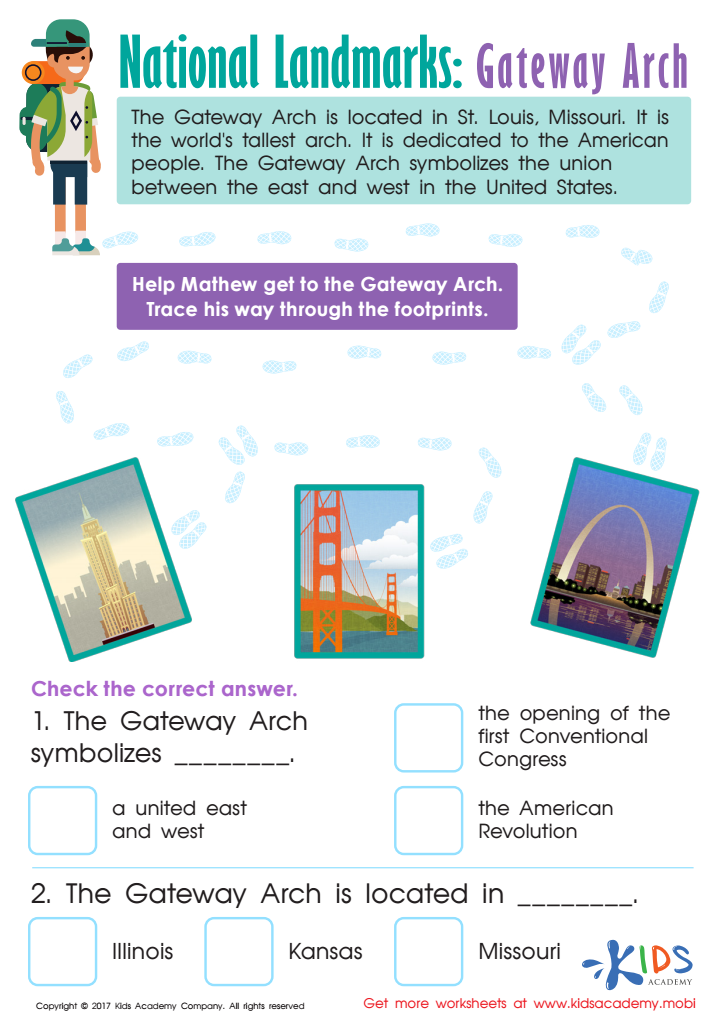
Gateway Arch Printable Worksheet
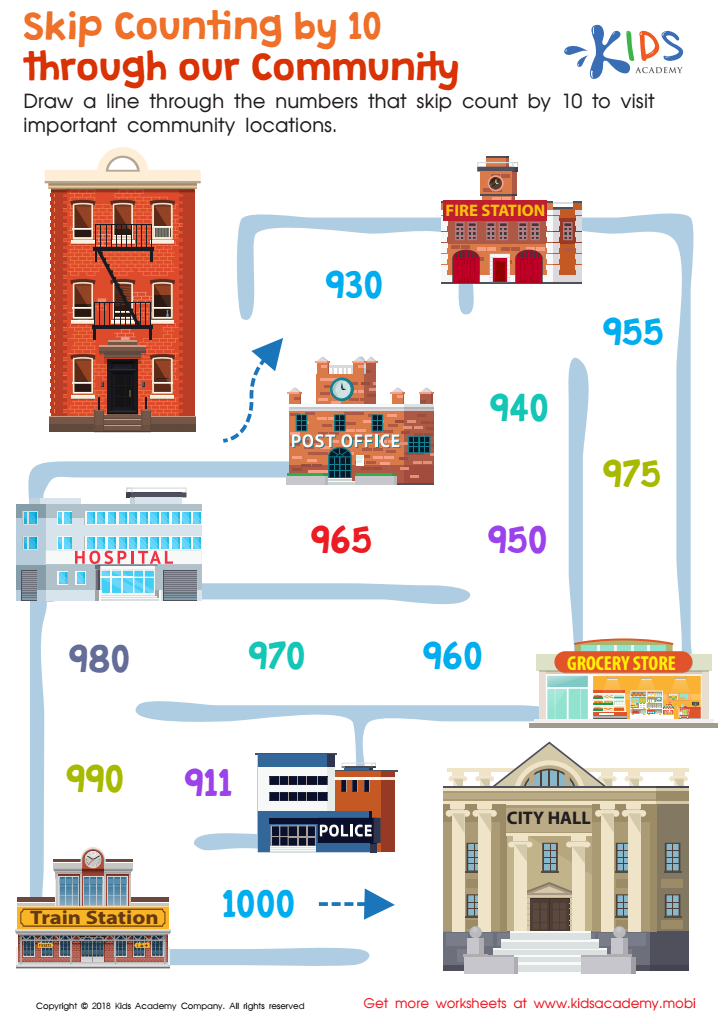
Skip Counting by 10 Through Our Community Worksheet
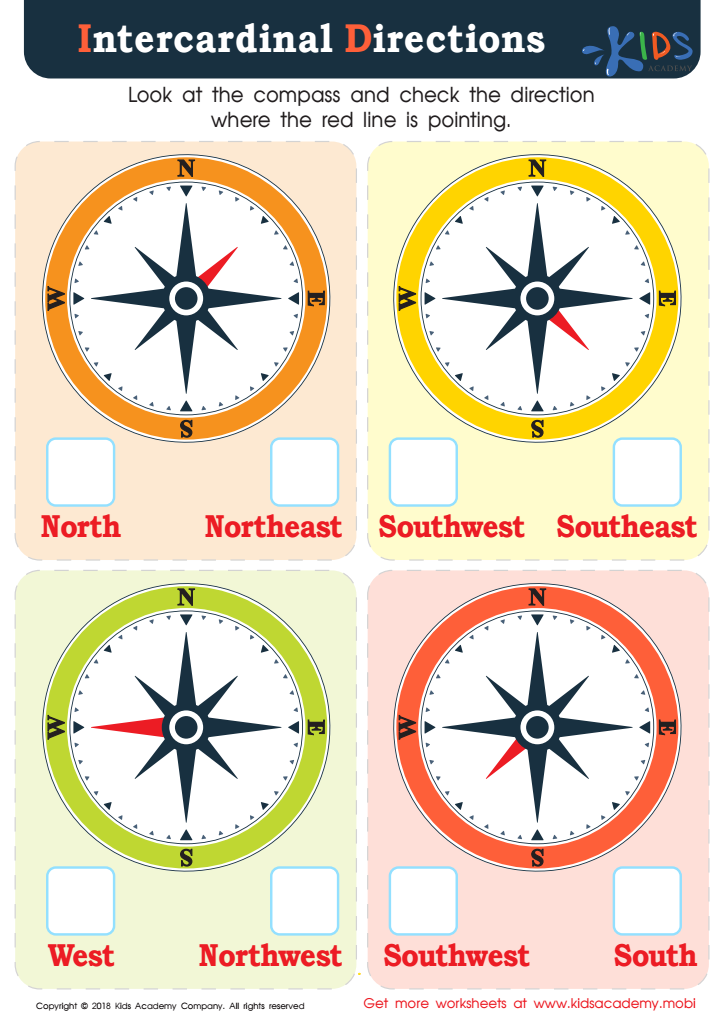
Intercardinal Directions Worksheet
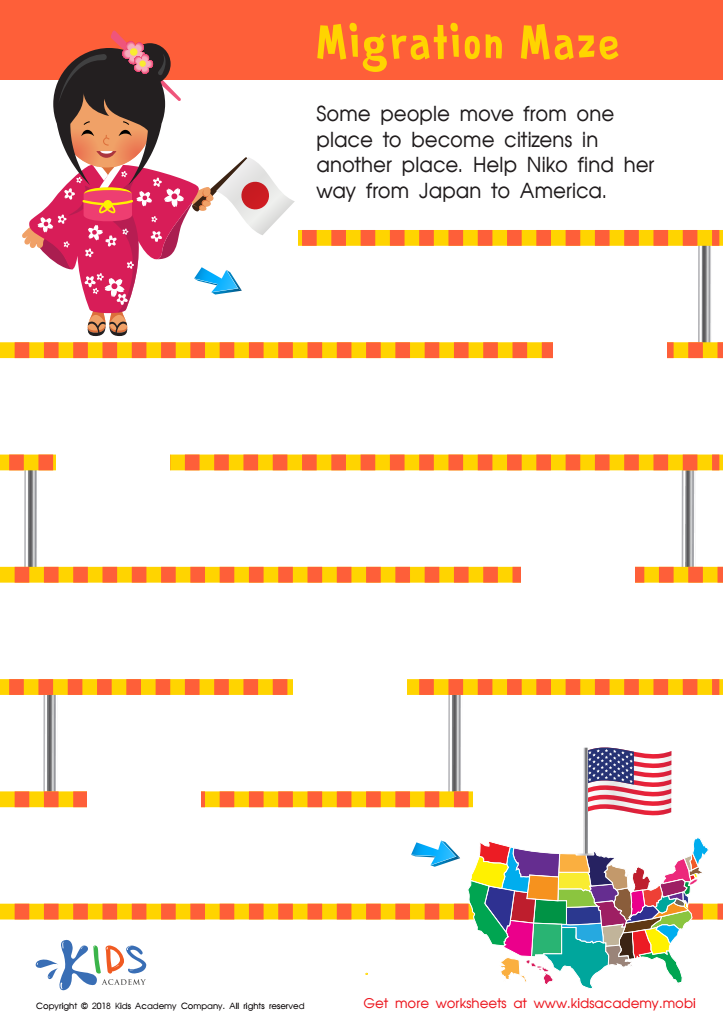
Migration Maze Worksheet







Spatial awareness is a crucial skill for children ages 6-8 that significantly impacts their development in various areas, particularly within subjects like social studies. Parents and teachers should care about this skill because it lays the groundwork for understanding geography, maps, and spatial relationships which are foundational elements in social studies.
Developing spatial awareness helps children to visualize where places are located, understand the layout of their community, and grasp the importance of landmarks and geographical features. This understanding nurtures curiosity about different cultures and regions, encouraging them to engage with the world around them more meaningfully.
Moreover, enhancing spatial skills supports critical thinking, problem-solving, and collaboration—essential skills for social interactions. As children learn to orient themselves in space and visualize scenarios, they become better equipped to participate in discussions about national and global issues.
Integrating spatial awareness activities, such as map reading or engaging in community explorer role-plays, drives home the importance of these skills in real-life contexts. Ultimately, fostering spatial awareness in young learners contributes not only to their academic success but also to their ability to interact with and understand the world as informed and active citizens.