Reading skills improvement Normal Grammar Worksheets for Ages 6-8
3 filtered results
-
From - To
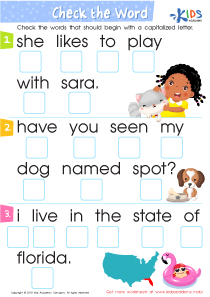
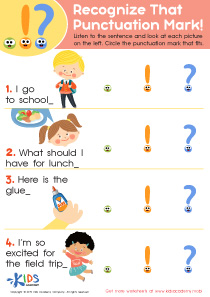
Enhance your child's reading skills with our comprehensive Normal Grammar Worksheets designed specifically for ages 6-8. These engaging and interactive worksheets focus on key components of grammar and reading comprehension, making learning fun and effective. Each activity reinforces essential skills, such as identifying parts of speech, understanding sentence structure, and improving vocabulary. Perfect for home or classroom use, these worksheets are designed to cater to varying skill levels, ensuring every child can progress at their own pace. Foster a love for reading while building a solid foundation in grammar with our well-structured resources. Start empowering young learners today!
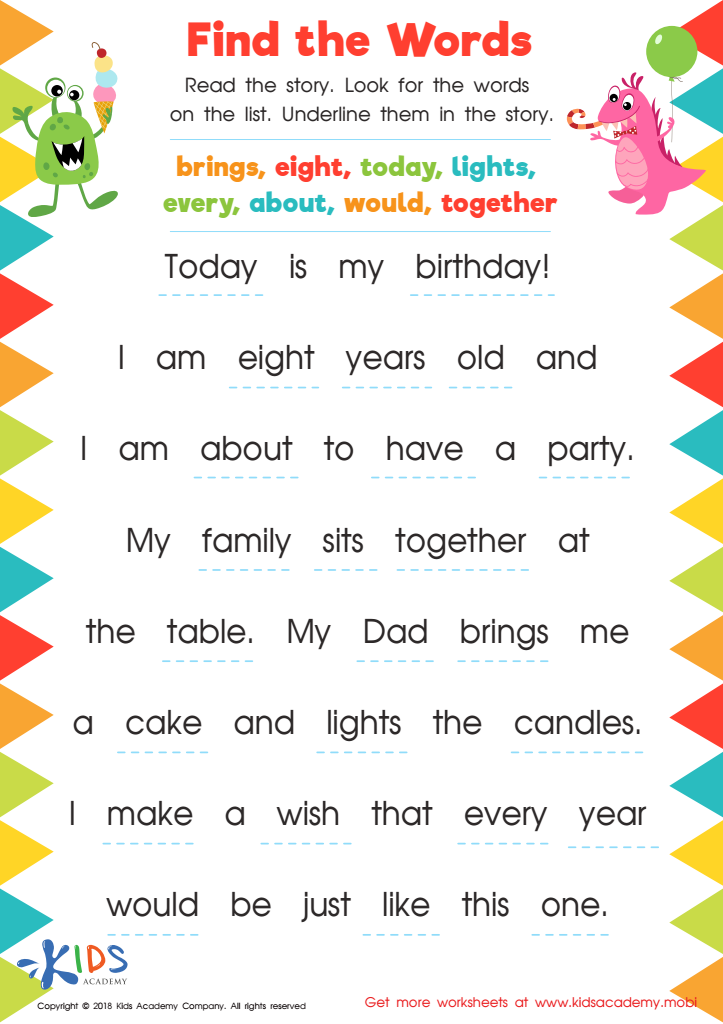
Find The Words Printable Worksheet
 Assign to My Students
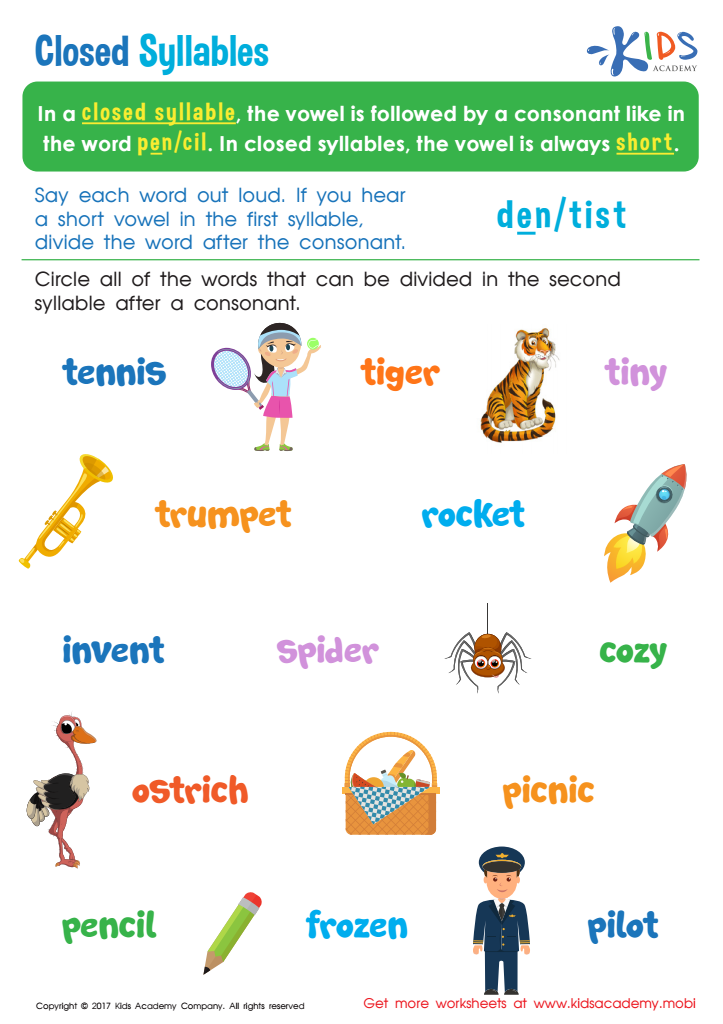
Closed Syllable Spelling Worksheet
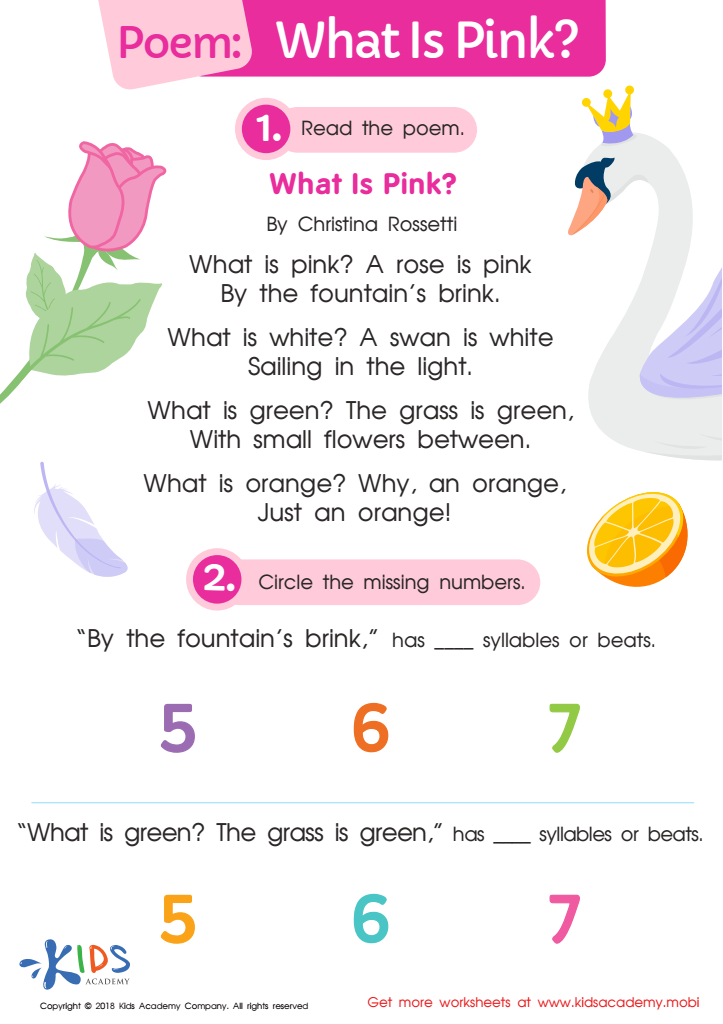
Poem: What Is Pink? Worksheet








Parents and teachers should prioritize improving reading skills for children aged 6-8 because these foundational years are crucial for a child's academic and personal development. Strong reading skills enhance comprehension, vocabulary, and critical thinking, which are essential for learning across all subjects. At this age, children are developing the ability to independently decode words and understand meaning, paving the way for a successful educational journey.
Improving reading skills also builds confidence. Children who are proficient readers tend to participate more in class discussions and feel more comfortable sharing their thoughts. Additionally, strong reading skills foster a love for books and learning, encouraging children to explore new ideas and cultures through literature.
Moreover, reading proficiency impacts future academic performance; children who struggle with reading may face ongoing challenges throughout their schooling, leading to frustration and disengagement. Early intervention helps to address these challenges, setting the stage for lifelong learning habits.
By focusing on reading improvement, parents and teachers not only support academic success but also empower children to become effective communicators and thoughtful individuals, able to navigate the world with understanding and empathy. This commitment ultimately influences their overall well-being and future opportunities.