Understanding adjectives Normal Grammar Worksheets for Ages 6-8
3 filtered results
-
From - To
Unlock your child's potential with our "Understanding Adjectives" grammar worksheets, designed specifically for ages 6-8. These printable resources from Kids Academy provide engaging activities that teach students how to identify and use adjectives effectively. Each worksheet focuses on enhancing vocabulary and improving sentence structure, laying a strong grammatical foundation. With colorful illustrations and fun exercises, children will find learning grammar enjoyable and rewarding. Boost your child's writing skills and confidence by exploring our expertly crafted worksheets today. Perfect for both classroom and at-home learning, fostering a love for language from a young age.
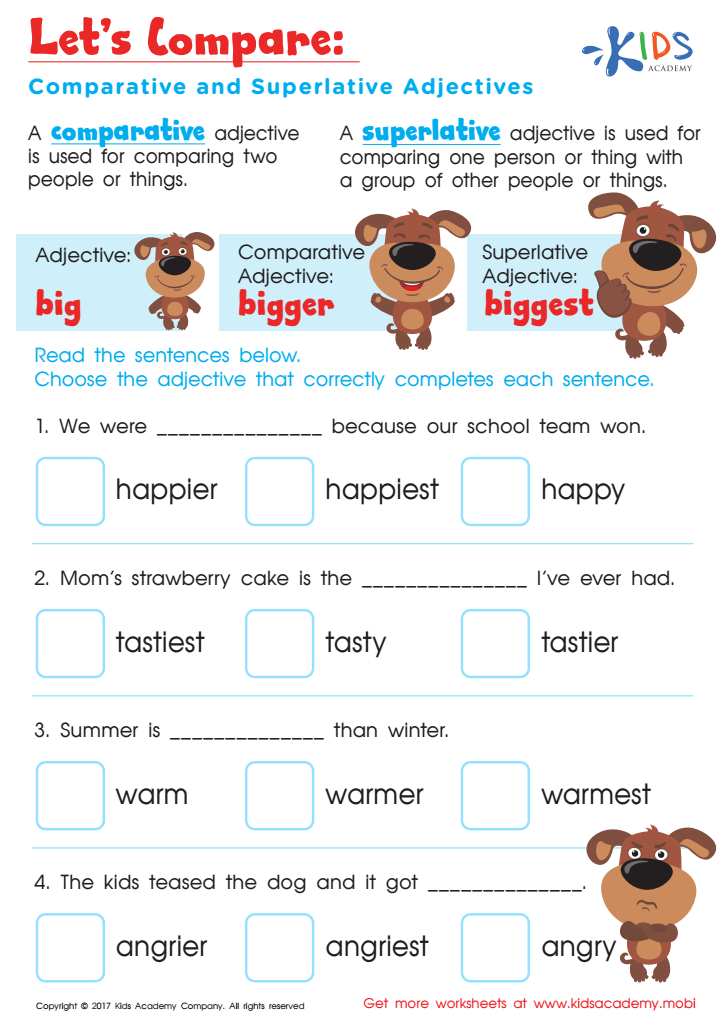
Comparative and Superlative Worksheet
 Assign to My Students
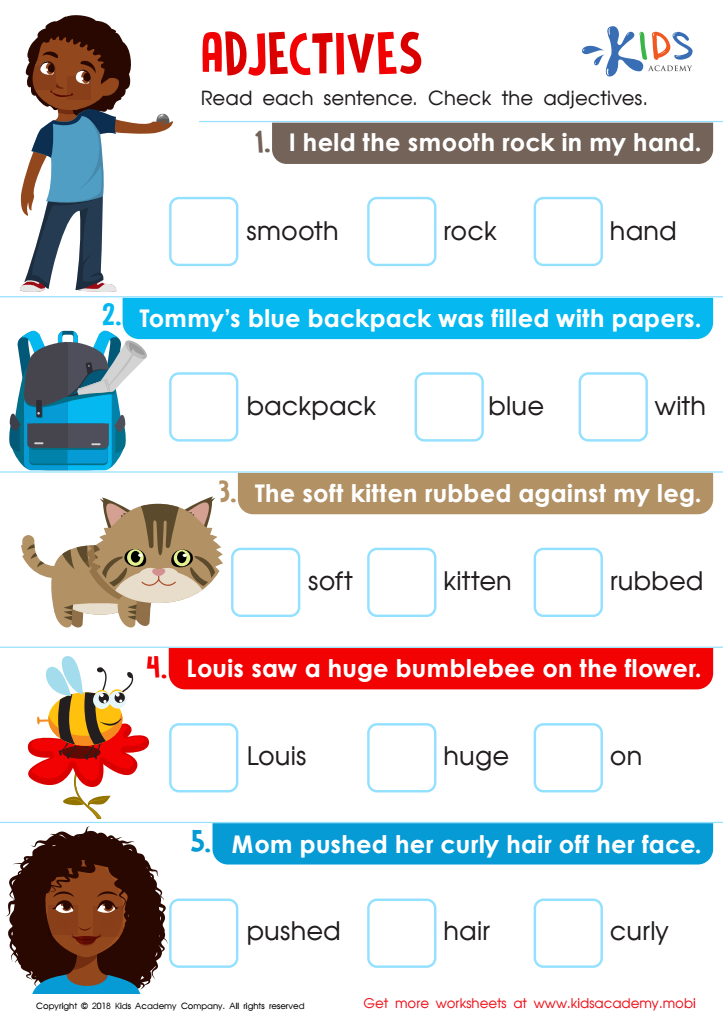
Adjectives Worksheet
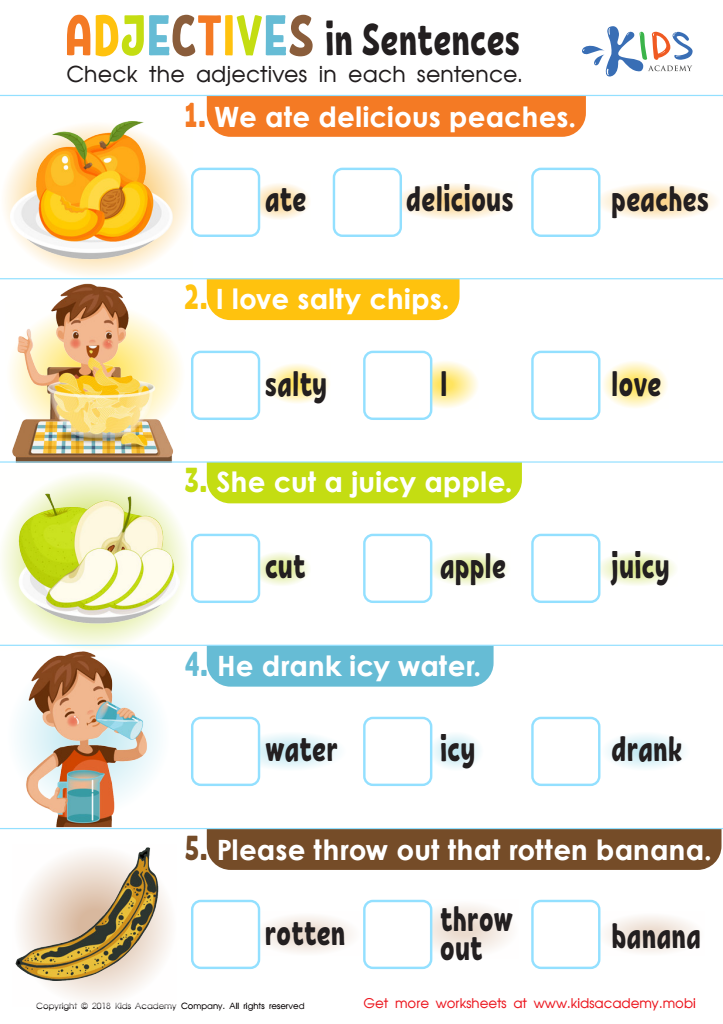
Adjectives in Sentences Worksheet







Adjectives are fundamental building blocks in the development of language skills for children aged 6-8. Understanding adjectives is crucial because they add color, detail, and precision to a child's speech and writing. For instance, instead of saying "a dog," a child can say "a big, brown dog," painting a clearer picture in the listener's mind.
At this age, children are expanding their vocabulary rapidly. By learning adjectives, they become more descriptive and expressive, which aids in better communication. This not only helps in personal interactions but also supports academic success, as nuanced language is often required for comprehension and creativity in subjects like reading and writing.
Teachers and parents should care about this because it lays the foundation for advanced language use. When children regularly use adjectives, they become more engaged storytellers and writers. It enhances their ability to convey emotions and describe scenarios vividly, enriching both their spoken and written narratives.
Furthermore, understanding and using adjectives properly can boost a child's confidence. They feel more equipped to express themselves clearly and effectively. Early exposure to the structure and use of adjectives will make more complex language concepts easier to grasp in later years, ensuring a smoother educational journey.