Vocabulary development Normal Grammar Worksheets for Ages 6-8
5 filtered results
Difficulty Level
Grade
Age
-
From - To
Subject
Activity
Standards
Boost your child's language skills with our Vocabulary Development Normal Grammar Worksheets for ages 6-8. Crafted to enhance vocabulary and grammar usage, these engaging worksheets help young learners grasp essential word meanings and sentence structures. Filled with fun activities and vibrant illustrations, each worksheet encourages kids to explore word relationships, context clues, and proper grammar. Ideal for reinforcing classroom learning or homeschooling, our sheets promote reading comprehension and effective communication. Give your 6-8-year-old the tools they need to succeed in literacy with our expertly designed worksheets, perfect for their developmental stage. Explore a world of words today!
Favorites
With answer key
Interactive
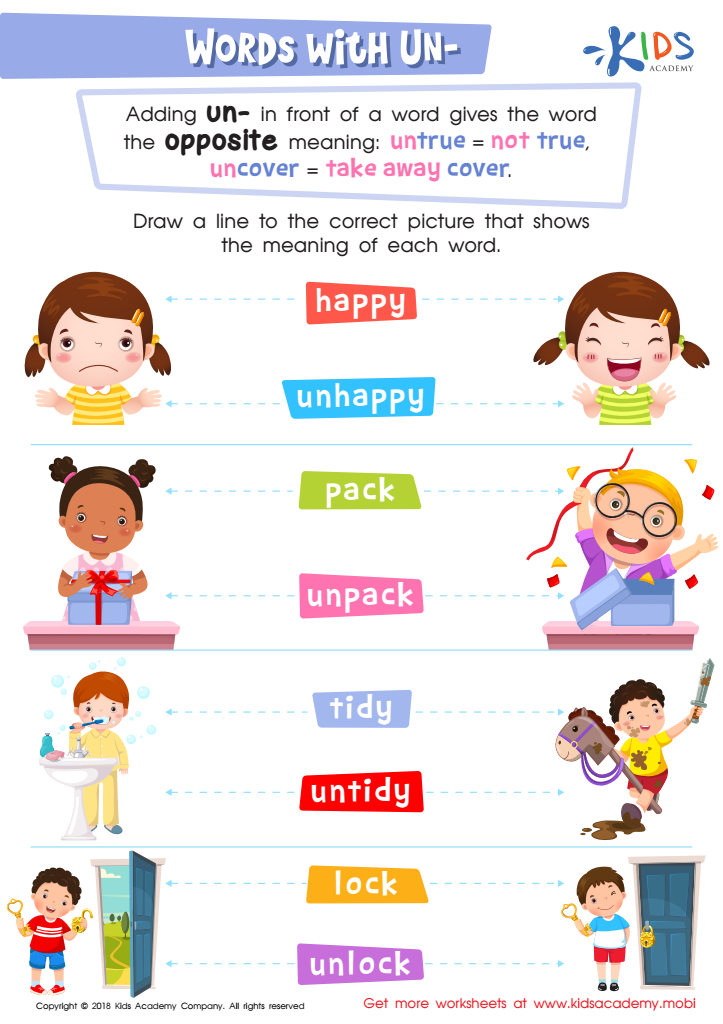
Words with Un– Worksheet
Prefixes can change the meaning of words. Adding "Un-" can give the opposite meaning, like Un-true, Un-happy, and Un-finish. Help your child learn with this worksheet. Draw a line to the picture that shows each word's meaning.
 Assign to My Students
Words with Un– Worksheet
Worksheet
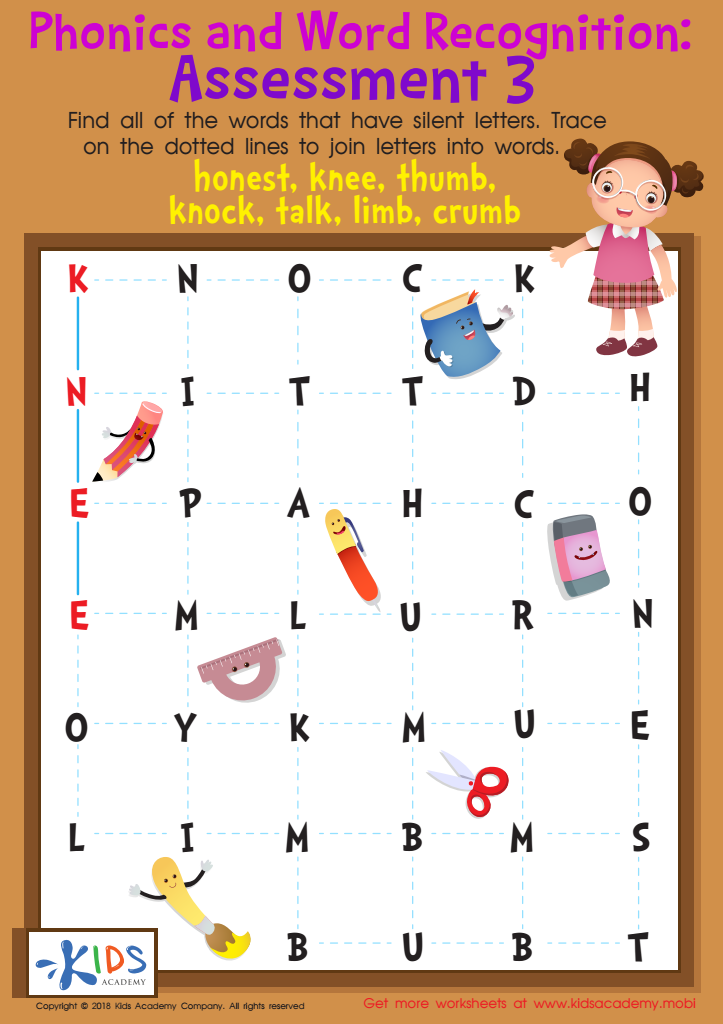
Phonics and Word Recognition: Assessment 3 Worksheet
Silent letters can be tricky for kids learning to read and write. Show them how they work with words like 'knee' and 'dumb'. Then, challenge them to come up with their own. Give them a worksheet with silent letters and trace the lines to join the letters into words.
Phonics and Word Recognition: Assessment 3 Worksheet
Worksheet
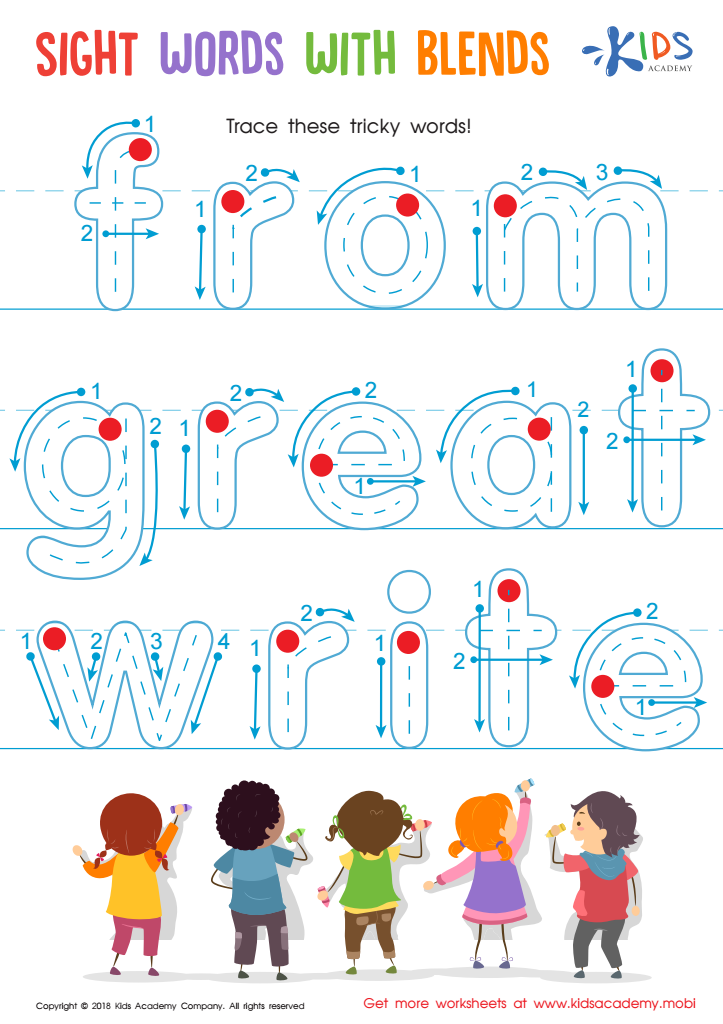
Sight Words with Blends Worksheet
This free PDF lets your children trace and write sight words with tricky blends. The guide numbers help them start from the top, building fine motor skills and enhancing sight word vocab. It's a great way to give your kids a solid foundation for reading!
Sight Words with Blends Worksheet
Worksheet
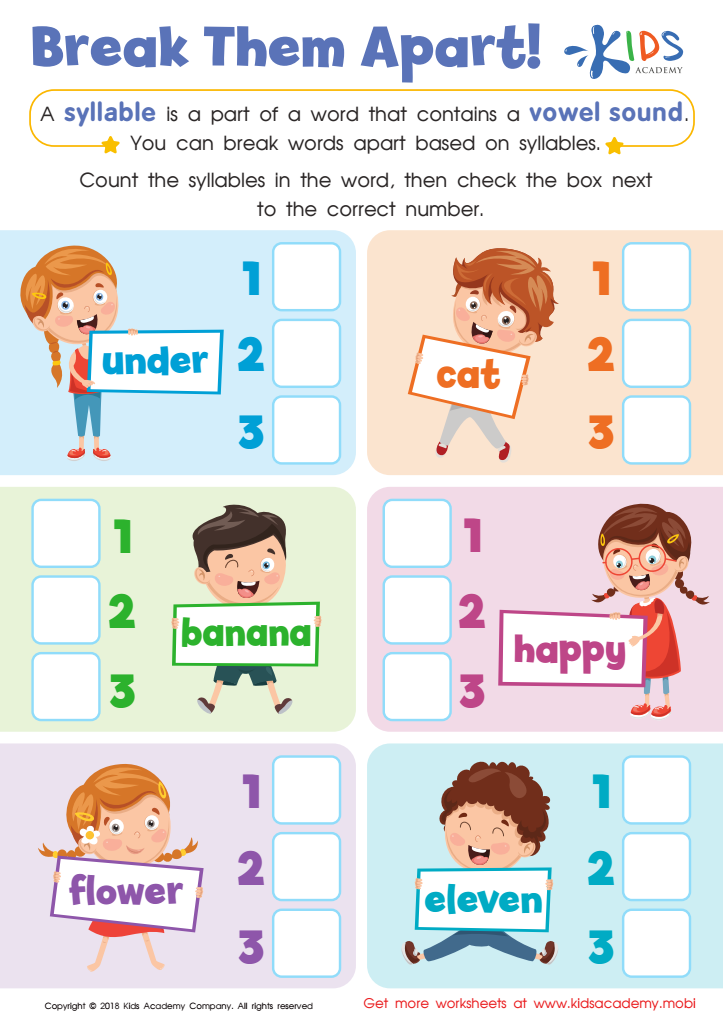
Reading: Break Them Apart Worksheet
See if students understand syllables with this fun worksheet. It teaches them that a syllable is a word part with a vowel sound. Kids read each word and choose how many parts it has. Doing this often helps them decode new words and gain confidence.
Reading: Break Them Apart Worksheet
Worksheet
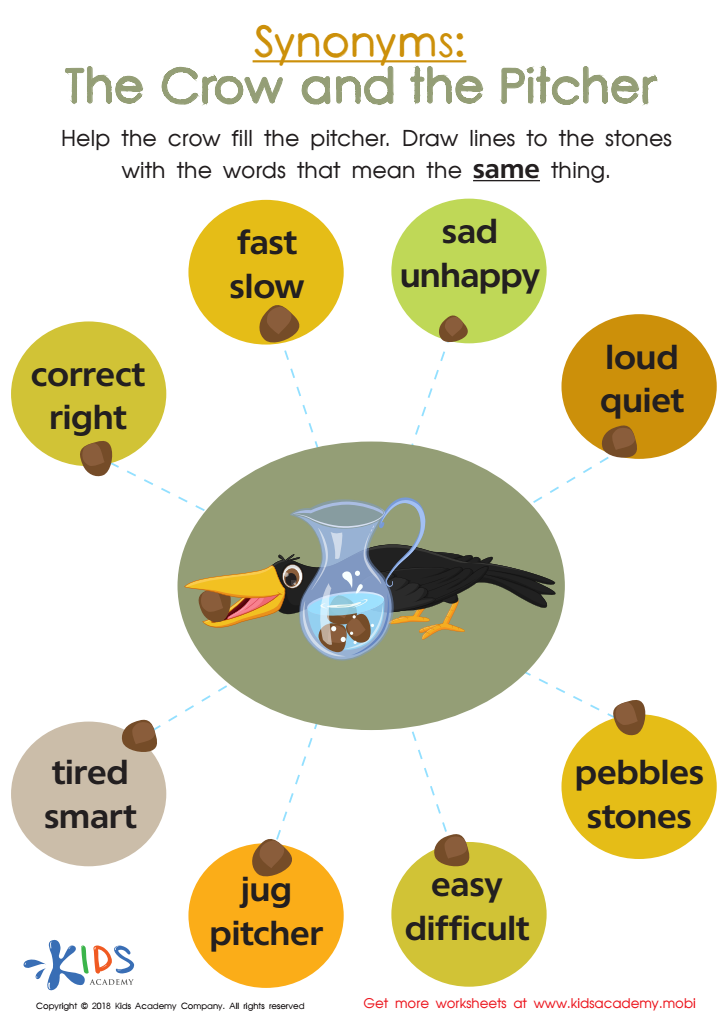
The Crow and the Pitcher Synonyms Worksheet
Give your child the building blocks for effective communication with an ELA lesson! Help the crow in this Kids Academy worksheet find the correct stones to fill the pitcher - only those next to synonym pairs! This is a fun way for kids to learn and expand their vocabulary and language skills.
The Crow and the Pitcher Synonyms Worksheet
Worksheet
Join Kids Academy for Free
Who is primarily going to use this learning content?








Vocabulary development is crucial for children ages 6-8 because it significantly impacts their academic success and social skills. At this foundational stage, a rich vocabulary enhances reading comprehension, enabling children to grasp more complex texts as they advance in their education. Proficient readers are more likely to enjoy reading, fostering a lifelong love for learning and literature.
Furthermore, having a strong vocabulary equips children with the tools they need to express their thoughts and emotions clearly. This is essential for effective communication, both in the classroom and in social situations. When children can articulate themselves well, they are more likely to participate in discussions, make friends, and navigate social nuances better, boosting their self-confidence and emotional intelligence.
Additionally, vocabulary development is deeply interconnected with other areas of learning, such as spelling and writing. A robust vocabulary allows children to become more proficient writers, as they have a broader arsenal of words to choose from when crafting stories or essays.
Parents and teachers play a pivotal role in this developmental phase. By engaging children in conversations, reading to them regularly, and encouraging them to read on their own, adults can provide the exposure and practice needed to expand a child’s vocabulary. Making vocabulary learning enjoyable and diverse helps children build their language skills, setting them up for ongoing academic and personal achievement.