Word identification Normal Grammar Worksheets for Ages 6-8
5 filtered results
-
From - To
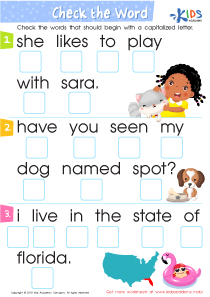
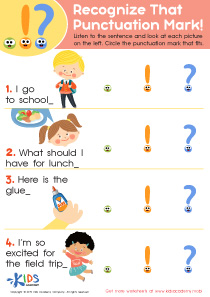
Explore our engaging Word Identification Normal Grammar Worksheets, specially designed for ages 6-8. These fun and interactive exercises help young learners recognize and categorize various words, enhancing their vocabulary and grammatical skills. Each worksheet focuses on key learning areas, including noun identification, verb usage, adjective and adverb differentiation, and more. Our carefully crafted activities are perfect for both classroom and home learning, providing children with the foundational skills needed to excel in writing and reading. Foster your child's language development with our comprehensive and easy-to-use grammar worksheets today!
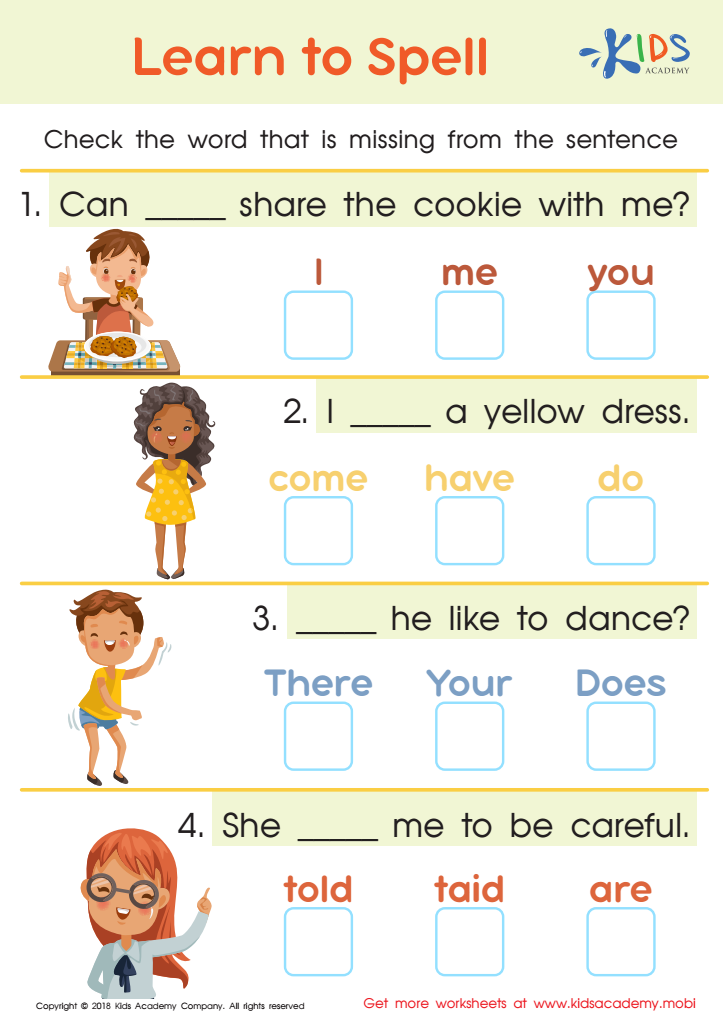
Learn to Spell Worksheet
 Assign to My Students
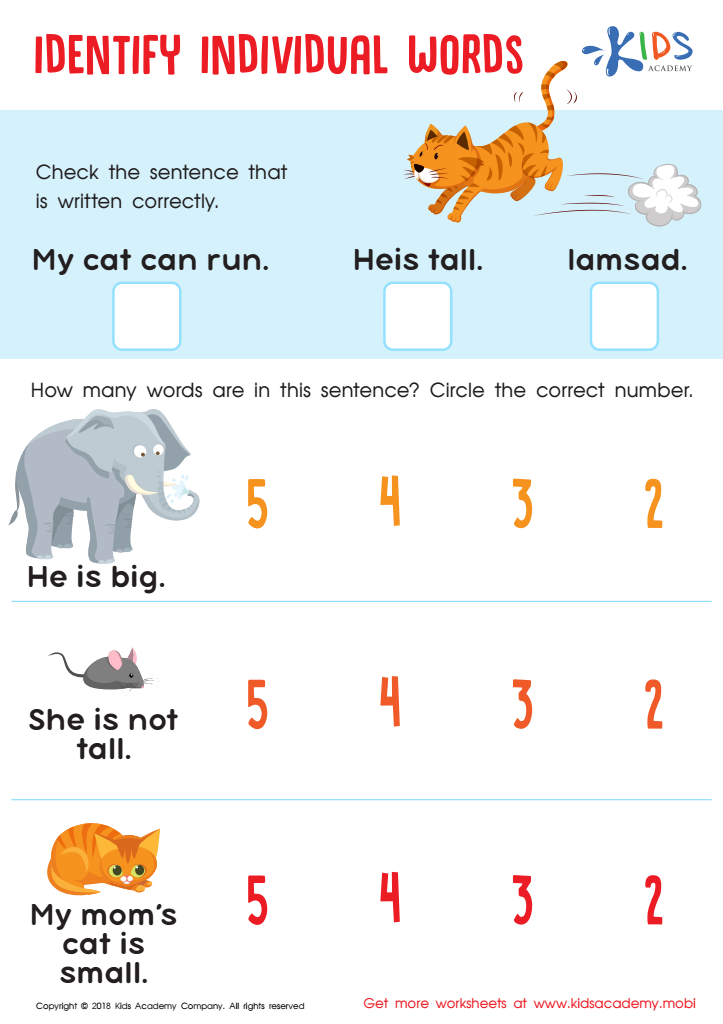
Identify Individual Words Worksheet
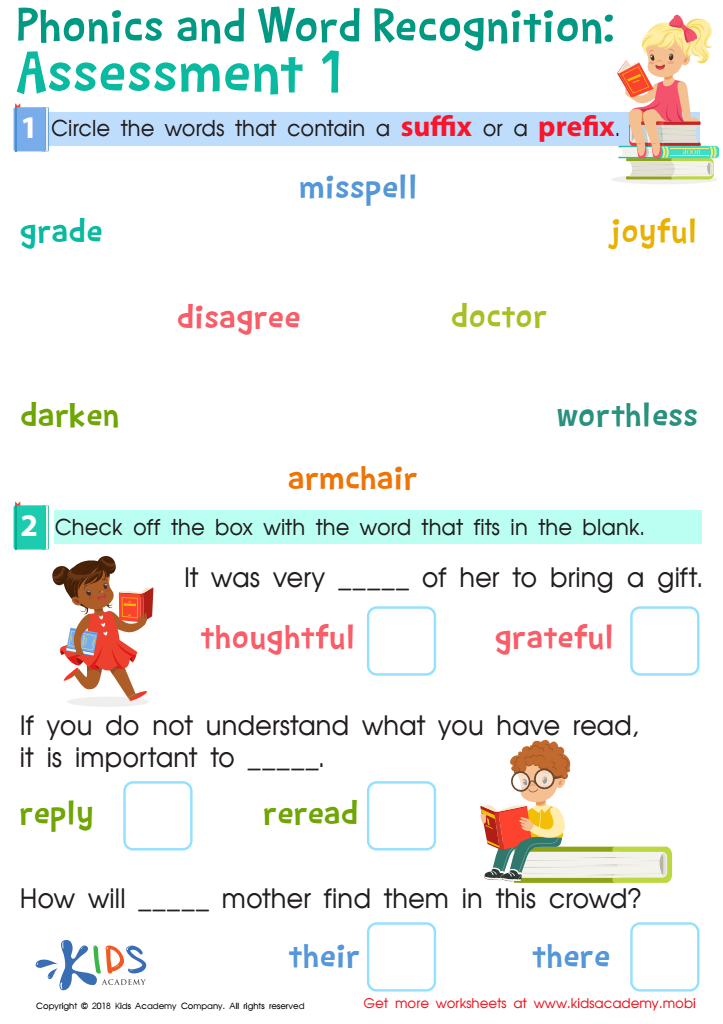
Phonics and Word Recognition: Assessment 1 Worksheet
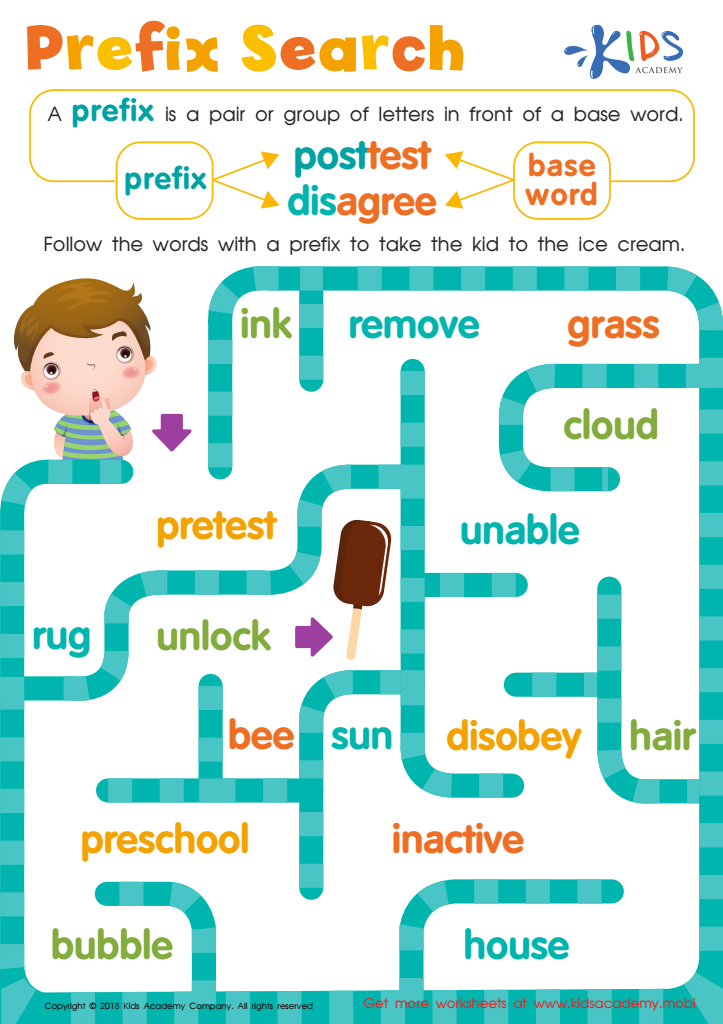
Reading: Prefix Search Worksheet
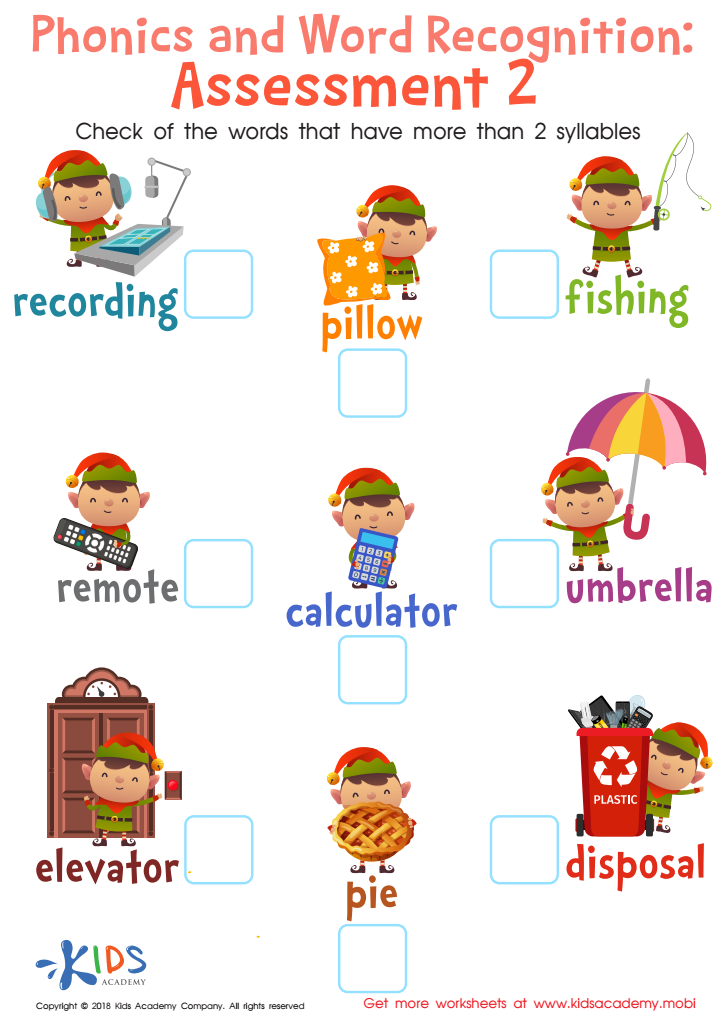
Phonics and Word Recognition: Assessment 2 Worksheet







Parents and teachers should care about word identification and normal grammar for children aged 6-8 because these foundational skills are critical for academic success and effective communication. During these developmental years, children are transitioning from recognizing simple letters and sounds to understanding and forming words, sentences, and basic grammar.
Proficient word identification helps children become confident readers. It enables them to decode words quickly and accurately, which is crucial for comprehension. If a child struggles to identify words, they may find reading frustrating, leading to reluctance and disengagement from learning. Early success in reading fosters a love for books and continuous learning.
Understanding normal grammar at this age solidifies the building blocks of language. Grammar rules guide children in constructing meaningful sentences, enabling them to express themselves clearly and logically. These skills are not only critical in language arts but also impact learning across all subjects, including math, science, and social studies, where instructions and problem-solving often require strong language skills.
Additionally, early mastery of these skills can boost a child’s confidence, encourage participation in class, and enhance social interactions. By prioritizing word identification and proper grammar, parents and teachers can support holistic development, laying a strong foundation for lifelong learning and success.