Pronoun identification Normal Writing Worksheets for Ages 6-8
3 filtered results
-
From - To
Enhance pronoun skills with our engaging Pronoun Identification Normal Writing Worksheets, designed for children ages 6-8. These printable worksheets introduce young learners to the basics of pronouns, helping them recognize and correctly use words such as 'he', 'she', 'him', 'her', 'it', and more. Tailored to blend learning with fun exercises, these resources aim to bolster writing abilities and reading comprehension. With colorful illustrations and a variety of activities, kids will enjoy practicing their grammar while developing foundational language skills. Perfect for both classrooms and homeschooling, these worksheets make learning pronouns simple and effective.
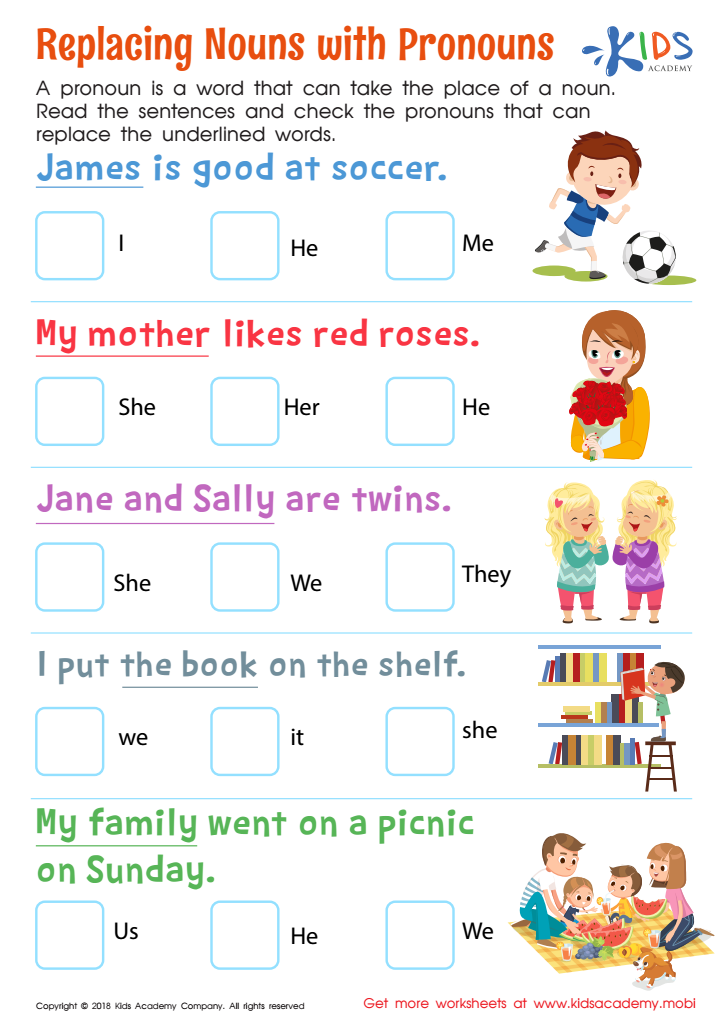
Replacing Nouns with Pronouns Worksheet
 Assign to My Students
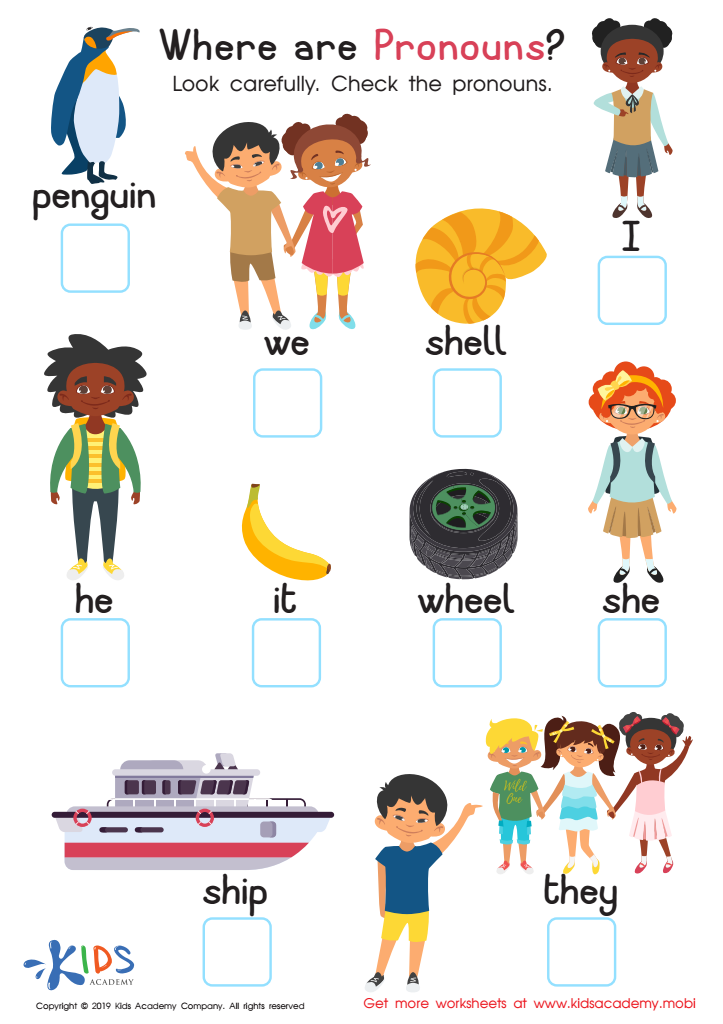
Where Are Pronouns? Worksheet
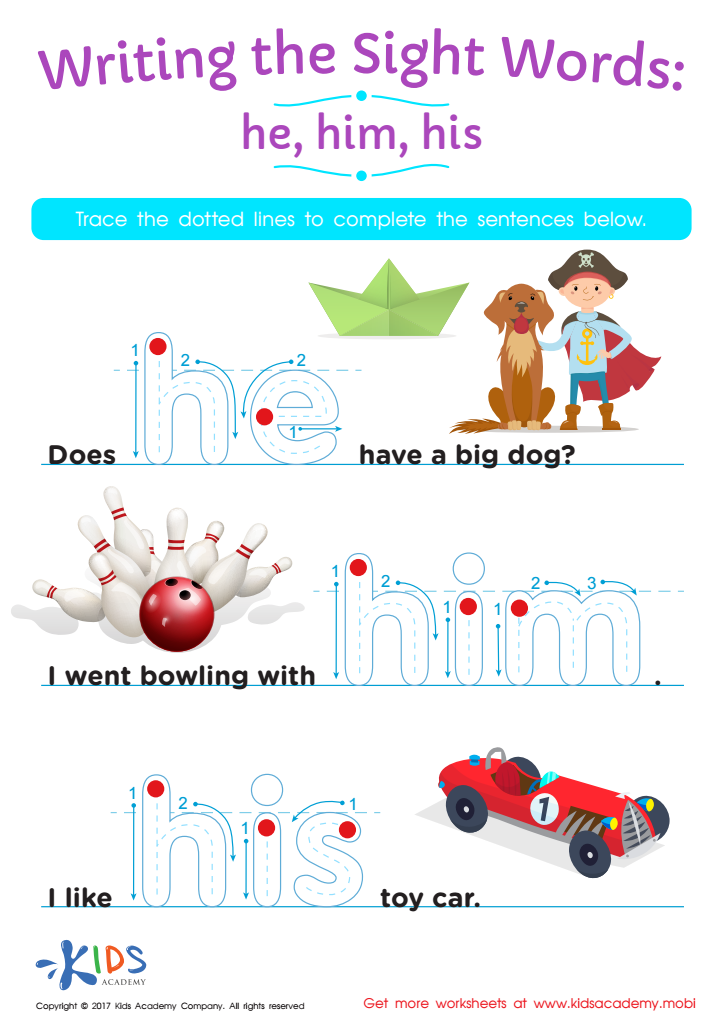
He, Him, His Printable Sight Words Worksheet






Parents and teachers should care about pronoun identification for children aged 6-8 because it is a foundational aspect of language development. At this age, children are expanding their vocabulary and improving their reading and writing skills. Understanding pronouns—such as he, she, it, they—helps kids construct better sentences and communicate more clearly. When children can identify and use pronouns correctly, they can avoid redundancy, making their speech and writing more fluid and easier to understand.
Moreover, pronoun identification helps in developing children's comprehension abilities. When reading, recognizing that "she" or "they" refers to a previously mentioned character means the child understands the context, enhancing their ability to follow stories and instructions. This skill is crucial for academic success and builds the child's confidence in their own literacy skills.
Lastly, being proficient in using pronouns also fosters inclusivity and respect. As children learn about different pronouns, they become more aware of and sensitive to others’ identities and preferences, an important social skill. By teaching pronoun identification, parents and teachers are not just honing a linguistic skill, but also encouraging empathy and social awareness from a young age. These early lessons lay the groundwork for more complex language and relationship skills in the future.