Syllable identification Normal Writing Worksheets for Ages 6-8
5 filtered results
Difficulty Level
Grade
Age
-
From - To
Subject
Activity
Standards
Explore our engaging Syllable Identification Normal Writing Worksheets, specially designed for children aged 6-8! These carefully crafted worksheets provide fun and interactive activities that help young learners develop their syllable recognition skills essential for reading and writing. Each worksheet encourages kids to break words into syllables, enhancing their understanding of pronunciation and spelling. Ideal for classroom or home use, our resources promote literacy and boost confidence in young writers. With vibrant illustrations and easy-to-follow exercises, children will enjoy practicing syllable identification while sharpening their language skills. Start your child’s journey to becoming a confident achiever in reading and writing today!
Favorites
With answer key
Interactive
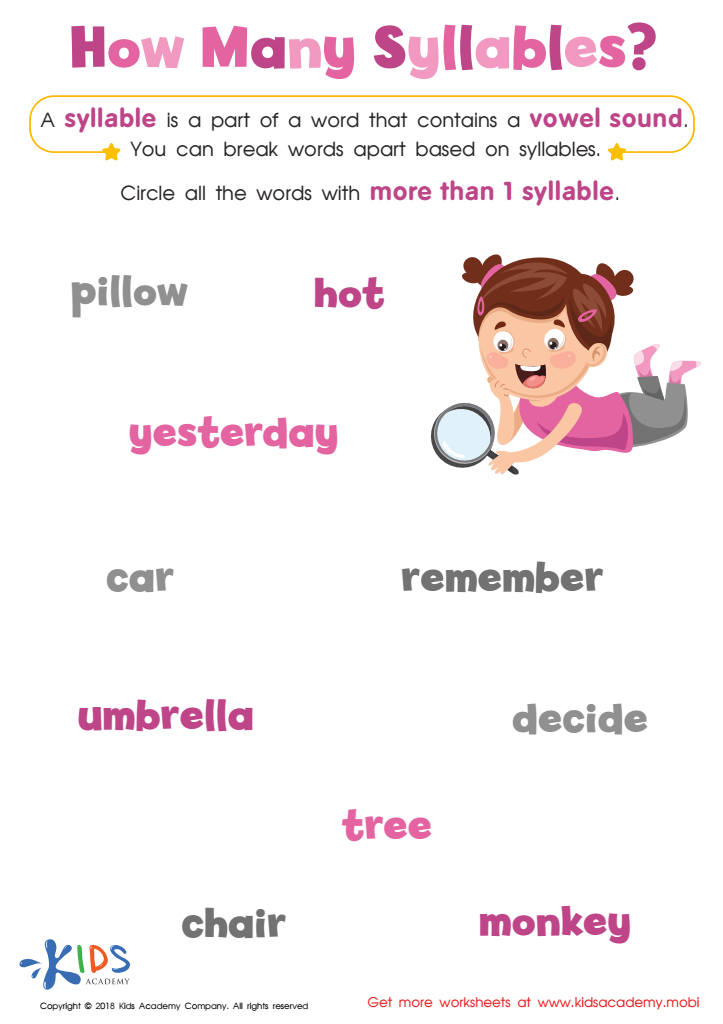
Reading: How Many Syllables Worksheet
This worksheet helps students practice counting syllables. They read each word, count the syllables, and circle single-syllable words. Mastering this skill helps with fluency and comprehension, so it's worth the effort! Use this printout to clear up any confusion.
 Assign to My Students
Reading: How Many Syllables Worksheet
Worksheet
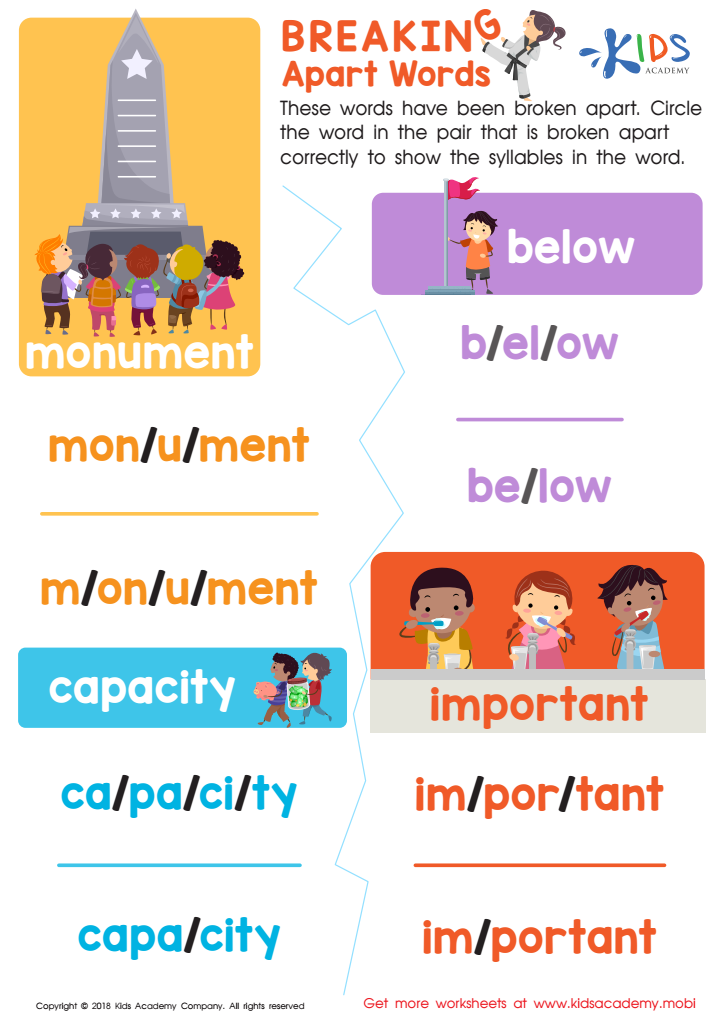
Breaking Apart Words Worksheet
Break words into syllables to make them easier to say correctly. Say each word carefully aloud and get kids to circle the correctly broken apart word in the pair to show the syllables. This worksheet has four words to practice with.
Breaking Apart Words Worksheet
Worksheet
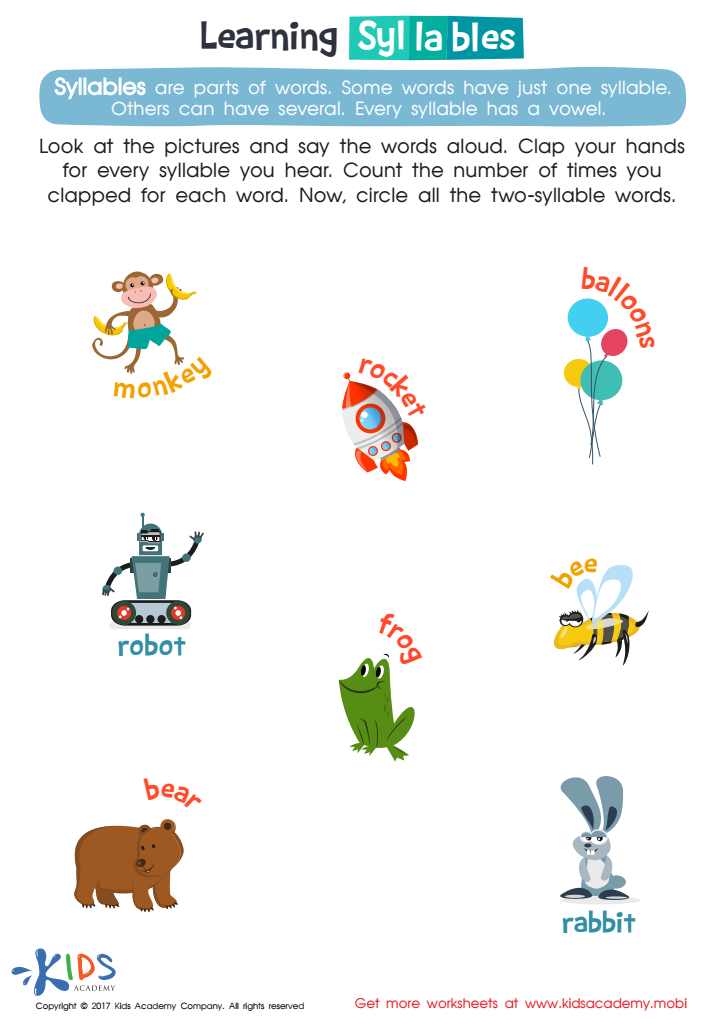
Learning Syllables Word Structure Worksheet
Teach kids to read and spell with our fun Learning Syllables worksheet. Kids will have a blast clapping and saying familiar words while counting syllables. Colorful and catchy, it's a great way to make learning enjoyable!
Learning Syllables Word Structure Worksheet
Worksheet
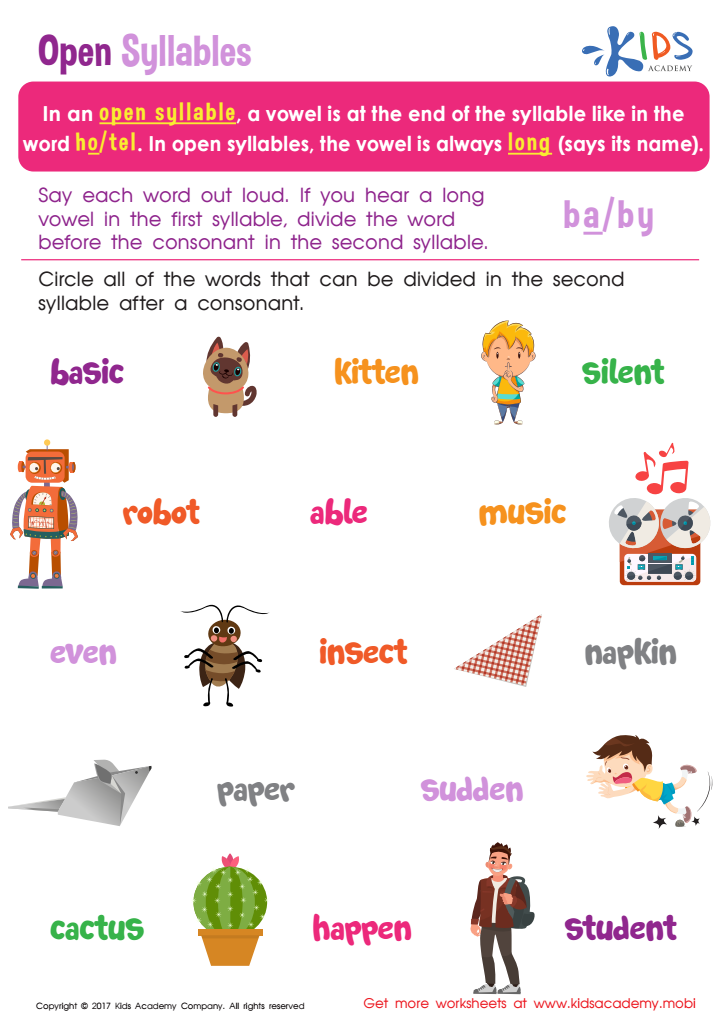
Open Syllable Printable Worksheet
Kids will have fun recognizing open syllables with this colorful worksheet. All they have to do is look for long vowel sounds and read each word aloud. With cute illustrations, they can easily discover the right answers!
Open Syllable Printable Worksheet
Worksheet
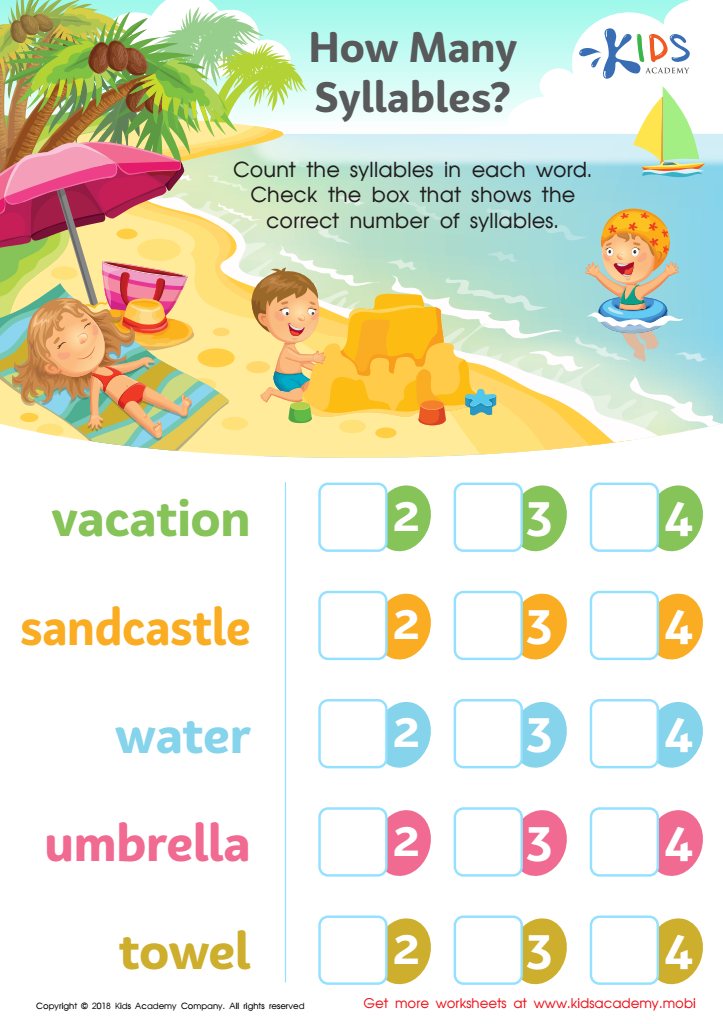
How Many Syllables Worksheet
Draw up memories of sunny beach days with your child. Ask them to tell you their favourite activities, objects seen. Read the words in the picture aloud and help them count the syllables. Then check the box with the right number of syllables.
How Many Syllables Worksheet
Worksheet
Join Kids Academy for Free
Who is primarily going to use this learning content?




.jpg)

Syllable identification is a crucial skill for children aged 6 to 8 as it lays the foundation for their reading and writing abilities. At this stage, children's cognitive development enables them to understand sound patterns in words, which is vital for phonemic awareness—a key component in learning to read. When children can identify syllables, they become better equipped to decode unfamiliar words, enhancing their fluency and comprehension.
For parents and teachers, nurturing syllable identification helps children develop spelling skills as well. By understanding syllable structure, children can break down words into manageable parts, making spelling less daunting. This skill also supports vocabulary expansion, as they become more comfortable experimenting with new words.
Furthermore, rhythmic speech and phonological awareness are encouraged through syllable games and practice, fostering a love for language. Engaging children in syllable identification cultivates a positive literacy experience, paving the way for future academic success.
In essence, supporting syllable identification is vital for children’s overall literacy development, empowering them to become confident readers and writers, ultimately enhancing their communication skills and lifelong learning. Parents and teachers play a pivotal role in guiding this essential process.