Understanding adjectives Normal Writing Worksheets for Ages 6-8
3 filtered results
-
From - To
Discover our "Understanding Adjectives Normal Writing Worksheets" designed for children aged 6-8! These engaging worksheets aim to enhance young learners' knowledge of adjectives, empowering them to describe nouns effectively. Through fun, interactive exercises, students will identify and use adjectives in sentences, fostering creativity and improving their writing skills. Each worksheet is age-appropriate, promoting comprehension and retention in a stress-free environment. Parents and teachers can easily incorporate these resources into their lesson plans to boost vocabulary development. Help your child become a more expressive writer with our carefully crafted worksheets that make learning adjectives enjoyable and impactful!
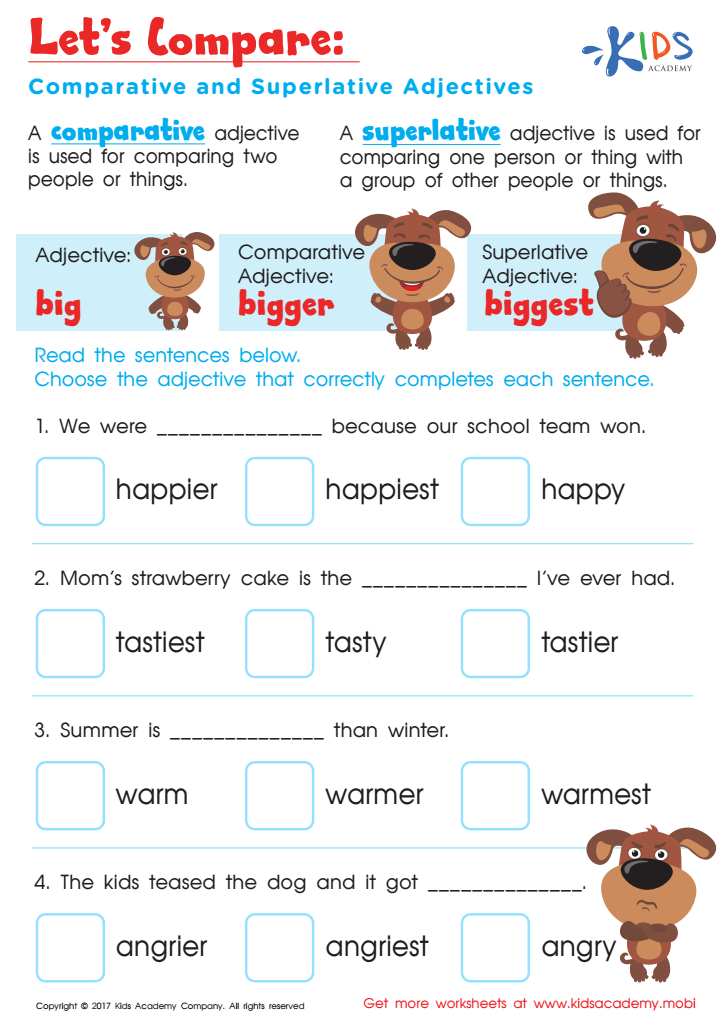
Comparative and Superlative Worksheet
 Assign to My Students
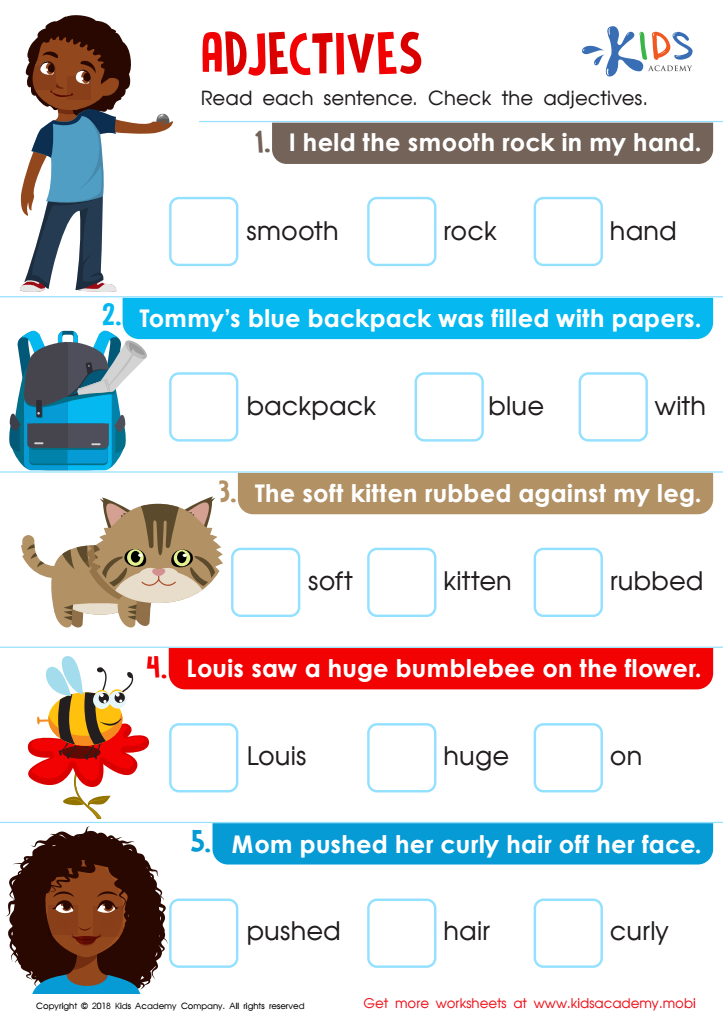
Adjectives Worksheet
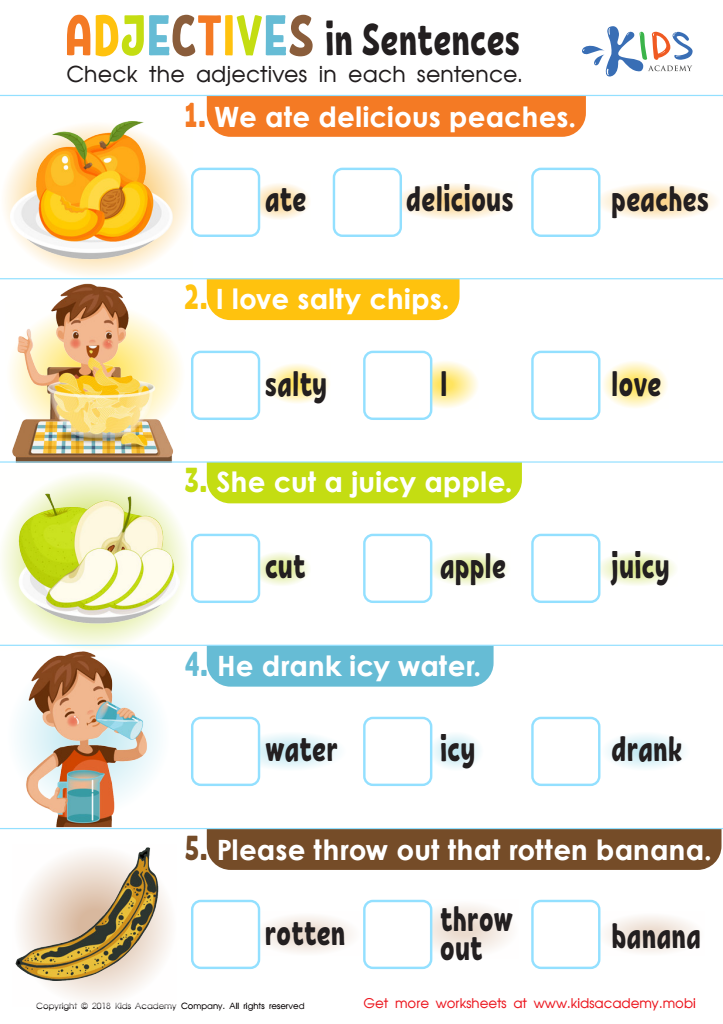
Adjectives in Sentences Worksheet






.jpg)

Understanding adjectives is crucial for children aged 6-8, as it enhances their literacy skills and helps them express themselves more vividly. Adjectives are descriptive words that modify nouns, adding detail and richness to language. When parents and teachers emphasize learning adjectives, they aid children in developing a stronger vocabulary and improving their reading comprehension. For instance, knowing how to use adjectives can transform plain sentences into engaging narratives, making stories more enjoyable.
In everyday communication, adjectives help children articulate their feelings and observations more clearly. This practice fosters better oral language skills, allowing children to share their thoughts and experiences with confidence. Furthermore, using descriptive language encourages imagination and creativity, enabling kids to describe their world in nuanced ways.
In addition to language arts, understanding adjectives supports other subjects like science and social studies. By helping children to describe what they observe in the world around them, educators and parents contribute to their critical thinking skills as well.
Ultimately, the importance of adjectives in writing and speaking cannot be overstated. By nurturing this understanding, parents and teachers help children become effective communicators, preparing them for successful academic and personal futures.