
Alphabetical order understanding Normal ABC Letters Worksheets for Ages 6-9
3 filtered results
Difficulty Level
Grade
Age
-
From - To
Subject
Activity
Standards
Introduce your child to the concept of alphabetical order with our engaging worksheets designed for ages 6-9. These Normal ABC Letters worksheets make learning fun and interactive, helping young learners grasp the fundamentals of arranging letters and words. Each worksheet is strategically crafted to enhance recognition skills, improve vocabulary, and foster critical thinking. From sorting simple words to exploring letter sequences, these activities support literacy development in an enjoyable way. Perfect for home or classroom use, our worksheets encourage kids to practice and master alphabetical order while building a strong foundation for future language skills. Ignite your child's love for learning today!
Favorites
With answer key
Interactive

Letter G Tracing Page
Get ready to trace the letter "G" – with a big red spot as the starting point, trace the lines and watch the letter appear. Uppercase and lowercase letters are both easy and fun to write. Give it a go and finish the word "go". Play the guitar and say "hello" to a funny ghost!
Letter G Tracing Page
Worksheet

Letter J Coloring Sheet
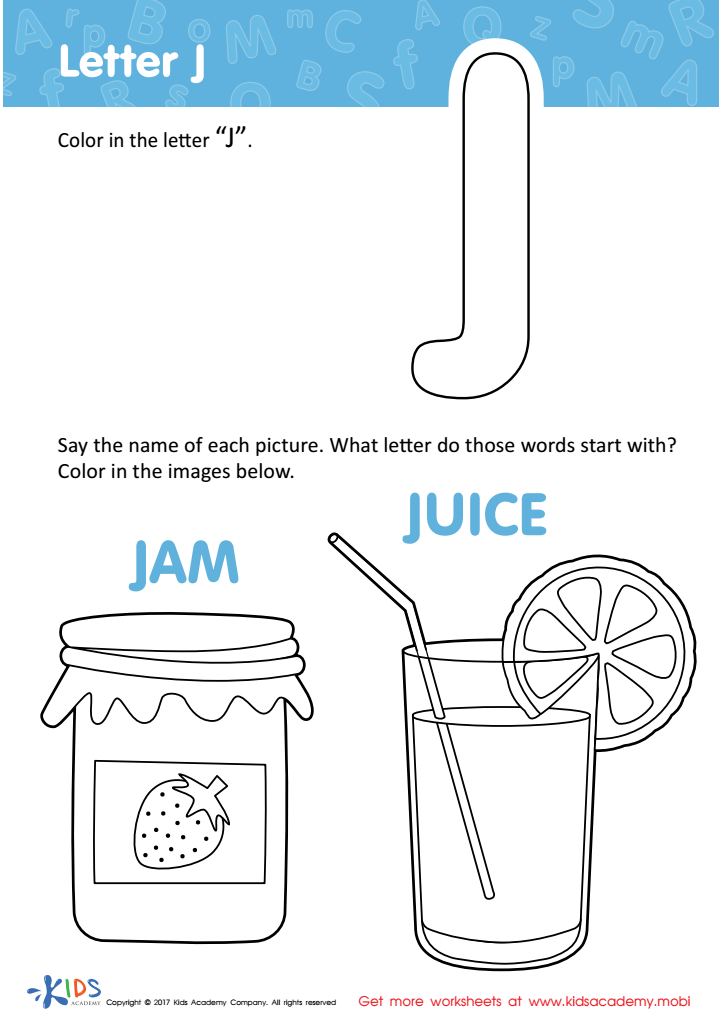
Practice the letter 'J' with your little one with this fun coloring page! Pictures of jar, juice, jam and jelly make it an enjoyable experience for kids. Learning the letter and coloring is fun for even the youngest learners.
Download (PDF)
 Assign to My Students
Assign to My Students
Letter J Coloring Sheet
Worksheet
Letter K Coloring Sheet
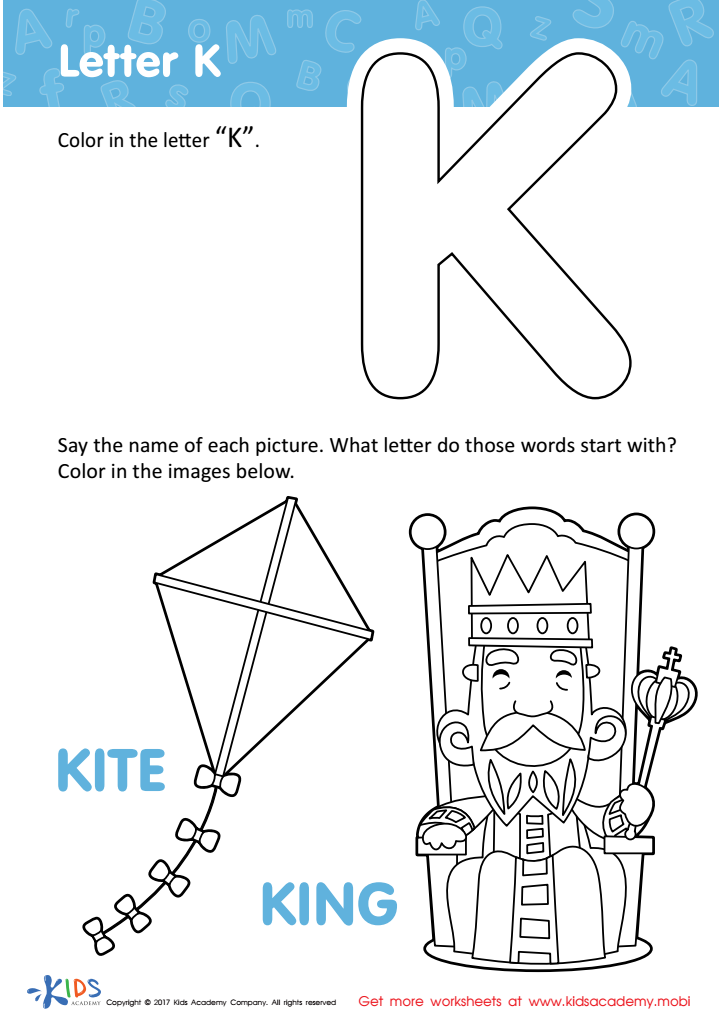
This letter K coloring page captivates your child's creativity while learning the letter! Showcasing a king and kite, common words for their age group, it's sure to spark their imagination.
Download (PDF)
Assign to My Students
Assign to My Students
Letter K Coloring Sheet
Worksheet
Join Kids Academy for Free
Who is primarily going to use this learning content?






Understanding alphabetical order is crucial for children ages 6-9 as it lays the foundation for effective reading and writing. Mastery of this skill helps students develop organizational abilities, literacy skills, and cognitive understanding of the written language. When children learn to arrange words in alphabetical order, they enhance their ability to locate information quickly, which is essential for research and reading comprehension. This skill also aids in dictionary usage, fostering independence in learning.
Furthermore, alphabetical order introduces essential concepts such as sequencing and categorization, which are important not only in language arts but also in math and science. As children recognize patterns and develop logical thinking, they become better equipped to tackle more complex ideas.
Moreover, learning alphabetical order can boost children's confidence as they recognize their ability to systematically approach tasks. In a world where technology and information are abundant, this foundational skill supports children in becoming proficient learners.
Hence, parents and teachers should actively nurture this understanding, integrating activities like sorting games, alphabet songs, and real-life applications to make the learning process engaging and effective. By emphasizing alphabetical order, adults contribute significantly to children’s overall academic success and lifelong learning skills.







