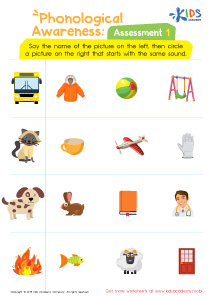
Phonics recognition Normal Consonants Worksheets for Ages 6-9
3 filtered results
-
From - To
Our "Phonics Recognition Normal Consonants Worksheets for Ages 6-9" provide a comprehensive approach to mastering consonant sounds. Tailored for young learners, these interactive worksheets enhance phonics skills through engaging activities, ensuring children can confidently identify and pronounce consonants. Designed by education experts, each worksheet supports essential reading foundations, boosting literacy in a fun and educational way. Perfect for classroom use or homeschooling, these worksheets make learning an enjoyable experience. Unlock your child's reading potential today with our expertly crafted phonics worksheets. Explore, learn, and excel with our top-notch resources designed specifically for children aged 6-9.
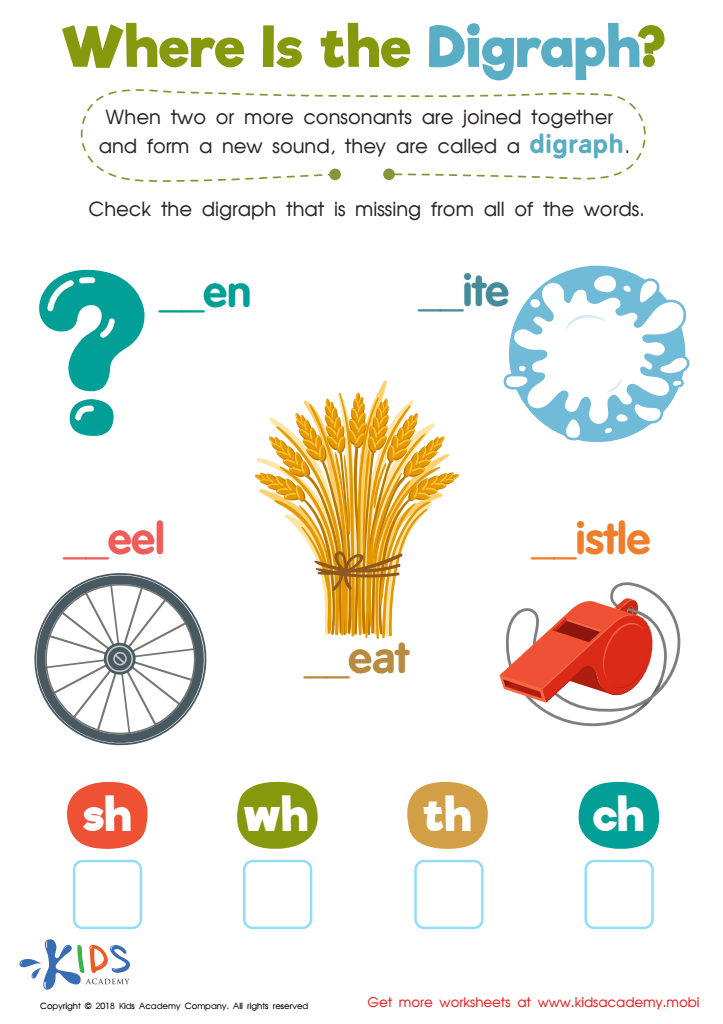
Where Is the Digraph? Worksheet
 Assign to My Students
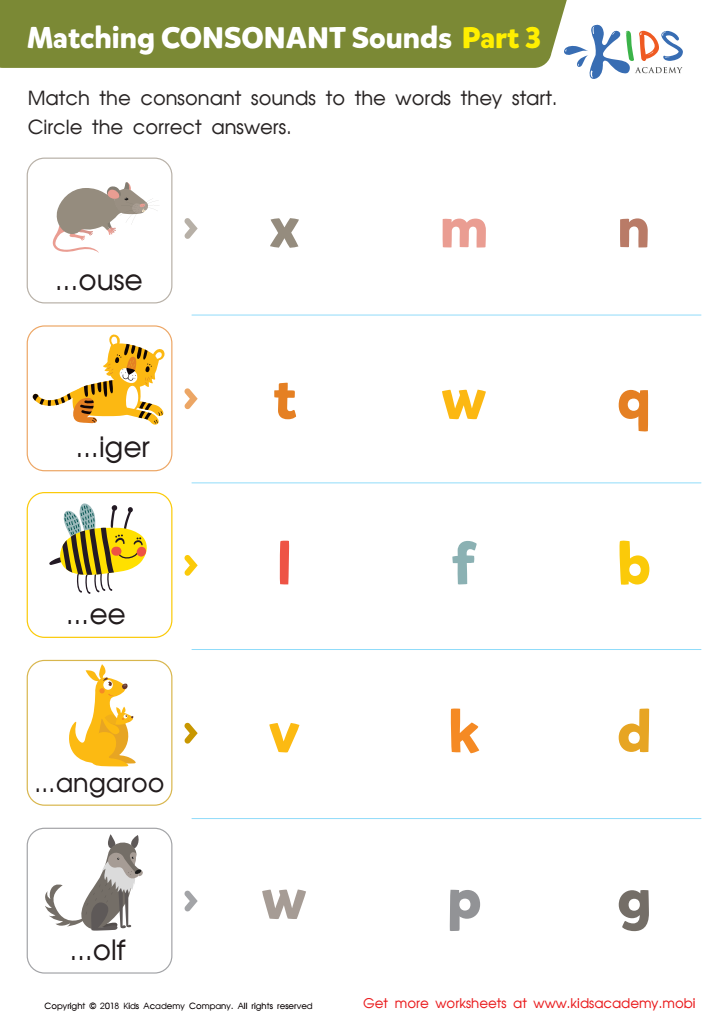
Matching Consonant Sounds: Part 3 Worksheet
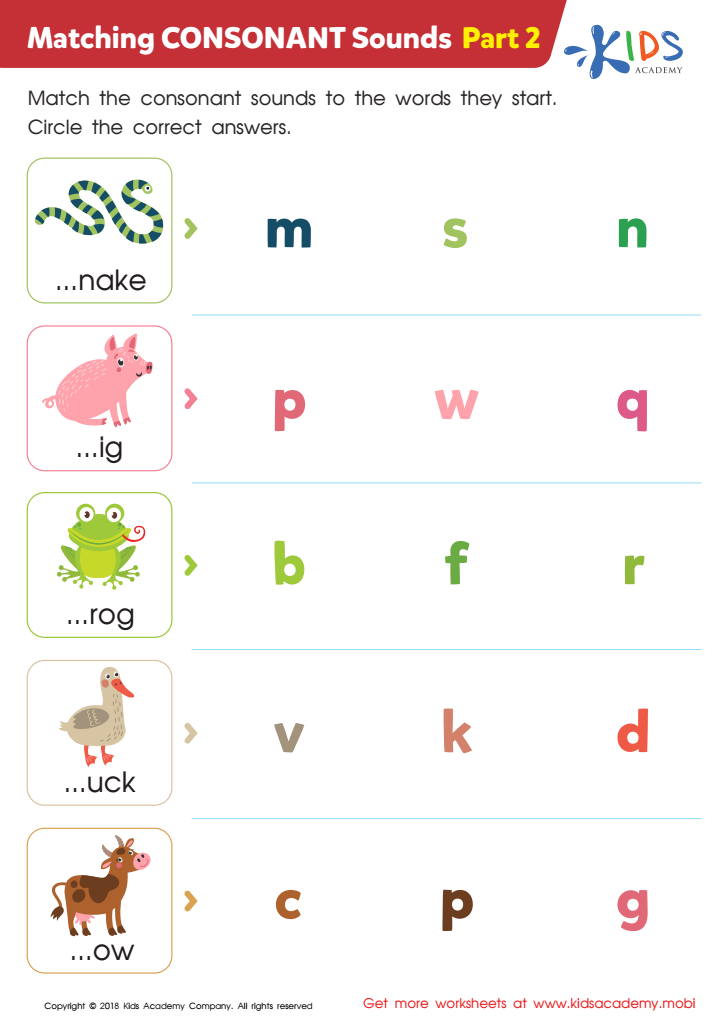
Matching Consonant Sounds: Part 2 Worksheet



Phonics recognition of normal consonants is a cornerstone of early reading development, particularly for children aged 6-9. This recognition is essential for understanding the relationship between letters and sounds, a foundation upon which reading proficiency is built. When children grasp how consonant sounds link to their corresponding letters, they can decode words more efficiently, fostering both reading accuracy and fluency.
Parents and teachers must prioritize phonics since it not only affects reading skills but also influences writing and spelling abilities. As children recognize and differentiate consonant sounds, they enhance their auditory discrimination, phonemic awareness, and word-blending skills. This phonics foundation propels them to tackle more complex texts with confidence, reducing frustration and promoting a love of reading.
The developmental strides made during these formative years lay the groundwork for academic success across subjects. Children with strong phonics skills are more likely to excel in reading comprehension, which in turn supports learning in areas like science, social studies, and math. Addressing phonics at this critical age helps prevent future reading difficulties, ultimately contributing to a child's long-term educational growth and self-esteem. Emphasizing phonics teaches kids to be active, independent learners who can nurture their curiosity and intellectual capacity efficiently.